Jenney Bitner’s Journey: Confronting Cancer During Pregnancy
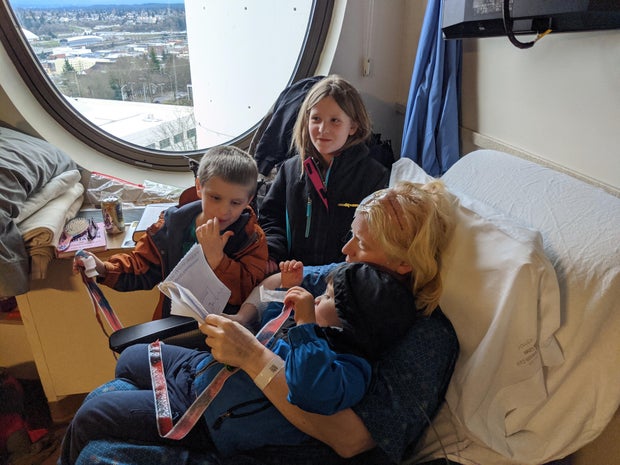
Jenney Bitner eagerly anticipated her family’s yearly visit to her mother’s home in San Diego. It was a cherished two-week vacation for her three children at their grandmother’s house. For Bitner and her husband, it was a chance to escape the February rain in Washington and enjoy the sun. In 2020, their trip felt particularly important. Bitner was 22 weeks pregnant and looking forward to family time during her pregnancy. However, after their first day, Bitner felt unwell, unable to get out of bed due to a headache, nausea, vomiting, and dizziness.
Medical professionals initially suggested her symptoms were related to pregnancy, which Bitner questioned. An upcoming appointment with her obstetrician was expected to bring clarity. After returning home, Bitner’s condition worsened. She experienced falls, prompting her husband to take her to the emergency room. An MRI revealed a large brain tumor. Surgeons planned to remove as much of the tumor as possible. Tests confirmed Stage IV melanoma, with cancer already spread to her brain. This was unexpected, as melanoma often shows as a visible lesion, which Bitner had never seen. The American Cancer Society notes a 35% survival rate at this advanced stage.
“I was just 38 and pregnant with my fourth child,” Bitner reflected. “I feared I wouldn’t see this baby grow.” These thoughts echoed in her mind, leaving her frightened about her future.
Treating Cancer During Pregnancy
Bitner’s doctors recommended aggressive treatment. The initial surgery had removed most of the tumor, but complete removal risked brain damage. Another tumor was found in Bitner’s back, palpable through her skin. Although she needed immunotherapy, it posed risks to her unborn child, leading doctors to consider an early delivery. Monitoring continued and Bitner delivered via C-section at 34 weeks. Before the scheduled delivery, her nausea and headaches returned. Scans showed the tumor had regrown.
“I had three and a half children, and I was scared I wouldn’t see them grow,” Bitner said. “I began writing them letters with things I wished I could tell them.” On May 4, she gave birth to her son Marcus, named after her neurosurgeon. Marcus weighed 3 pounds 12 ounces and required NICU care. Bitner’s husband described him in an online journal entry as “a fighter,” who was already “feisty.” A week later, Bitner underwent another brain surgery. This time, the entire tumor was successfully removed. After another week of recovery, mother and son returned home together. Holding his family together, Bitner’s husband expressed joy: “And so begins the sleepless nights. I’ll take them.”
A Remarkable Recovery
In early June 2020, Bitner started immunotherapy. The treatment aimed to boost her immune system, enabling it to target cancerous cells. Tests highlighted new issues near Bitner’s lung, thigh, and brain, causing her concern. However, her husband’s observations revealed positive changes. The palpable tumor on her back became undetectable within days. Other skin lumps reduced in size. Scans verified her remarkable progress, and she was well enough to attend her final immunotherapy session independently.
Although Bitner experienced rare side effects, such as an allergic reaction and encephalitis, leading to hospitalizations, the outcome felt worthwhile. In October 2020, her oncologist declared her free of disease.
Dr. Alicia Zhou, CEO of the Cancer Research Institute, highlighted the impact of immunotherapy. According to Zhou, “It’s truly transformational for patients like Bitner.” Prior to immunology advancements, curing Stage IV metastatic disease seemed unachievable. Bitner is not only a survivor but now advocates for ongoing immunotherapy research while cherishing family life.
“Every day since these events is a gift,” Bitner reflected. She describes the chaos at home as precious sounds she once feared she’d miss. Despite not expecting a messy house, she embraces it as a blessing.