Exploring Orion, Betelgeuse, and the Lifecycle of Stars
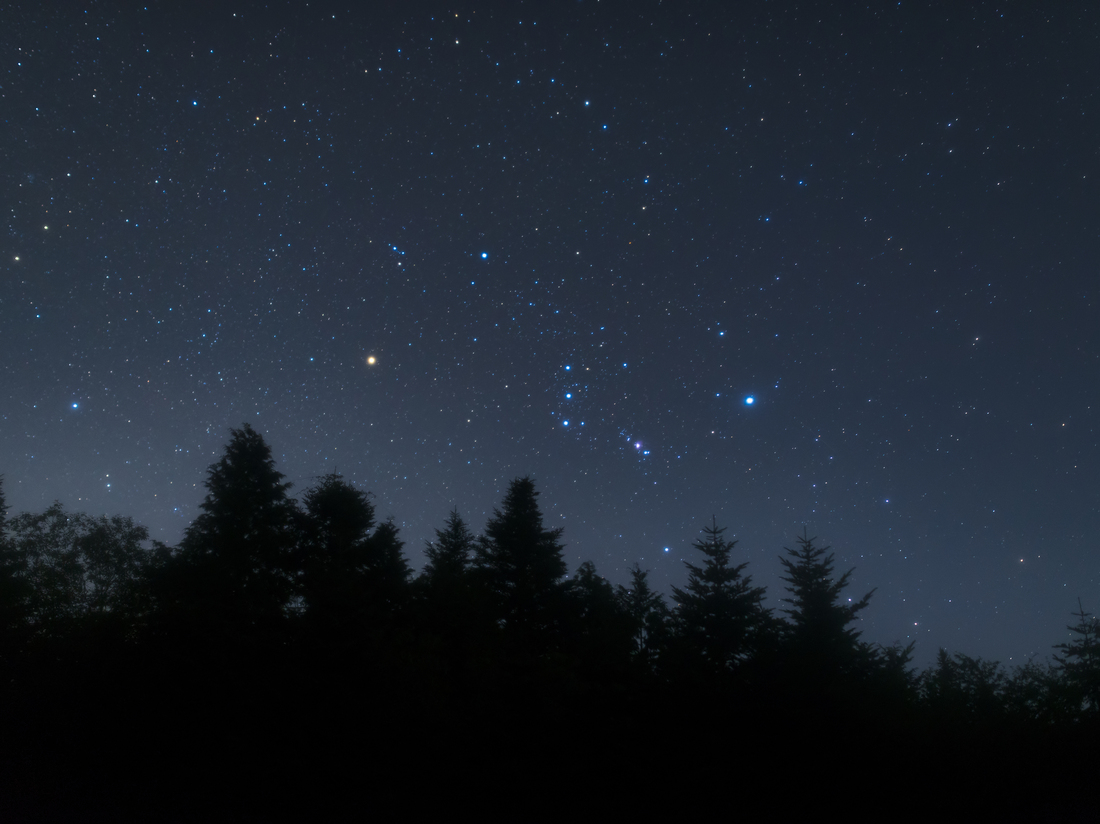
As night falls during winter in the northern hemisphere, the Orion constellation can be spotted near the eastern horizon. Orion, a legendary figure from Greek mythology, is a hunter banished to the sky for boasting of his hunting skills. He, along with his two dogs, eternally chases Taurus the bull and the Pleiades sisters.
The constellation is easily recognized by the three stars forming Orion’s belt. Astrophysicist Sarafina El-Badry Nance has a particular interest in Betelgeuse, the red supergiant located on Orion’s left shoulder. Betelgeuse is nearing the end of its life and is expected to explode as a supernova.
A Star is Born
Stars originate in clouds of dust scattered across galaxies. According to El-Badry Nance, these are regions where gas and dust accumulate due to gravity. As these regions become denser, they collapse into what is known as a protostar, the earliest phase of a star’s life.
Eventually, protostars ignite nuclear fusion, turning hydrogen into helium in their cores. This energy production prevents stars from collapsing under their own gravitational pull. The energy is released as light, appearing to us as starlight or, in the case of our sun, sunlight. Stars spend most of their existence in a stable middle-age phase. For example, our sun is expected to continue burning hydrogen for about five billion more years.
A Star Dies
Once a star exhausts its hydrogen, its core collapses, leading to its final life stage. The star’s outer layers expand and cool, transforming into a bloated version of itself. Betelgeuse is currently at this stage. Given its size, Betelgeuse is anticipated to have a dramatic finale by exploding as a supernova. The timing of this explosion is uncertain, but it will be visible from Earth for an extended period.
El-Badry Nance reflects on the lessons stars teach us about change. She notes that everything changes and nothing in the universe is static, despite the immense timescales involved. Turbulence and chaos are natural, and from them can emerge beauty.
If you are curious about the night sky, feel free to email [email protected]. You can also listen to Short Wave on Spotify, Apple Podcasts, and Google Podcasts. The episode was produced by Rachel Carlson, edited by Rebecca Ramirez, fact-checked by Brit Hanson, and engineered by Ko Takasugi-Czernowin.