Supreme Court Ruling Challenges Trump’s Tariff Strategy
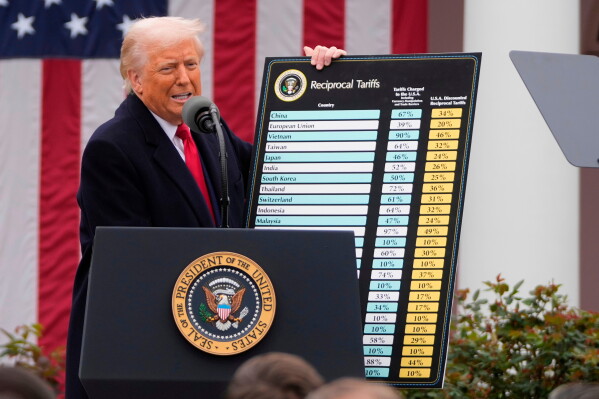
The U.S. Treasury experienced significant revenue growth from President Donald Trump’s taxes on global imports last year. However, this flow of money halted after the Supreme Court invalidated Trump’s significant tariffs in February. The looming question is whether the president’s trade team can fulfill its commitment to replace the lost revenue.
A deadline approaches swiftly. Following the Supreme Court’s decision, Trump looked to Section 122 of the Trade Act of 1974, enabling him to impose 10% tariffs worldwide. Yet, Section 122 permits tariffs only for 150 days, meaning Trump’s expire on July 24. Extending these tariffs would require congressional approval, which seems unlikely with midterm elections approaching and widespread voter dissatisfaction over rising living costs.
The administration, however, has more sustainable alternatives. Section 301 of the same 1974 trade law allows the president to impose tariffs and sanctions on countries practicing unjust or discriminatory trade. Trump previously used Section 301 against China in his first term and is applying it again, recently imposing 25% tariffs on certain Brazilian imports due to perceived unfair practices.
Trade experts predict the administration will quickly replace Section 122 tariffs with broader Section 301 tariffs by the July 24 deadline. Ryan Majerus, a trade lawyer involved in Trump’s and Biden’s administrations, suggests the tariff wall will rise once more.
Last year, Trump pushed—and exceeded—his authority to levy import taxes, a power designated to Congress by the U.S. Constitution. He invoked the 1977 International Emergency Economic Powers Act (IEEPA) to impose substantial tariffs globally, citing national emergencies caused by longstanding trade deficits. This rationale didn’t convince the Supreme Court, leading to a February ruling against using emergency powers for setting tariffs. Consequently, the administration issued refunds to importers who paid these tariffs, turning a revenue windfall into a Treasury shortfall.
Revenue from import taxes peaked at $31.4 billion last October but dwindled to $22 billion in March and April following the Supreme Court’s decision. Refunds outpaced revenue, resulting in a $42 million deficit in May and a $25.6 billion loss in June.
Trump and Treasury Secretary Scott Bessent vowed to regain lost revenue through other legal avenues. Section 301 offers the president the ability to impose tariffs in response to foreign trade practices. While procedural steps are necessary—collecting public comments and holding hearings—Section 301 tariffs have no immediate expiration and allow the president flexibility in adjustment.
A transition to rule-bound Section 301 tariffs introduces less uncertainty for businesses but isn’t entirely free of it, according to Sarah Bianchi, Evercore ISI’s chief strategist for international political affairs.
The Trump administration is conducting two major Section 301 investigations to recoup lost tariff revenue. One claims that 60 countries accounting for 99% of U.S. imports haven’t adequately controlled imports created by forced labor. The other examines whether 16 trading partners, including China, the EU, and Japan, are overproducing, lowering global prices and disadvantaging U.S. manufacturers.
Decisions regarding the forced labor issue have been made. Last month, U.S. Trade Representative Jamieson Greer proposed tariffs—10% on 16 countries and 12.5% on 44—that match or slightly exceed the 10% Section 122 tariffs they replace. Public comments on these proposals are ongoing, and tariffs haven’t been imposed yet.
Trade attorney Nathaniel Halvorson anticipates Greer’s team will implement the forced-labor tariffs promptly to avoid gaps with expiring Section 122 tariffs. The administration’s other investigation into alleged overproduction by 16 countries remains incomplete. Majerus expects further major tariffs proposals soon, but possibly timed post-midterm elections for strategic reasons.
Trump’s self-proclaimed title of “Tariff Man” indicates a desire to reinstate broad import taxes from 2025. These new Section 301 investigations appear to be aimed at facilitating this goal, despite potential legal vulnerabilities, according to Bianchi.
Section 301 tariffs have historically proven resilient legally, but their use for universal tariffs might invite legal scrutiny.