Wildfire Smoke Impacts Air Quality Across U.S.
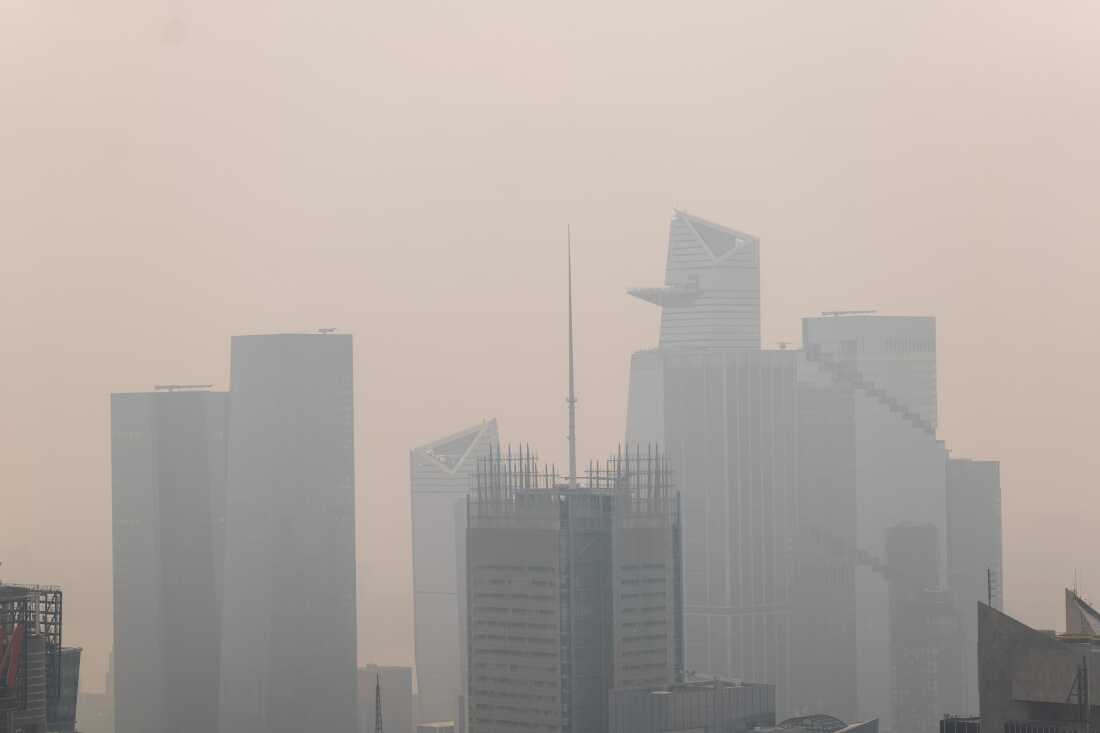
Smoke from Canadian wildfires has enveloped the Manhattan skyline, observable from venues like the Top of the Rock Observation Deck. This pervasive smoke is spreading throughout the Great Lakes region, affecting New England and extending as far south as Maryland, posing significant risks to air quality in numerous states.
The interplay of extreme heat and dry conditions in Ontario and northern Minnesota has resulted in expansive wildfire occurrences since July 13. Currently, over 800 wildfires are active across Canada, as reported by the Canadian Wildland Fire Information System. Record-breaking temperatures have triggered a heat dome over western Ontario and Minnesota, with temperatures exceeding 100 degrees in several locations. According to Derek Mallia, a professor of atmospheric sciences at the University of Utah, these conditions have sustained fires on a path described as ‘unprecedented.’
In Ontario, social media is replete with dramatic footage showcasing intense fires and skies filled with smoke. Air Quality Ontario has classified the air in specific regions as ‘very high risk,’ forcing thousands to evacuate. Hazardous or unhealthy air quality conditions are impacting parts of Minnesota, Wisconsin, and Michigan, as well as major northeastern cities like Philadelphia, New York City, and Baltimore, according to AirNow. Mallia likens the current situation to a ‘firehose of smoke,’ indicating sustained smoke-filled skies through the weekend.
Dangers from Wildfire Smoke
Human-induced climate change is intensifying these events. Prolonged droughts and heat waves are drying vegetation, increasing the frequency and severity of wildfire smoke occurrences. Dan Westervelt from Columbia University’s Lamont-Doherty Earth Observatory notes that such fires are becoming regular and sometimes more frequent.
Smoke consists of tiny particles that can penetrate deep into lung tissues and the bloodstream.
Dr. David Eisenman from the David Geffen School of Medicine at UCLA emphasizes that wildfire-induced pollution significantly affects health. He cites research correlating exposure with heightened risks of heart attacks, stroke, and respiratory issues. Chronic exposure increases the potential for pregnancy complications and developmental disorders in children. Additionally, Eisenman highlights that air pollution ranks among the leading causes of premature death worldwide, comparable to smoking and high cholesterol.
Eisenman advises consistent monitoring of air quality through online resources because smoke is sometimes imperceptible. Despite skies not appearing brown, the air may still contain toxins. Amidst soaring temperatures exceeding 100 degrees, Eisenman points out the compounded hazard of heat and smoke on public health.
Public Health Recommendations
The Environmental Protection Agency suggests adhering to guidelines concerning wildfire smoke exposure. Stay updated on air quality reports, utilize air purifiers, and replace filters regularly. Establish a cleaner air room within your home using an air purifier, and stock up on essential food and medications to minimize outdoor activity during smoky conditions. If air quality reports are poor, consider curtailing outdoor activities and wear N95 masks when venturing outside.