UK Designates Iran’s Revolutionary Guard as National Security Threat
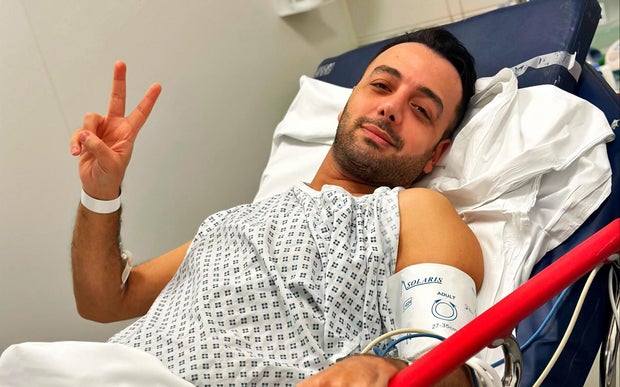
British Iranian journalist Pouria Zeraati felt a profound relief upon hearing the UK’s plans to ban support for Iran’s Islamic Revolutionary Guard Corps (IRGC). Zeraati described it as “the happiest day of my life since I was stabbed.” His primary concern was never the jail time for the Romanian nationals convicted of attacking him; they were seen as mere mercenaries.
Zeraati emphasizes the need to target the source of such threats, primarily the Iranian regime and the IRGC. He told CBS News, “This is a huge step that gives huge leverage to law enforcement to track, monitor, and counter the main source of the threat, which is in Tehran.” The IRGC was designated a “threat to national security,” along with two other state-backed groups, after approval from both houses of the UK Parliament and outgoing Prime Minister Keir Starmer’s administration.
The new designation makes it a criminal offense to provide support to the IRGC, punishable by up to 14 years in prison. Acts of sabotage could lead to life imprisonment. This places the IRGC on par with other UK-designated terrorist organizations.
Zeraati and Challenges Faced by Iranian Journalists
Journalists like Zeraati and their families have long faced threats and intimidation from the Iranian regime. As a prominent TV anchor, Zeraati has been no stranger to threats and accusations. Billboards in Iran portrayed him as a child killer. The terrorist designation by the Iranian regime further endangered his life.
Due to credible threats, London’s Metropolitan Police installed barriers outside Iran International’s studios, maintaining armed security. Eventually, the channel suspended operations in the UK, relocating to Washington, D.C.
In March 2024, Zeraati was attacked while walking in south London. Two men restrained and stabbed him, fleeing the scene in a getaway car. Zeraati suffered severe injuries but returned to work within a week, driven by determination to continue his reporting.
The attack was meticulously planned, as shown by surveillance and communication data. Romanian men Nandito Badea and George Stana were sentenced for their roles, with British prosecutors labeling the attack state-sponsored. A third suspect remains in Romania.
Iran’s Hostile Activity on Western Soil
In the year up to October 2025, MI5 identified at least 20 Iran-linked threats in the UK. These security concerns influenced the UK government’s decision to designate the IRGC. Closely connected to Iran’s military, the IRGC serves as the state’s security core.
The UK also proscribed the Islamic Companions of the Right (IMCR), linked to a series of attacks, including one on ambulances belonging to Jewish organizations. The IMCR is believed to be directed by the IRGC’s Quds Force.
The Decision’s Impact and Challenges
The U.S. labeled the IRGC a foreign terrorist organization in 2019. Canada and the European Union have followed suit. However, UK political circles debated the impact of such designation due to diplomatic ties. Concerns arose about possible expulsion of the UK ambassador to Iran, closing crucial communication.
Neil Basu, former head of UK Counter Terrorism Policing, welcomes the move as a strong political gesture. The designation allows for new strategies to counter threats and deters recruits due to severe punishments.
Zeraati concurs with the deterrence effect, though he doubts IRGC’s activities will change. “The decision applies pressure on proxies,” he noted. Regarding potential return to the UK, Zeraati remains cautiously optimistic, “This is the first step… and I wouldn’t hesitate to go back once it’s safer.”