Chicago’s Smart Streets Program Targets Package Delivery Giants
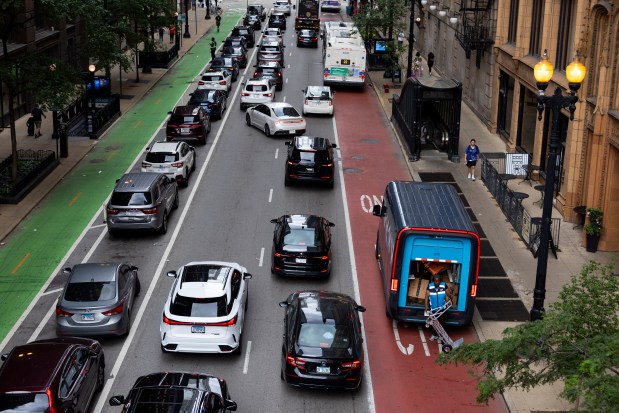
Chicago’s Smart Streets program, designed to enhance the safety of cyclists and pedestrians on busy downtown streets, has revealed that package delivery companies frequently violate bike lane regulations. Residents often see package vans blocking bike lanes throughout the Loop. The city’s Department of Finance issues warnings and fines to violators through the program.
Program Overview and Fines
The program employs cameras on city vehicles and buses to identify obstructed lanes. Since its inception, the initiative has generated nearly $2.6 million in fines for obstructing bike and bus lanes. Major offenders include Amazon Logistics, FedEx, and UPS, paying $460,000 for violations. Independent contractors and smaller companies also contribute to this issue. For example, Trans One Inc. and Northwest Express Inc. received fines totaling $78,000.
Program Expansion and Impact
Initiated in fall 2024, Smart Streets aims to decrease accidents and fatalities while improving traffic flow. This fall, the program expanded, with bike lane fines now at $250, spurred by the tragic death of 3-year-old Lily Grace Shambrook. Currently, the program covers a larger area, including 1,300 bus stops.
Enforcement and Compliance
Chicago’s Department of Transportation reports compliance improvement, citing a drop in repeat offenses from 15.6% to 7.6%. Close to 60,000 zero-fine warnings have been issued. Violators face escalating penalties, and large companies with unpaid fees may face lawsuits. The city prioritizes accountability, enforcing laws uniformly.
Challenges for Delivery Companies
Amazon links many fines to third-party contractors. Spokesperson Leigh Anne Gullett emphasizes safe operations, while FedEx’s Andrew Russell highlights compliance efforts against urban parking limitations. UPS seeks to optimize deliveries to minimize disruptions.
“Safe and responsible delivery is a priority in every community we serve,” said Gullett.
Program’s Future
The pilot concludes in December unless continued by City Council. The program has seen substantial support, with CTA President Nora Leerhsen emphasizing its critical role in enhancing safety and accessibility. By addressing obstacles in bike lanes, it strives to make roads safer and more efficient.
Christina Whitehouse of Bike Lane Uprising underscores dangers posed by blocked bike lanes. Cyclists face risks of entering traffic unexpectedly due to such obstructions, highlighting the importance of the program.