Challenges Facing the U.S. Congress and Public Perception
The United States Capitol features statues celebrating notable Americans such as Will Rogers, who humorously remarked about Congress, “Every time they make a joke, it’s a law, and every time they make a law, it’s a joke.” This sentiment persists, with nearly 90% of Americans expressing dissatisfaction with Congress.
Carl Hulse, chief Washington correspondent for The New York Times, notes that frustration with Congress remains high. Having covered Capitol Hill since the Reagan era, Hulse describes the institution as broken, citing a lack of bipartisan cooperation.
“I’ve spent my career covering the decline of Congress,” Hulse states. “They need to get it together.”
Despite Congress’s constitutional powers, Hulse criticizes the ceding of authority to the executive branch on key issues like tariffs and war powers. He highlights the Republicans’ approach as a significant mistake: once power is relinquished, it is not easily regained.
Republicans currently control both the Senate and the House. Yet, despite having power, legislative progress faces gridlock. Although some impactful bills have passed, such as a tax-cutting GOP mega-bill and a bipartisan housing bill, critics demand more legislative action.
President Trump has often bypassed Congress on trade and military issues, pressuring it on matters like federal voting rule changes. The Senate is particularly unstable given Mitch McConnell’s hospitalization and Lindsey Graham’s unexpected death.
Reflecting on the political climate, Hulse compares today’s Congress to that of 1985, noting the previous prevalence of World War II veterans who prioritized problem-solving over political maneuvering. Now, with tight margins and gerrymandered districts, party alignment with the President dominates.
Both parties blame each other for dysfunction. Rep. Peter Welch cites chaos, while Sen. Katie Britt blames Democrats for prioritizing politics over people. Sen. Chris Coons highlights Trump’s confrontational stance against his own Congress.
Sarah Binder, a senior fellow at the Brookings Institution, describes Congress as struggling and marginalized due to the empowered executive branch. Philip Wallach from the American Enterprise Institute concurs, noting Congress’s diminished authority despite constitutional powers like budget control and war declarations.
Binder adds that Congress has forgotten how to legislate effectively, while Wallach points to a shift in congressional self-perception: prioritizing support or opposition to the White House over addressing constituents’ needs.
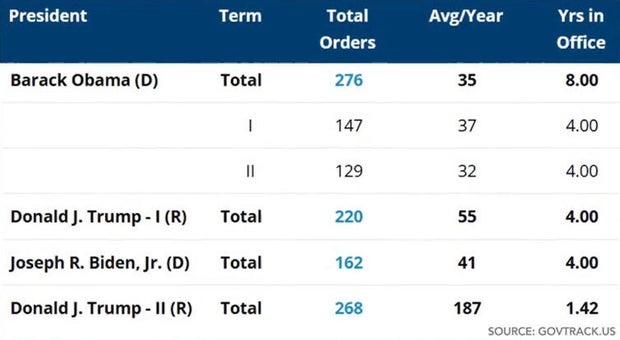
President Trump’s use of executive orders — over 260 — surpasses recent predecessors, prompting questions about Congress’s role. Wallach maintains that Congress, noted for unglamorous work, may not achieve popularity but needs scrutiny.
Binder argues for public criticism due to urgent fiscal and social issues, contrasting against unrealistic expectations of bipartisan achievements in polarized times.
Binder and Wallach view Congress as reflective of American society. Binder remains hopeful yet grounded, seeing long-term challenges. Wallach believes Congress can innovate and regain centrality.
Looking forward, Congress may eventually revitalize its role. Compromise and coalition-building could transform its function.