Grass Science at the World Cup: Enhancing Soccer’s Playing Field
This year’s World Cup has set new viewership records, encouraging a surge in American interest in soccer. Hosted across multiple venues, the event has captivated audiences. The final match between Spain and Argentina is expected to draw immense viewership.
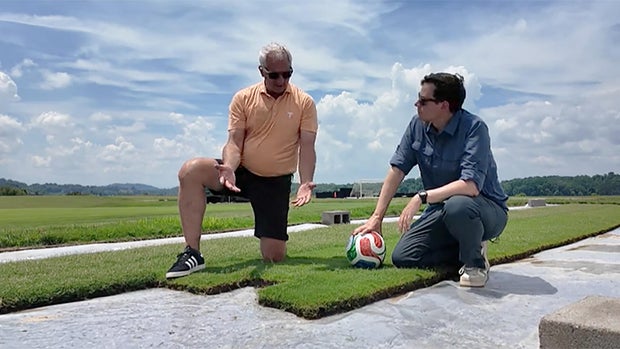
Dr. John Sorochan, a distinguished professor in Turfgrass Science at the University of Tennessee, Knoxville, highly values this year’s tournament for its focus on the playing surfaces. He emphasizes the importance of quality grass fields for the game, noting that while billions watch, little consideration is given to the fields themselves. These fields undergo meticulous preparation and maintenance.
Over the past five years, the University of Tennessee, in collaboration with Michigan State University, has contributed to the FIFA Pitch Research Project. This World Cup is the largest in history, featuring 104 matches held in 16 stadiums across three countries. FIFA mandates high-quality natural grass for all matches, with Sorochan playing a pivotal role in ensuring the grass meets standards.
The diverse climates and elevations of the host stadiums necessitate varying grass species. To provide quality surfaces, rolls of specially-engineered sod have been transported from farms nationwide. For instance, the MetLife Stadium grass used for the final grew in North Carolina. Some stadiums have domes, requiring artificial grow lights on the Tennessee campus to test how grass responds to light for 12-14 hours daily, ensuring healthy growth.
Dr. Sorochan explains the need for grass viability for extended periods. He has invested years in testing grass resiliency with a robot that mimics the force exerted by professional soccer players’ cleats. This precision helps create uniform and consistent surfaces. The research also covers how soccer balls behave on various grass types, ensuring that the ball does not bounce excessively and remains in the players’ control.
Grass varieties like Meyer Zoysia and TifTuf Bermuda are evaluated for their suitability. Brad Jean, owner of Crossroads Sod Farm in Tennessee, works alongside the university experts. Sod farming caters mainly to residential areas and golf courses, contributing significantly to the economy. Artificial turf is often criticized, including its heat retention and plastic residue issues noted by Jean.
Studies reveal higher injury rates on artificial surfaces compared to grass. Sorochan emphasizes the natural flow and appeal of the game on grass, contributing to the traditional aesthetics and dynamics of soccer.
Players like Enzo Fernandez and Djed Spence exhibit the beauty of the sport on well-crafted grass surfaces. Post-World Cup, customers can acquire souvenir sod for a notable price, preserving a piece of the occasion.
Resources:
Dr. John Sorochan, University of Tennessee, Knoxville
FIFA Pitch Research Project
Crossroads Sod Farm, Belvidere, Tennessee