Revitalizing Chicago’s Austin Community: The Power of Local Leadership
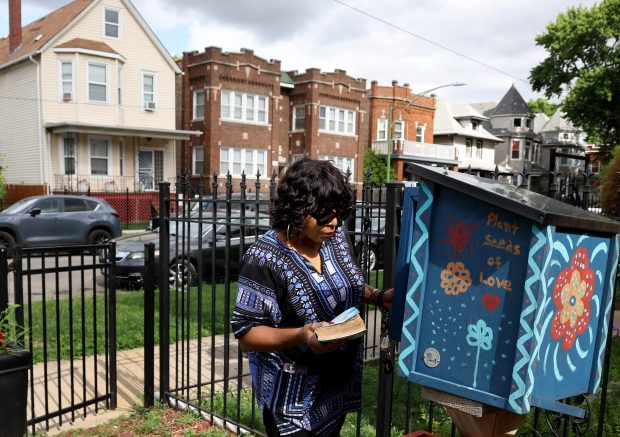
The Austin neighborhood in Chicago is often depicted negatively through statistics highlighting crime and poverty. While these challenges are real, there are also positive stories emerging, thanks to dedicated community members.
Rev. Dollie Sherman has been a key figure in this positive transformation. For nearly 50 years, she has lived on Chicago’s West Side. Her journey began with small community events, such as summer cookouts and school supply drives. Over time, these efforts grew into the Vessels Unto Honor block club, which has focused on beautification, fostering youth engagement, and supporting residents for over a decade.
“The block club has helped turn our block into a community,” Sherman explained. “We’re not just waiting for somebody else to come along; we’re building it ourselves.”
This grassroots leadership trend is growing in Chicago. More residents and neighborhood organizations are stepping up to tackle issues that government efforts alone haven’t solved.
A great example of community collaboration was evident this past Memorial Day weekend. Residents gathered on the 600 block of Lorel Avenue for the first community job fair organized by the Center for Poverty Solutions. This event brought together nearly a dozen employers who conducted interviews and collected résumés, providing job opportunities that were previously out of reach for many.
The job fair’s impact was immediate. Over a dozen attendees received job offers that day. Additionally, 50 more secured interviews for full-time positions, highlighting how block club leadership can change both the physical space and neighborhood culture.
Significantly, the event underscored the importance of meaningful job opportunities in discussions about poverty and public safety. Work gives people the chance to contribute, support themselves, and plan for the future. Sherman highlighted this point:
“If we get our youth busy with something, I think it helps us avoid a lot of crime and vandalism,” Sherman said. “It also helps those youth.”
Meaningful employment is more than receiving a paycheck. It provides stability, purpose, and self-esteem. Over 97% of Chicagoans with full-time work live above the poverty line, while 80% of part-time workers do. In contrast, only 68% of unemployed individuals remain above the poverty line. Jobs help parents support their families and enable young people to envision a future, thereby strengthening community bonds.
Sherman has tirelessly helped young people facing homelessness and limited employment opportunities. She provides a path forward through work:
“A lot of these youth are homeless. They’re staying with a friend, sleeping on their couch,” said Sherman. “But they’ll come here, and they’ll go back with something in their pocket after work. They can feel good about themselves.”
While a single job fair cannot eradicate decades of poverty or stop violence, each person connected to a career opportunity represents progress toward self-sufficiency. Each young individual who opts for employment over the streets marks a victory, significantly reducing their risk of criminal involvement. Leaders like Sherman, who devote themselves to neighbors, lay the groundwork for safer, more connected communities.
Sherman has long understood that fighting poverty and enhancing public safety are interconnected goals. For policymakers, philanthropists, and community leaders, the lesson is clear: Creating work pathways and fostering self-sufficiency go beyond improving economic outcomes. They restore hope, block by block, transforming neighborhoods.
Eddie Kornegay, Ph.D., serves as the executive director of the Center for Poverty Solutions, an initiative launched by the Illinois Policy Institute.
Submit a letter, of no more than 400 words, to the editor here or email [email protected].