Indian Youth Movement Persists as Activist Ends Hunger Strike
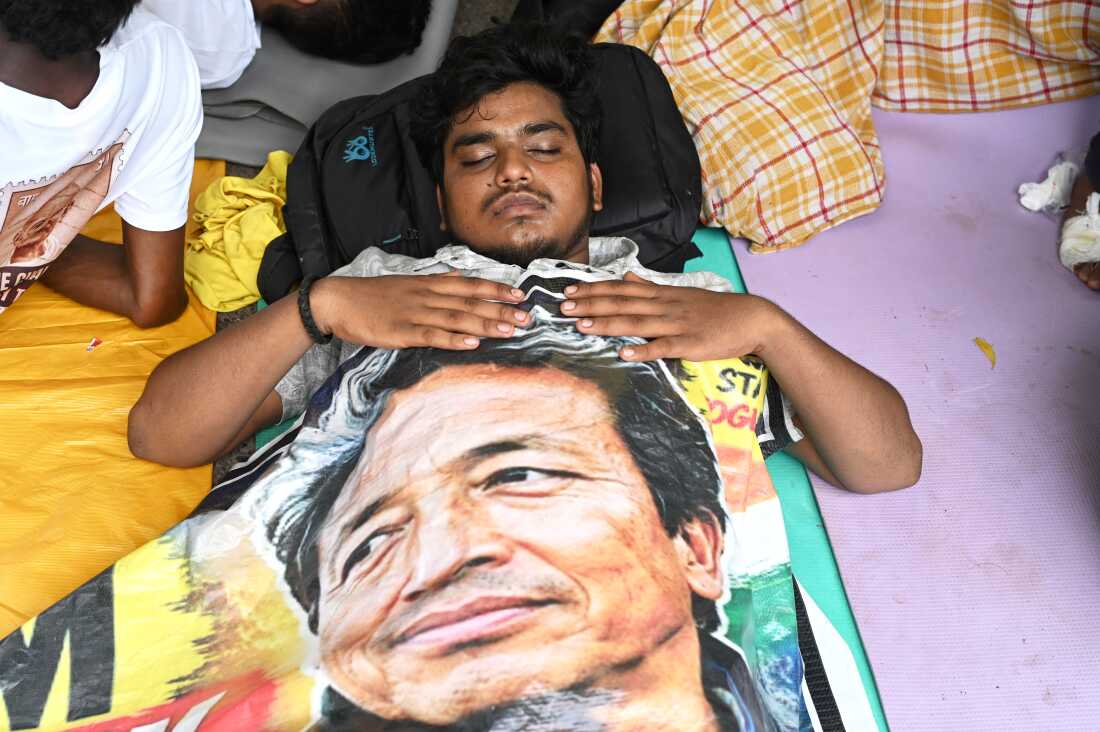
A protester wraps himself in a banner featuring Sonam Wangchuk, a well-known activist, during a demonstration in New Delhi, India, on July 22, 2026. Wangchuk was forcibly moved to a hospital by police while participating in a hunger strike supporting the Cockroach Janta Party’s movement. Demonstrators express determination to continue their protests until the education minister resigns.
Sonam Wangchuk concluded a 26-day hunger strike, significantly energizing a burgeoning youth movement, now one of India’s largest protests of recent times. The movement began over claims of leaks in competitive entrance exams, leading to demands for educational reform. It has since addressed wider issues like unemployment and government accountability. The protests have drawn diverse participants, including professionals, families, and activists, coming together in New Delhi and across India.
This wave of dissent is one of the most persistent against Prime Minister Modi’s government. Despite police intervention, using tear gas and batons, thousands continued to rally, determined even after efforts to stop them from reaching Parliament.
Wangchuk announced the end of his fast on social media, mentioning that this decision came after talks with federal ministers and Parliament members, and considering the risk of potential violence. The details of these negotiations were not disclosed.
Protest organizers remain firm that demonstrations will not cease until Education Minister Dharmendra Pradhan steps down. They have planned further protests nationwide in solidarity with students who faced police brutality during a march to Parliament, which attracted thousands earlier in the week.
Abhijeet Dipke, founder of the Cockroach Janta Party, a satirical group driving the movement, emphasized that Wangchuk’s efforts must not be in vain. This movement’s name references a comment by the supreme court’s chief justice likening some unemployed youth to cockroaches.
Prime Minister Modi addressed the protests recently, promising the establishment of fast-track courts to handle examination paper leak cases. He also announced forthcoming legislation aimed at preventing such leaks. Yet, these announcements have not satisfied the protesters, who demand more substantial accountability, educational reforms, and support for families of students who died by suicide over leaked exam papers.