Reviving Frank Lloyd Wright’s Mile-High Skyscraper Concept
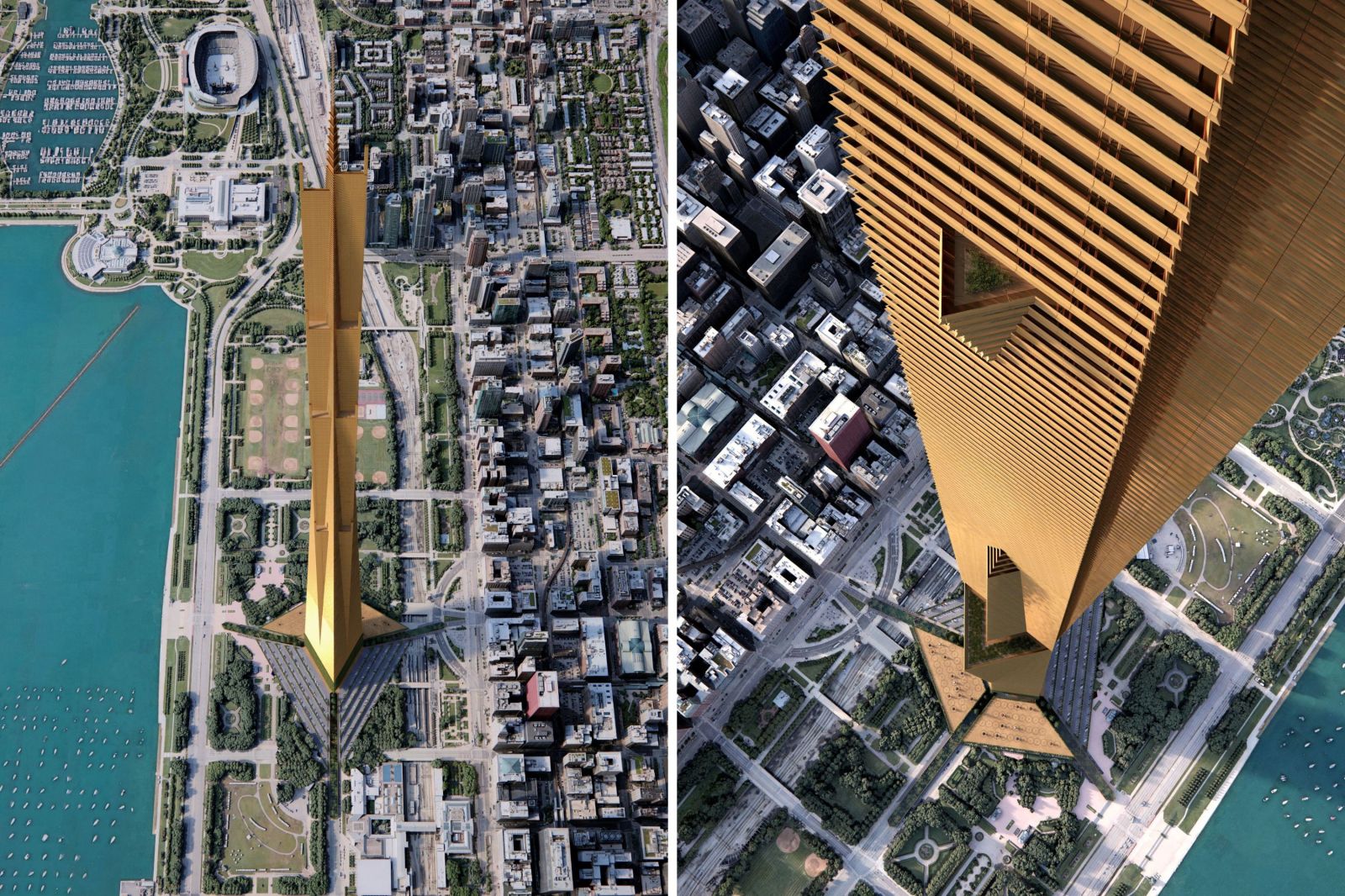
Nearly seventy years after Frank Lloyd Wright unveiled a plan for a mile-high skyscraper, the visionary structure has been reimagined through detailed 3D renderings by Spanish architect David Romero. Known as The Illinois, this unbuilt tower represented one of Wright’s most ambitious ideas—a 528-story ‘city in the sky’ that aimed to redefine urban living.
Romero’s Realization of Wright’s Concept
Romero has created renderings of The Illinois and other unrealized Wright designs for the Frank Lloyd Wright Quarterly magazine. His photorealistic reconstructions present a glimpse of how the futuristic megastructure might have appeared if it had ever risen above Chicago.
The renewed interest in Wright’s unbuilt giant coincides with debates on whether the future of architecture lies in building higher or in updating and preserving existing structures. Architect Gordon Gill, responsible for Saudi Arabia’s Jeddah Tower, suggests refreshing current buildings to maintain relevance and longevity.
The American Institute of Architects highlights that reusing existing structures can prevent 50 to 75 percent of carbon emissions linked to new construction by avoiding the release of embodied carbon from new material production.
Bringing Wright’s Design to Life
Romero, who runs the Hooked on the Past project, aimed to recreate Wright’s most famous unbuilt design for some time. He studied Wright’s completed towers, like the S.C. Johnson Research Tower, before tackling The Illinois. These references helped fill gaps left by Wright’s surviving drawings.
Creating the model was an extensive process, taking months of Romero’s spare time. He wanted the tower to sit convincingly within the real Chicago skyline, not appear in isolation.
Insights Gained from the Tower’s Structure
While creating the renderings, Romero gained a new appreciation for the building’s internal logic. According to him, the scale of the tower is surprising once modeled against actual dimensions. Although its height seems provocative on paper, its placement with landmarks like the Eiffel Tower reveals a more thoughtful rationale.
Wright’s tapered tetrahedral form was a structural response to wind forces, not merely decorative. Romero noted that these principles were an extrapolation of Wright’s tested ideas.
Could The Illinois Be Realized Today?
Romero believes some engineering concepts from Wright remain relevant, although some elements are rooted in the technological optimism of the 1950s. Wright’s taproot foundation and wind-shedding geometry are still seen in modern engineering.
However, a literal mile-high structure as envisioned would not be feasible today. Modern building standards would not support Wright’s proposed atomic-powered elevator system or mechanical systems.
Ahead of Its Time
Wright’s vision still offers lessons for urban planners. The Illinois combined housing, offices, commerce, and transport within a vertical development. This reflects current arguments for dense, mixed-use growth over suburban expansion.
Romero observed that Wright’s ‘city in the sky’ proposed a self-sufficient vertical footprint. It included infrastructure like highways and a heliport, aligning with today’s transit-oriented growth ideals.
At a mile high, The Illinois would have transformed Chicago’s skyline and would challenge today’s urban assumptions. The concept continues to fascinate due to its bold ideas about height and urban density.