South Africa Faces Heightened Tensions Over Illegal Immigration
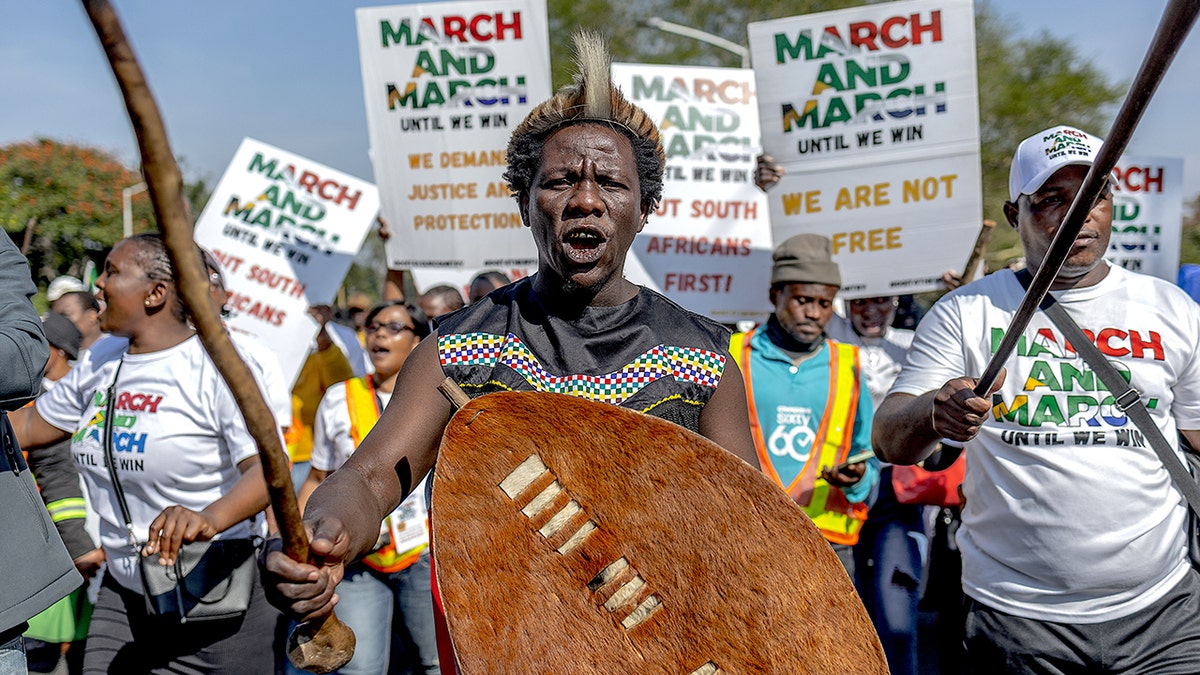
In Johannesburg, significant tensions have arisen as over 160,000 illegal immigrants have fled South Africa amid widespread protests. Thousands of citizens demanded foreigners leave, criticizing the government for inadequate border controls and inaction. Concerns are exacerbated by claims from one organization that there could be up to 30 million illegal immigrants in the nation, which has a documented citizen count of around 63 million.
These undocumented immigrants are frequently blamed for rising crime, job displacement, and overcrowding in hospitals and schools. In areas like Soweto, near Johannesburg, there have been reports of groups going door-to-door, issuing deadlines for immigrants to leave. Recently, Reuters reported that the nationwide protests resulted in about 900 arrests in a single day. While mostly peaceful, some areas saw violent confrontations, leading to one reported death in Johannesburg.
The protests have driven some immigrants to leave by bus or flights organized by their home countries across Africa. During one incident in June, the South African border authority reported that 321 out of 332 Ghanaians attempting to depart from Johannesburg’s OR Tambo International Airport were found to be in South Africa illegally.
Despite claims of operating peacefully, the March and March movement, a prominent anti-immigrant group, has been involved in marches where participants carry large sticks called knobkerries, pressuring foreigners to leave. The movement’s leader, Jacinta Ngobese-Zuma, expressed exhaustion with the situation, citing figures ranging from 15 to 30 million illegal immigrants in the country. She noted that official figures from a 2022 census are perceived as manipulated due to government control.
Ngobese-Zuma highlighted frequent instances where immigrants evade showing documents when confronted by officials. Statistics South Africa’s head, Risenga Maluleke, acknowledged that his team relies on immigrants’ statements without verifying their origin.
In South Africa, the unemployment rate hovers at 32.7%, yet many illegal immigrants reportedly find work. President Cyril Ramaphosa has publicly noted that employers exploit undocumented workers by paying below minimum wage and extending work hours without proper compensation. Ngobese-Zuma stated that the local job scarcity fuels demands for prioritizing South Africans for employment.
Reports reveal that services in hospitals, such as a Johannesburg government hospital, face severe strain. Patients reportedly have waited as long as 36 hours, largely due to the influx of foreign citizens seeking medical care. One patient’s death in the Helen Joseph hospital brings attention to the pressing healthcare challenges.
Concerns about border control and corruption at entry points are widespread, with some claiming that entering via low rivers is easier than contending with crocodiles. In response to public pressure, and with impending local elections, President Ramaphosa has committed to enforcing stricter immigration measures. As of mid-July, authorities reported processing 53,449 foreign nationals for deportation, a fraction of the numbers cited by anti-immigrant groups.
Political figures such as Action SA’s Herman Mashaba criticize the government’s handling of the issue. Mashaba emphasized the need for mass deportations and more robust immigration enforcement, challenging the ruling party’s past failures. Polls indicate that South Africans see immigration as a critical concern, especially among black South Africans.
Protests led by organizations like March and March are fueled by frustration at perceived governmental complacency. Protesters demand government intervention to prevent communities from resorting to self-help measures. The situation mirrors past incidents, including violent riots in 2008 and 2015, resulting in numerous deaths.
Ngobese-Zuma and her supporters remain unapologetic in their stance against illegal immigration, asserting their right to protect community interests. Requests for comment from the South African government on these developments have not been answered.