Deadly Earthquake Strikes Southwestern Japan
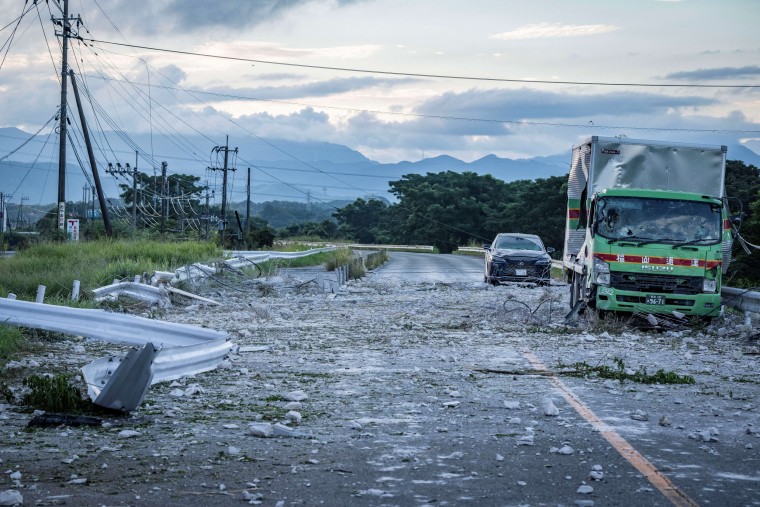
A magnitude-7.1 earthquake in southwestern Japan has claimed the lives of at least 13 people. Prime Minister Sanae Takaichi shared this tragic news on Wednesday as rescue efforts continued in the affected areas.
The earthquake hit Kumamoto prefecture, located on Japan’s southern main island of Kyushu, on Tuesday afternoon. The quake struck at a relatively shallow depth of 6 miles, leading to tsunami warnings and evacuations from coastal areas. Although the tsunami warning was rescinded shortly after, substantial damage occurred throughout the prefecture.
Among the notable damages, the historic Kumamoto Castle suffered further destruction. This site has been under repair following a previous earthquake in 2016. Roads in the area were also damaged, resulting in power outages for thousands of homes. Authorities have advised residents to remain cautious of heat stroke risks as temperatures soar into the 90s.
An explosion at the Aeon mall in Kashima left two women in their 20s dead. Eight others have been rescued from the wreckage, while four more remain unaccounted for. Investigations are ongoing to determine if a gas leak caused the explosion. In another incident, a chimney collapse at a Nippon Paper Industries factory in Yatsushiro has left seven individuals missing, reported Reuters.
Thousands of soldiers have been mobilized to join rescue operations. Hospitals are treating numerous injuries, some involving passengers from Japan’s high-speed trains. The train services on Kyushu were immediately halted post-earthquake. Additionally, a freight train derailed at Yatsushiro station, and footage showed overturned carriages alongside collapsed pillars of the Yatsushiro Shrine.
On Wednesday, suspensions were still in place for bullet trains and certain airport operations. Kyushu Electric Power stated that approximately 35,000 households remained without electricity. Japan’s meteorological agency has cautioned about the potential for more earthquakes in the coming days, advising vigilance for events of similar intensity.
Fortunately, there was no reported damage to nuclear reactors in the area. The International Atomic Energy Agency confirmed that the Sendai nuclear power plant stayed intact, continuing to monitor the situation closely.
Japan’s vulnerability to earthquakes stems from its position on the “Ring of Fire,” where several tectonic plates intersect. This location is prone to frequent seismic activities, accounting for about 20% of the world’s earthquakes measuring 6.0 or higher.