Iran Vows Retribution Following U.S. Military Strikes
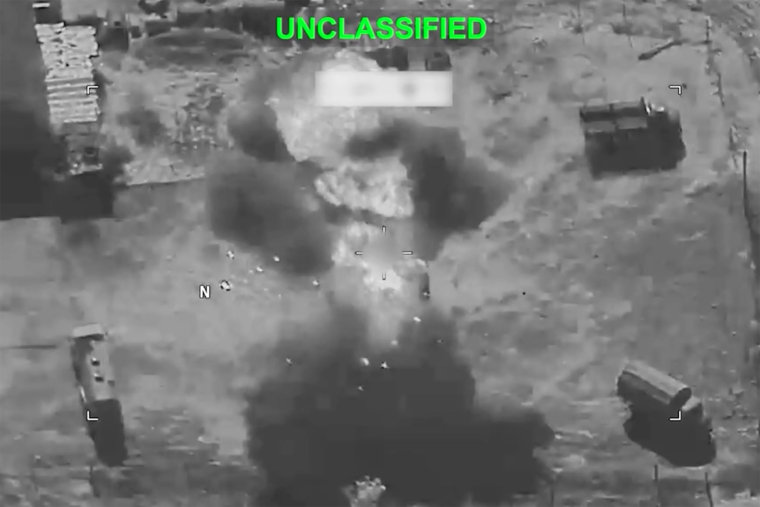
On Thursday, Iran announced plans to retaliate against the United States after U.S. military forces reported completing numerous strikes overnight. These actions were in response to an earlier attack by Tehran on U.S. military forces in the Middle East. The situation marks an escalation in tensions after a short period of diplomatic efforts aimed at reducing conflict.
President Donald Trump stated that the U.S. would react forcefully to Iran’s strike on an American base located in Jordan. The influential Revolutionary Guard Corps (IRGC) in Iran declared their intention to penalize the aggressors, indicating that the conflict might not cease soon.
Jordan intercepted a barrage from Iran, while Kuwait reported a strike affecting a Chinese-owned building, resulting in one casualty. The conflict appears to be broadening, involving more countries and potentially impacting the global economy.
Following collaboration with the U.S., Saudi Arabia attacked Iran-backed militants. Meanwhile, Egypt reported that a drone attack caused fires on two natural gas vessels at Damietta port. The attack, targeting a U.S.-owned storage facility and a Greek-owned tanker, is yet to be attributed to any party. Should Iran be involved, this would represent a major expansion of the conflict to a critical U.S. ally and further threaten global energy supplies.
During an event at the Oval Office on Wednesday, President Trump, addressing whether Iran was responsible, indicated that resolutions were being pursued without clarifying specifics. He mentioned that aggressive measures against Iran were planned as a counteraction.
On Wednesday, President Trump reportedly used vulgar language during a conversation with Fox News, vowing to take severe actions against Iran following their attack on U.S. forces. Subsequent videos released by Central Command, CENTCOM, showed explosions at undisclosed locations in Iran.
U.S. Central Command later announced via X that a series of heavy strikes targeting Iran was completed in reaction to what was described as an attempted surprise attack on U.S. forces. Strikes focused on several IRGC assets including command centers, missile and drone facilities, and maritime defenses, resulting in casualties including civilians in Qeshm Island in the Strait of Hormuz, according to IRIB news agency.
The Strait of Hormuz, a crucial passage for about 20% of global oil before the conflict, has become central to the conflict and peace negotiations. Current attacks are slowing shipping through Hormuz as the U.S. continues efforts to ease Iran’s influence there. Oil prices surged, with Brent crude oil trading around $90 a barrel.
NBC News analysis of MarineTraffic data showed a Qatar-managed LNG tanker navigating from the Persian Gulf to the Gulf of Oman, via Iran-controlled lanes in the Strait of Hormuz, marking the first such passage since an attack in early July. Iran granted permission for this transit, according to Fars news agency.
On Thursday, four additional ships utilized Iranian routes, including two Emirati-managed asphalt tankers and another LNG tanker. Approximately 59 tankers or cargo ships have passed through Bab el-Mandeb in the Red Sea within a day.