Americans Remain Critical of Political Parties’ Economic Policies
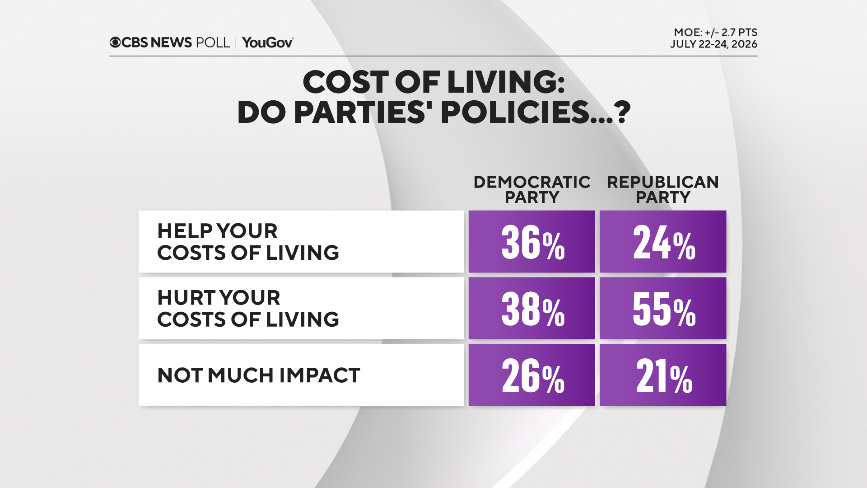
For a significant period, large segments of the American population have expressed dissatisfaction with their incomes not keeping pace with inflation. Many feel that President Trump is not sufficiently addressing the issue. Relief seems absent from both political parties, leading to dissatisfaction.
Criticism is stronger towards Republicans, with a majority indicating GOP policies are detrimental rather than beneficial. This sentiment correlates with President Trump’s low approval ratings on inflation, as those who disapprove of his economic policies often feel financially disadvantaged.
Democrats do marginally better than Republicans, yet only one-third of Americans feel they are helping with the cost of living. Their impact is slightly negative when comparing those who feel helped versus those who feel hurt.
Regarding economic policy, Republicans and Trump have a slight advantage over Democrats concerning immigration. However, this success is marred by declining approval of the administration’s deportation initiatives, directly linked to these views. Positive opinions are primarily among the GOP base, with Trump receiving higher immigration ratings than for inflation.
Democrats are seen as not prioritizing long-term citizens’ interests over recent immigrants. This perception affects their standing in immigration-related matters.
American views on voting procedures remained largely unchanged since Mr. Trump’s recent primetime speech on elections. Confidence levels stayed steady. Bipartisan support is evident for photo ID requirements when voting, yet most consider elections a state-run issue. A majority favor state control over election processes instead of federal oversight by the Trump administration.
More voters lean towards Democrats controlling Congress in the upcoming elections, a common trend when the opposing party occupies the White House. As fall approaches, preferences may evolve, especially given the narrow, competitive contests.
Survey Details: Conducted by CBS News/YouGov, 2,193 U.S. adults were interviewed nationally between July 22-24, 2026. The sample represents nationwide demographics, weighted by gender, age, race, education, and past election data. Margin of error: ±2.7 points.