Economic Divide in Angola Exposed by Global Events
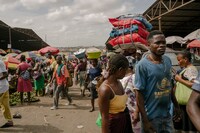
In the bustling Catinton Market of Luanda, Angola, vendors sell fruits and vegetables under umbrellas offering minimal shade in the scorching heat. Despite the market’s lively atmosphere, the impact of the U.S.-Israeli conflict with Iran can be felt strongly among the people.
Angola, a nation with 40 million residents, is one of the world’s most unequal societies. About half of its population survives on less than $3.65 a day, while oil revenues enrich a small elite. The conflict has exacerbated this divide.
Angola is unique among oil producers because it does not rely on the Strait of Hormuz for oil transport. The situation has resulted in rising food, fuel, and fertilizer prices negatively affecting the poor, while reliance on Angolan oil benefits the wealthy and well-connected.
Market Struggles
Veronica Simon and Isabelle Ferreira, vendors in Catinton Market, face challenges with increasing costs. The wholesale price of a box of red peppers has quadrupled since February. Despite their struggles, they remain unaware of the Iranian conflict’s influence.
Simon expressed concerns about their daily earnings. Making more than $2.50 in a day has become rare, insufficient to meet their needs. Both women share worries over their ability to pay for their children’s school fees, leaving them with limited options.
Wider Economic Impacts
The Angolan government benefits from oil price increases, resulting in an influx of revenue. Oil constitutes about 30% of the nation’s GDP, 65% of government revenue, and over 95% of exports. Economic uncertainty from the conflict has increased import costs globally, hitting the poorest households hardest.
Jucy Manuel, another market vendor, shared her predicament of increased prices in cooking essentials like oil, sugar, rice, and butter. Feeding her three children has become significantly more challenging.
Despite a budget anticipating oil prices at $61 a barrel, the current Brent crude price is around $87. The government has taken the opportunity to pay down debt and create reserves of food and medicine to mitigate future supply disruptions.
Local Dissatisfaction
Angolans living near trash-filled waterways express their frustration with political corruption. The People’s Movement for the Liberation of Angola has ruled since independence, but dissatisfaction remains high as elections approach.
An elderly resident, Eva Damiao, lives in impoverished conditions. She relies on her grandchildren for support, marking the struggle of those in informal settlements with unreliable utilities.
Joveth Hebo, who dreams of finishing his law degree, articulates his frustration about rising costs and the elites’ hold over additional revenue. He experiences the daily hardships of searching through landfills for sellable materials, with no signs of relief from government profits.
Hebo remarks on the communal suffering, noting that developments around them displace families. The majority, he believes, will see no benefit from the economic growth surrounding the conflict.