Ebola Outbreak Declared in Congo and Uganda
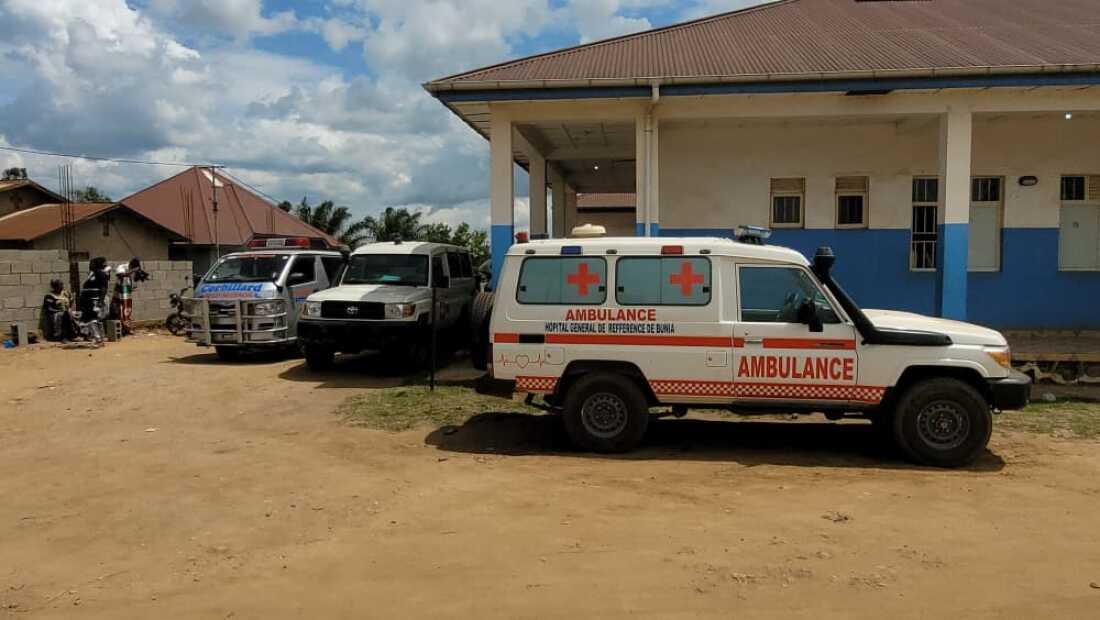
Ambulances lined up outside a hospital in Bunia, Congo, highlight the urgency of a new Ebola outbreak declared by the World Health Organization (WHO). The outbreak, affecting both the Democratic Republic of Congo (DRC) and Uganda, is termed a ‘public health emergency of international concern’. However, the WHO Director-General, Tedros Adhanom Ghebreyesus, clarified that it doesn’t reach the level of a pandemic emergency. Countries are advised to keep their borders open.
The outbreak was first detected in the DRC’s eastern Ituri province, with hundreds of suspected cases already reported. One case has been confirmed to have crossed into Uganda. The Africa Centres for Disease Control and Prevention (Africa CDC) announced that this strain of the virus currently lacks a vaccine.
Ebola spreads through blood, bodily fluids, and contaminated surfaces. Symptoms include fever, body pain, weakness, vomiting, and sometimes bleeding. The outbreak is believed to have started in late April in Mongbwalu and Rwampara, two mining towns in the DRC. These areas see a high flow of people due to work-related activities.
As of now, 10 cases are confirmed, with 336 suspected cases and 88 deaths in the DRC. Uganda has reported two confirmed cases with one resulting in death. The U.S. Centers for Disease Control and Prevention (CDC) supports local efforts and states that the threat to the U.S. is low. Dr. Satish K. Pillai, the CDC’s Ebola response manager, confirmed the deployment of additional CDC personnel to the region.
Efforts are underway to coordinate the safe return of Americans affected by this outbreak. The Africa CDC leads regional efforts to curb the spread of the disease. Dr. Jean Kaseya, director general of Africa CDC, discussed a 59-year-old Congolese man’s death in Kampala, emphasizing the importance of protective equipment for healthcare workers.
A man traveled from the DRC to Uganda, became ill, and interacted with many people, spreading potential infection risks.
The man’s body was later returned to the DRC for burial. Protective gear remains crucial for those in contact with Ebola patients, including head coverings, goggles, masks, gloves, and gowns.
The current strain, known as Bundibugyo, is less understood and not easily detected by standard tests. Dr. Boghuma Titanji of Emory University noted that the virus had potentially been spreading unnoticed for weeks. There are no approved vaccines or treatments for this strain, yet an experimental vaccine shows promise in preliminary studies.
Efforts to bolster surveillance and response continue, involving partnerships with various health organizations and pharmaceutical companies. This outbreak’s recognition comes after it had already spread significantly, making containment challenging. Historical data from a previous outbreak between 2014 and 2016 in West Africa show the grave impact, infecting 28,600 and resulting in 11,325 deaths.