The Future of Navigation and Security Challenges
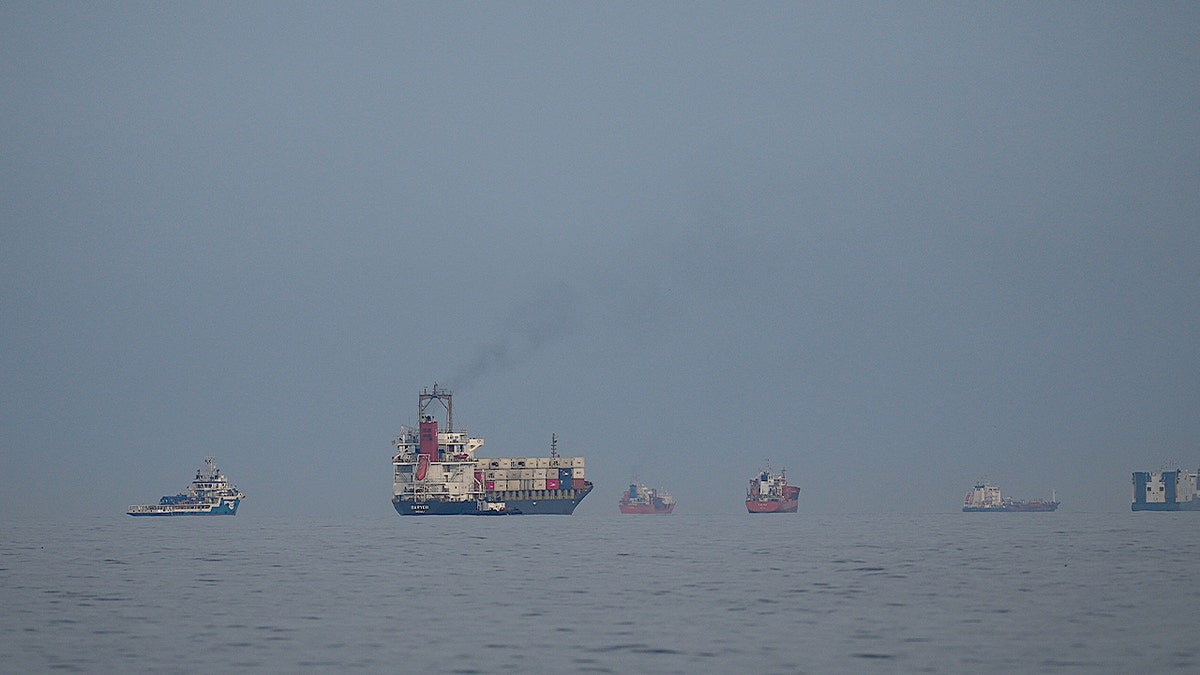
In July, Iran attempted to close the Strait of Hormuz, but it had already lost reliability as commercial infrastructure. Over 1,100 vessels experienced GPS and AIS interference in one day, appearing misplaced on tracking systems, and crews relied on radar alone due to unreliable satellite navigation. This demonstrated the threat a determined adversary poses to satellite infrastructure, which the modern world relies on extensively.
The U.S. depends heavily on the Global Positioning System (GPS), which timestamps credit card transactions, synchronizes power grids, cellular networks, and guides various operations, from agriculture to military movements. Created in the 1970s, GPS now supports the global economy and military operations. However, the world has changed, and adversaries have adapted. In 2024, global aviation reported around 430,000 jamming and spoofing incidents, marking a 62% rise from the previous year. Jammers are easily built from common parts, challenging GPS’s reliability.
General Jack Keane emphasized the importance of reliable navigation in military operations. GPS played a crucial role without being noticed, aiding in team location and fire synchronization. Today, service members face difficulty with a vulnerable, outdated system. Oil tankers navigate the Strait of Hormuz, highlighting the challenge of maintaining effective navigation.
Incremental upgrades won’t solve GPS’s fundamental issues. Its challenge lies in physics, with satellites broadcasting faint signals from medium Earth orbit. Jammers nearby can overpower these signals. While the military’s M-Code offers slight improvements, it cannot address the core mathematical limitations.
China has advanced its navigation capabilities. The Chinese Communist Party expands its satellite infrastructure, including low Earth orbit (LEO) constellations broadcasting stronger signals designed for electronic warfare. Beijing aims to control the navigation layer of the global economy. Congress has recognized this shift, noting that the U.S. is trailing behind China in satellite navigation.
American commercial industry offers an emerging solution. U.S. companies have launched navigation satellites independently, operating in LEO, delivering signals up to 100 times stronger than GPS. These systems resist spoofing and give centimeter-level accuracy, compatible with current GPS receivers in millions of devices. Often, a simple software update is sufficient for transition to resilient navigation.
The Space Force has acknowledged the potential of commercial providers, canceling a government-owned “Resilient GPS (R-GPS)” project in favor of leveraging commercial services. The fiscal year 2027 defense bill proposes the Air Force demonstrate capabilities with commercial LEO providers, like maintaining operations without GPS and resisting jamming.
“Three steps will transform congressional direction into active capabilities,” says Will Thibeau, Director of the American Military Project.
First, Congress should fund what they have directed. The 2027 defense appropriations bill needs to establish a dedicated budget for commercial LEO demonstration. This investment costs much less than a single GPS III satellite.
Second, the Department of Defense should secure operational services from commercial providers, similar to contracting launch services. Payment should be based on proven in-orbit performance.
Third, resilience standards for vital infrastructure must be set. Merchant crews in the Strait of Hormuz used outdated 15-year-old receivers, posing risks similar to those faced by farmers, utility operators, and airline pilots. Federal regulators should define resilience standards that legacy GPS cannot fulfill.
In 1973, the U.S. forged a plan with navigation satellites, transforming warfare and economies. The plan succeeded beyond expectations but also exposed vulnerabilities. Iran disrupted a strait people thought would remain open, while other adversaries aim to disrupt a signal assumed to always be overhead.
The next phase of navigation belongs to those who prioritize resilient capabilities. American industry has already provided these options. The U.S. government’s pace will decide if it retains its 50-year advantage or cedes it to others.
Will Thibeau is Director of the American Military Project at The Claremont Institute, founder of Escoreal Solutions, and an Army veteran of the 75th Ranger Regiment.