Senator Warnock Advocates for Expanded Child Tax Credit Amid Rising School Supply Costs
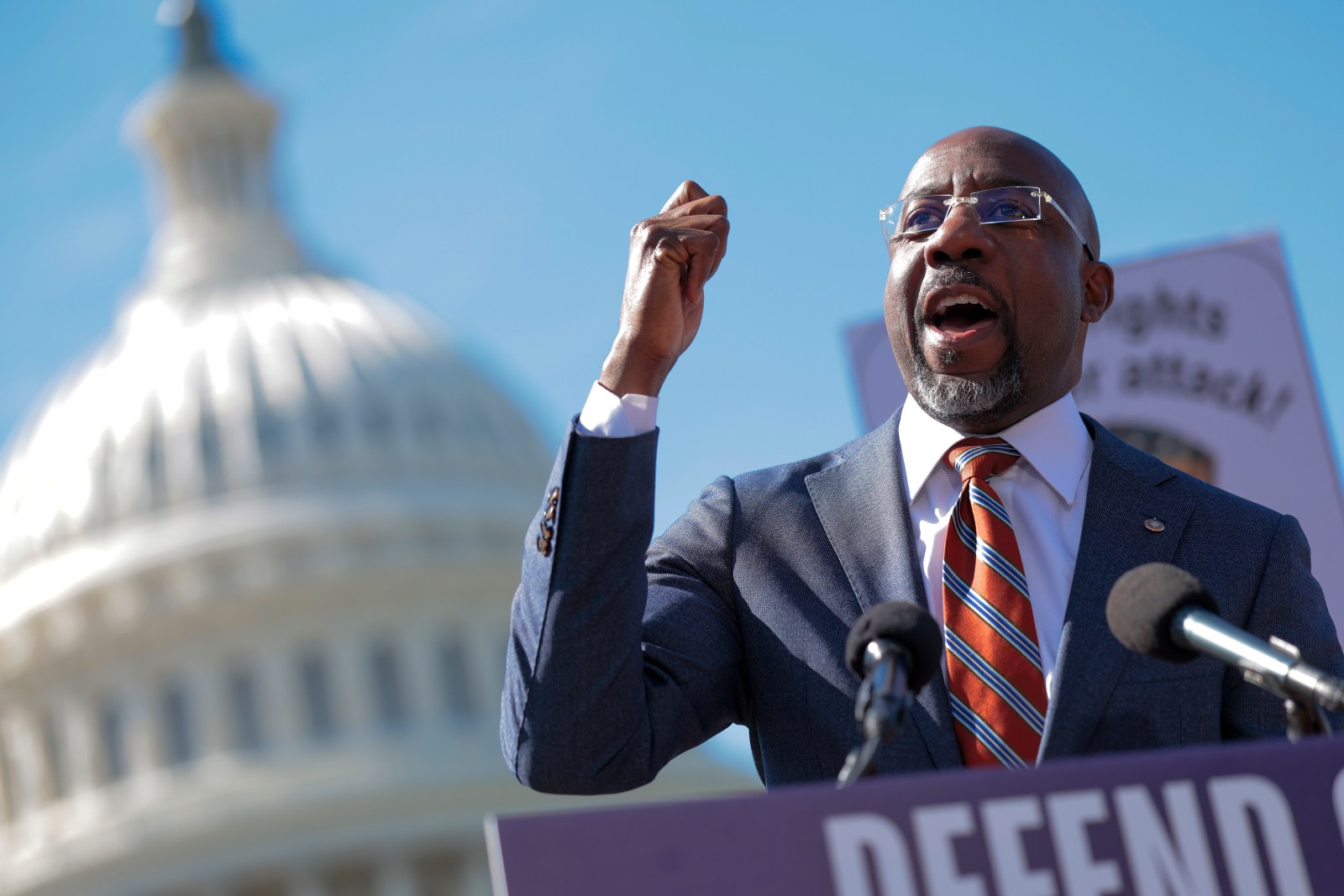
Democratic Senator Raphael Warnock is advocating for a significant expansion of the Child Tax Credit, arguing that former President Donald Trump’s tariffs contribute to the growing expense of preparing children for a new school year. A report from Warnock’s office revealed that the cost of acquiring supplies for a fourth-grade student at several elementary schools in Georgia ranged from $96 to $132. This data supports Warnock’s push for the American Family Act, which aims to enhance the credit, allow for monthly payments, and offer extra support for newborns.
Current Child Tax Credit
The current federal Child Tax Credit provides families with up to $2,200 per qualifying child under 17. Single filers earning up to $200,000 and married couples filing jointly earning up to $400,000 can receive the full credit, after which it phases out. Primarily, the credit reduces federal tax bills, though low-income families can receive up to $1,700 per child via the Additional Child Tax Credit. Families typically claim this benefit when filing their annual tax returns rather than receiving monthly.
Rising School Supply Costs
The office of Senator Warnock reviewed supply lists from five Georgia schools, both urban and rural. The expense for one child ranged from $96 to $132, indicating that households with multiple school-aged children are likely to spend significant sums. According to the Bureau of Labor Statistics, the consumer price index for educational books and supplies increased by 8.4% from May 2024 to May 2026. Research by the Century Foundation and the Groundwork Collaborative further estimated that a basket of school supplies saw a 7.7% increase, with lunchbox staples up by 10.9%.
The joint analysis highlighted sharper increases in specific items, like a 26.8% rise for lunch boxes, 23% for one-subject notebooks, and 22.2% for index cards. Warnock’s report also cited data showing that a 36-pack of Crayola colored pencils rose from $4.94 in July 2025 to $6.49 in July 2026, a 31.4% increase. The report attributes these hikes partly to tariffs, as several classroom essentials are sourced from countries experiencing higher U.S. duties.
Crayola’s colored pencils are manufactured in Brazil, where a 25% tariff was applied on most goods starting in July. China, noted as a leading exporter of writing tools, faces a statutory tariff rate averaging 26.9%. It remains uncertain precisely how these tariffs alone affect these price increases. The Trump administration defends tariffs for protecting American interests, encouraging domestic production, and strengthening local industries.
Proposed Changes in the American Family Act
The American Family Act, co-led by Warnock and Senator Michael Bennet of Colorado, proposes increasing the maximum credit to $4,320 annually for children under six and $3,600 for those six to 17. These amounts would translate to monthly payments of $360 and $300, respectively. It also seeks to introduce a one-time $2,400 credit for newborns and make these changes permanent. Lower-income families would receive the full credit, with the phase-out starting for married couples earning above $150,000.
Warnock’s findings show that almost a third of Georgia’s children miss out on the full credit due to their parents’ low income. It references research showing Georgia’s child poverty rate dropped by 42.7% when the credit temporarily expanded in the 2021 tax year under the American Rescue Plan Act.
Opposition to Expanding the Credit
The libertarian Cato Institute opposes further Child Tax Credit expansion, seeing its refundable aspect as government spending rather than a tax reduction. In a February 2025 analysis, Cato argued that refundable payments can benefit households without federal tax liability and estimated that 2024’s direct spending accounted for roughly 40% of the program’s fiscal cost. They further claimed the credit is poorly targeted to reduce poverty or lower family expenses and advocated for state-level innovations instead of federal ones.
Legislative Outlook
The proposal requires congressional approval. It is currently introduced in the Senate and has been referred to the Finance Committee for further deliberation.