Horror films often serve as reflections of broader societal issues. Movies like Get Out (2017) tackled racism, while Curry Barker’s Obsession (2025) confronted male entitlement. Yet, the final girl trope, representing the last woman standing against a killer, rarely receives her own redemption story. Jane Schoenbrun’s Teenage Sex and Death at Camp Miasma changes that.
According to Hannah Einbinder, the film’s unique blend of horror tropes and empowerment drew her to the project. “The genre ambiguity and its use of horror slasher elements to create something empowering is just cool. I hadn’t seen anything similar,” she explained to Newsweek.
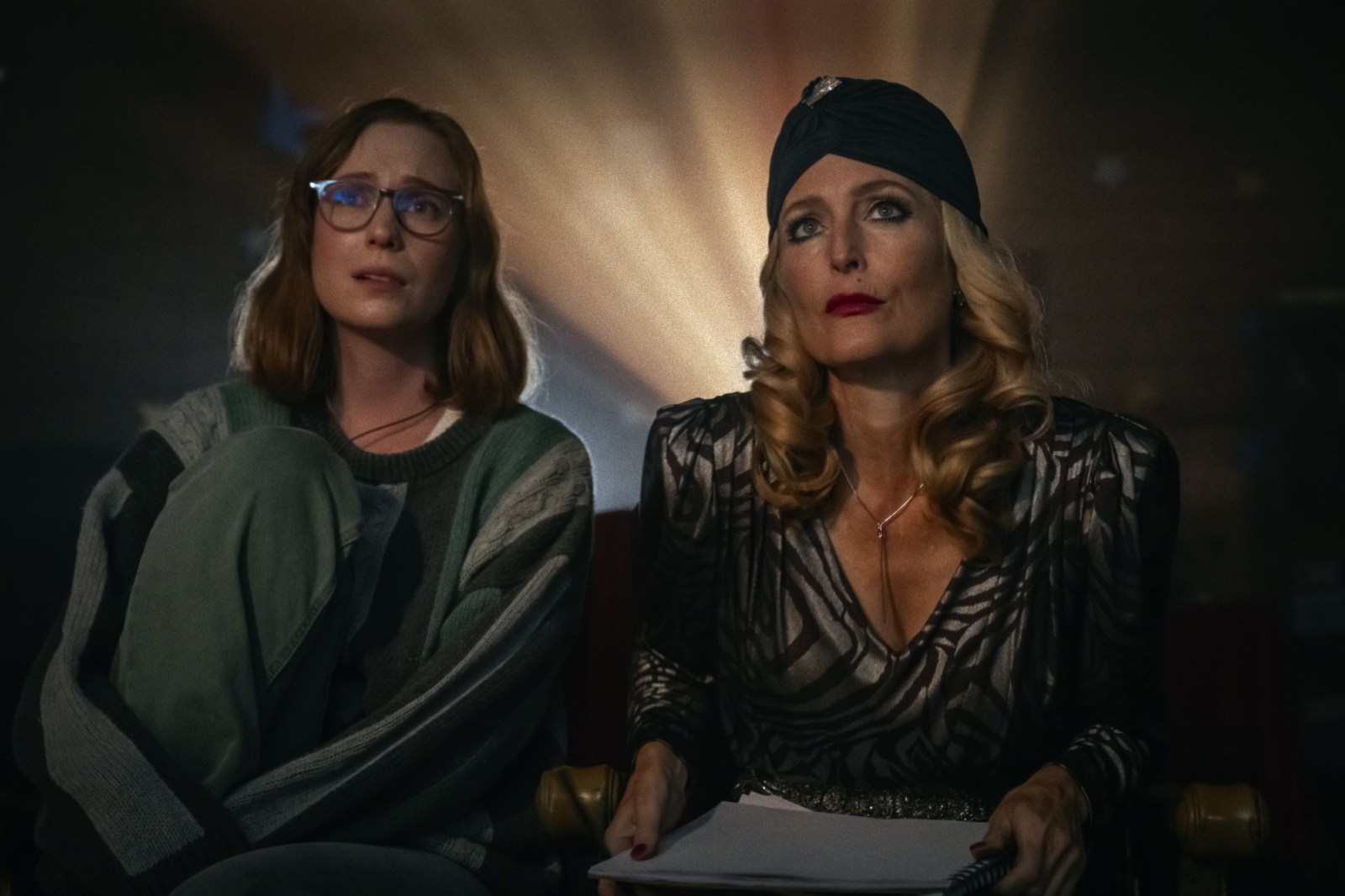
Einbinder plays Kris, a director aiming to revitalize a slasher franchise by casting the original final girl, Billy Wilder, portrayed by Gillian Anderson. Through Billy’s character, the film challenges a male-driven narrative. As Kris attempts to recruit Billy, a psychosexual exploration unfolds, promising an intriguing cinematic experience.
“It’s one thing to read a script and imagine the scenes,” Anderson shared. “But stepping onto a production-designed set is different. Every detail is crafted for an audience that will dissect each part. It adds a meta aspect I didn’t anticipate.”
For Anderson, the film’s inclusivity excites her. She believes its message can unify various human groups and foster global compassion. “If different subsections embrace the film, it might reduce judgment and hate,” she said. “I see it as potentially unifying.”
Historically, male filmmakers dominated horror. Recent films like A Girl Walks Home Alone at Night (2014), The Babadook (2014), and The Substance (2024) have opened doors to female perspectives. Camp Miasma is part of this shift, blending horror references with a female-led, queer story.
“Knowing Jane’s connection to the material was striking,” said Einbinder. “Their films are deeply personal.” Anderson’s character, Billy, draws parallels to Sunset Boulevard‘s Norma Desmond. Billy, like Desmond, becomes an industry outcast for aging. However, Camp Miasma sees potential in her, unlike Sunset Boulevard.
Einbinder highlights the film’s dialogue as more analytical compared to older films. “There’s psychoanalysis in their conversations. It offers a modern reflection,” she said.
Anderson possesses experience with roles defining a career. Her portrayal of Dana Scully in X-Files could have pigeonholed her, yet she’s explored diverse roles, such as in The Fall and The Crown. Her fans’ loyalty intrigues her. “Addressing fan devotion from an activist stance feels right,” she stated. “I can embrace and enjoy their support.”
Discussing their favorite final girl, Anderson deferred to Einbinder, who quickly named Carrie from Brian De Palma’s 1976 film as her choice. “Carrie was a final girl who took control,” Einbinder noted. The character, created by men, highlights the genre’s historical male perspective. Camp Miasma reclaims the final girl trope, allowing her narrative to be told by those who embody it.