Kevin Warsh Takes Helm at Federal Reserve, Faces Mixed Signals on Interest Rates
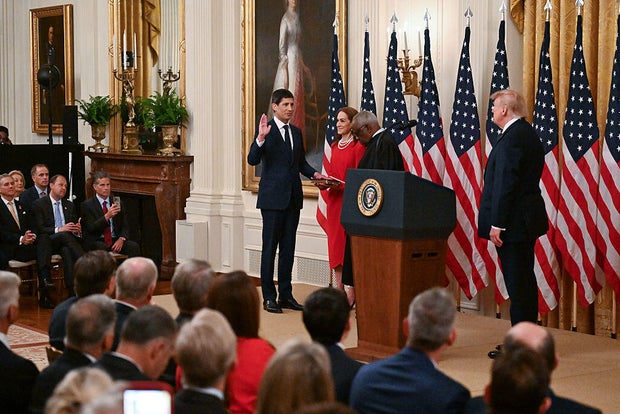
Kevin Warsh was sworn in as the new chairman of the Federal Reserve, succeeding Jerome Powell after a White House ceremony. Warsh emphasized the importance of promoting price stability and maximum employment, asserting these goals could result in lower inflation, stronger growth, and higher real take-home pay. His tenure intends to lead a reform-oriented Federal Reserve, focusing on learning from past successes and mistakes, while maintaining integrity and performance.
President Trump introduced Warsh at the event, highlighting his independence and urging him to perform his duties without undue influence. Trump indicated that Warsh’s abilities are highly respected, and expressed hope that Warsh will be one of the great Fed chairmen.
For months, Trump has pushed the Federal Reserve to lower interest rates to stimulate economic growth. He criticized Powell for cautious rate cuts, hoping Warsh would prioritize economic expansion. Trump balanced this by stating that while inflation is a concern, strong economic performance should not be hindered.
Warsh has pledged to uphold the Fed’s independence, particularly regarding interest rate decisions. He mentioned the potential for collaboration with the Trump administration in other areas, like the Fed’s balance sheet. Despite his willingness to engage, Warsh’s stance on rate cuts aligns with the Fed’s consensus-driven approach, requiring the persuasion of the rate-setting committee.
The committee, comprising 12 top Fed officials, faces a complex economic scenario. Inflation surpassed the Fed’s 2% target, influenced partly by international conflicts. Some committee members advocate rate cuts to address potential labor market weaknesses, despite recent strong employment data.
Recently released meeting minutes show divisions within the committee; a slight majority supports raising rates if inflation persists above target. Meanwhile, financial markets predict stable rates in the near term, with a 70% chance they will increase by year’s end, according to CME Group’s FedWatch tool.
Jerome Powell plans to remain on the Fed’s Board of Governors until a Justice Department probe concludes, allowing him to influence rate-setting decisions. Warsh’s past as a monetary policy hawk contrasts with his recent support for lower rates, believing innovations like artificial intelligence could reduce inflation and enhance productivity.
Warsh’s former colleague, Randall Kroszner, expressed confidence in Warsh’s strategic thinking and ability to build consensus. Kroszner emphasized that effective leadership requires collaboration rather than unilateral decisions.