Preparation for the 2026 Total Solar Eclipse
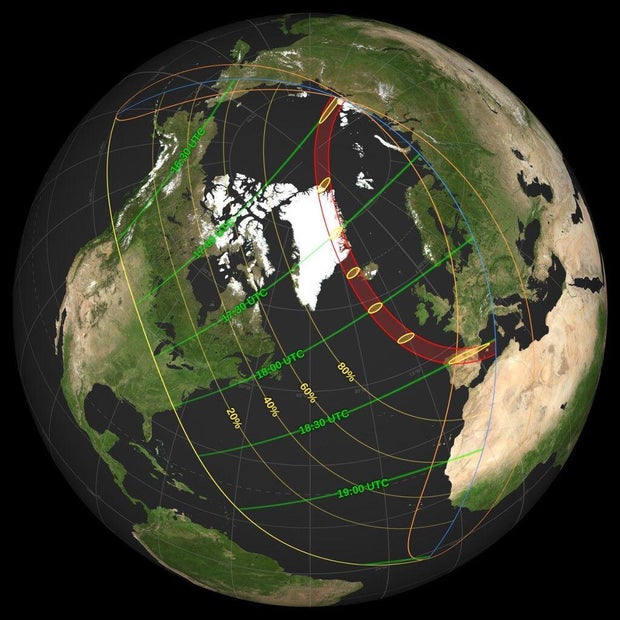
The only total solar eclipse of 2026 is set to capture attention across the Northern Hemisphere. On a Wednesday, darkness will briefly slide across select regions. For those unfamiliar, a solar eclipse happens when the moon covers the sun. These are rare events for specific locations, sometimes occurring centuries apart.
Where to Observe the Eclipse
The path of totality for this eclipse passes over some sparsely populated areas, including northern Greenland. However, western Iceland and northern Spain are key locations for optimal viewing. Spain hasn’t seen a total solar eclipse since 1905.
Animation from NASA illustrates the path of totality and specific timing for viewing regions. Although limited areas will experience full totality, a larger population will witness a partial eclipse. Approximately 230 million people will see up to 90% totality. Major European cities like Madrid, London, and Paris will experience significant obscuration.
In North America, a partial eclipse will be visible, though less striking than the 2024 total eclipse in the U.S. In Fairbanks, Alaska, the eclipse will reach 37% totality. Boston, New York City, Toronto, and Philadelphia will observe lower percentages.
Eclipse Timing
The eclipse path, constrained to the northern globe, will complete its passage in about one hour and 45 minutes. It will first become visible in extreme northern Russia at 17:00 UTC, corresponding to 1 p.m. Eastern time in the U.S.
Totality hits northeast Greenland by 1:30 p.m. ET and western Iceland by around 1:45 p.m. ET, precisely reaching 5:48 p.m. local time in Reykjavík. The eclipse then traverses the northern Atlantic, becoming prominent over the U.K. London reaches a peak of 91% totality at 2:13 p.m. ET. Totality concludes in northern Spain by approximately 2:30 p.m. ET.
In North America, Toronto will see its best view at 1:40 p.m. local time, with New York City following at 1:54 p.m. Fairbanks, Alaska, will feature its maximum view at 8:27 a.m. local time.
Safe Viewing Practices
Viewers within the path of totality will witness around two minutes of darkness. Proper eye protection with solar eclipse glasses is essential to prevent retinal damage during the eclipse. During totality, glasses may be removed briefly. Outside the path of totality, glasses should remain on throughout the viewing.
Future Solar Eclipses in the U.S.
The next opportunity for a total solar eclipse in the U.S. arrives in 2044, exclusive to Montana, North Dakota, and South Dakota. A broader path will occur the following year, starting in Northern California and stretching to Florida, reminiscent of the 2017 eclipse.
Another opportunity arises in 2052, focusing on the Southeast, including Florida, Georgia, and South Carolina. New York and the Northeast will wait until May 1, 2079, for their next total eclipse.
2026 Eclipse Live Coverage
What: Total solar eclipse over parts of the Northern Hemisphere
Date: August 12, 2026
Time: Live coverage begins at 2 p.m. ET
CBS News offers streaming coverage, featuring Rob Marciano reporting from Mallorca, Spain, as totality approaches at about 2:30 p.m. ET. The coverage is accessible online and on mobile devices.