The Impact of the Saharan Air Layer on Weather in the Southern U.S.
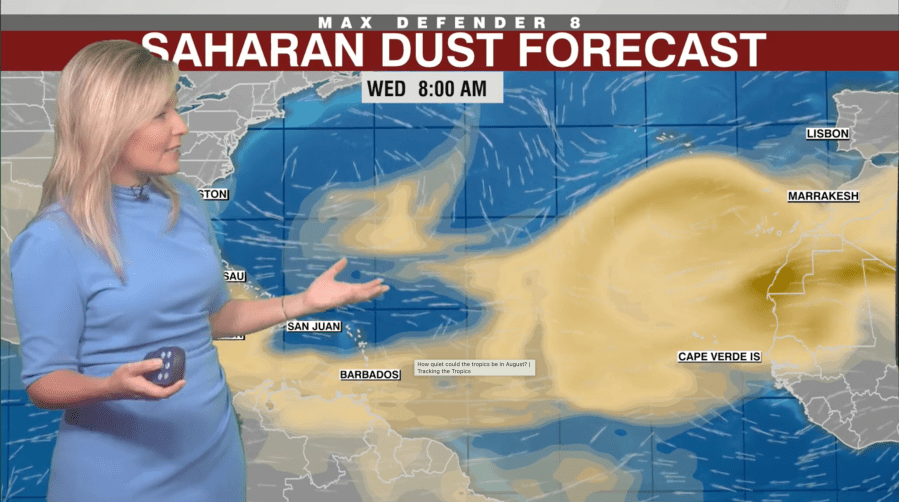
The Saharan Air Layer, also known as Saharan dust, is affecting weather patterns in the southern United States. This dust layer, originating from Africa, spans approximately 2.5 miles in thickness and begins about a mile above the Earth’s surface. According to Jason Dunion, a meteorologist from the University of Miami who collaborates with NOAA’s Hurricane Research Division, these dust clouds emerge from Africa every three to five days during summer, covering an area similar to the size of the contiguous United States as they journey across the Atlantic.
This phenomenon usually peaks between mid-June and mid-August. During this period, the warm, dry air of the Saharan dust acts as a barrier against the formation of thunderstorms and hurricanes. Dunion explains that the dust layer serves to stabilize the atmosphere, making it challenging for clouds and storms to penetrate its warmth. This stabilization could contribute to a quieter start to the Atlantic hurricane season.
Meteorologist Rebecca Barry from Nexstar’s WFLA highlights a notable late-season plume of Saharan dust, remarkable for its size and presence at this time of year. Usually observed from May to June, the occurrence of such a robust plume in August is uncommon. The presence of this dust inhibits the formation of tropical storms and hurricanes, which naturally cool the region with their associated precipitation.
Without these common summer storms, regions in the southern U.S. have experienced increased temperatures. Dunion notes the absence of typical afternoon thunderstorms results in hotter days, reaching heat indexes up to 110 degrees Fahrenheit.
The effects of the Saharan Air Layer extend beyond the southern states. Freddy Vela, a meteorologist with KXAN, reported waves of Saharan dust traveling as far west as Arizona. Beyond weather impacts, the dust produces striking sunrises and sunsets, especially in Florida, where light scattering creates vivid orange hues at dawn and dusk. Dunion marvels at the journey of the dust, which travels thousands of miles across the Atlantic yet remains visible and impactful.