Trump’s Legal Battle Over White House Ballroom May Head to Supreme Court
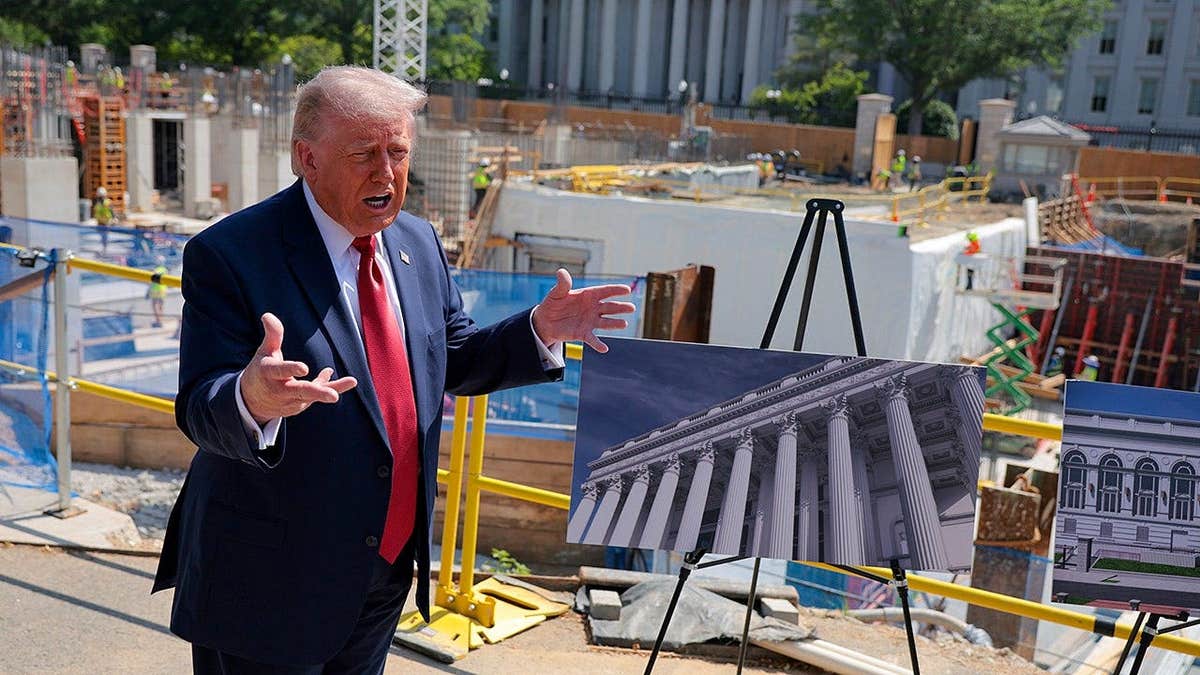
President Donald Trump is pursuing a legal battle over his plan to construct a White House ballroom. Two legal experts believe the U.S. Supreme Court might settle the case without addressing the primary constitutional question. Trump announced his intent to escalate the case to the Supreme Court following a D.C. Circuit ruling that upheld a decision blocking the construction above ground, on the basis that Congressional approval is needed.
The D.C. Circuit Court, in a 2-1 judgment, ruled in favor of blocking the construction of the ballroom unless Congress gives its approval. Judge Neomi Rao, appointed during Trump’s first term, dissented. She argued that the plaintiffs, the National Trust for Historic Preservation, lack the necessary legal standing.
Controversy Over Legal Standing
The National Trust’s argument centers around Alison Hoagland, who lives nearby and frequently visits President’s Park. She contends that the ballroom’s size and design would detract from her enjoyment of the area due to its impact on the White House’s aesthetic appeal.
Rao criticized the decision, emphasizing that personal aesthetic grievances should not outweigh government security interests. Former Justice Department attorney Abhishek Kambli noted that the Supreme Court might agree, given its typical strictness on standing requirements.
Debate Over Authority and Security Concerns
Trump oversees an underground military fortress under the proposed East Wing ballroom. He argues that leaving an open construction site poses security risks. Kambli suggests the National Trust’s difficulty lies in proving any direct use of the space where the ballroom is planned.
Hans von Spakovsky, a senior legal fellow, expects Trump to succeed on appeal. According to him, Supreme Court precedent demands a demonstrable, concrete injury for a lawsuit to proceed, which is difficult to claim based solely on the passerby’s aesthetic concerns.
Potential Outcomes and Implications
If the Supreme Court reviews the case, it may focus on standing grounds without addressing the administration’s legal authority to build. Von Spakovsky sees minimal likelihood of another party, like Congress, establishing standing due to partisan divides.
The administration argues existing laws authorize the president to modify federal property, including the White House, while the National Trust insists Congressional approval is mandatory. Kambli backs Rao’s interpretation that terms like “alteration” and “improvement” in real-property law pertain to this context.