The Ongoing Struggle in Gaza Near the Advancing ‘Yellow Line’
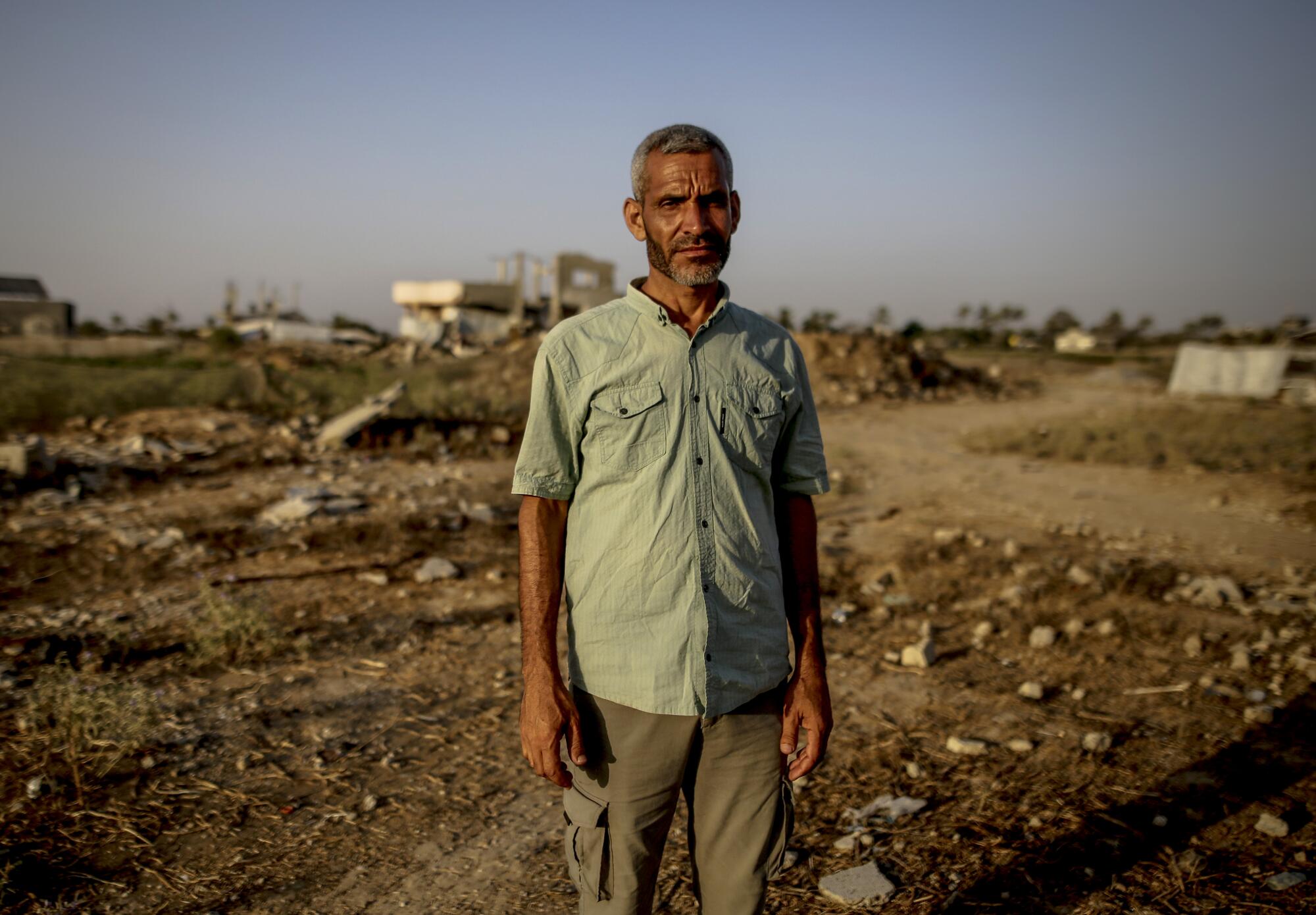
In the city of Deir al Balah, Gaza Strip, the advancing Yellow Line signifies the limit of Israel’s military zone. Each day it moves closer to Ashraf Al-Louh’s temporary shelter, compelling many, including Al-Louh’s neighbors, to leave the area.
Yellow-painted concrete blocks mark this line, progressively displacing inhabitants as the Israeli military occupies more land. Witnessing a donkey cart carrying elderly passengers past collapsed buildings and damaged orchards highlights the neighborhood’s despair, with belongings wrapped in a mattress cover and scant food supplies stacked between them.
Al-Louh, 45, shares his exhaustion after enduring displacement seven times. The current location, close to his farm, risks being lost as the Yellow Line encroaches. Created in October 2025, this line emerged after a truce between Israel and Hamas. Despite not being recognized by the United Nations as a legal border, it splits Gaza into an Israeli military-controlled east and a Palestinian-controlled west, where most of the population resides despite daily attacks.
The Yellow Line is a quiet thief. It stole my land, my work and everything I spent my life building.
Israeli advancements have extended control over Gaza to 64%, excluding the Orange Zone where aid delivery must be coordinated. Families like the Al-Louhs live under precarious conditions, witnessing the line’s steady approach. Moving closer weekly, it leaves fewer safe spaces for Gazans already struggling with overcrowding.
Approaching the Yellow Line poses significant danger. The U.N. reports 196 Palestinian casualties since the October ceasefire, including women and children, due to Israeli attacks. Israel defends such actions as necessary for self-defense when threats are perceived.
Nearby, farmers like Ahmed Al-Louh hastily harvest crops in anticipation of losing access, working through fears as burst gunfire and drones hover overhead. Ahmed resettled essentials farther west, waiting anxiously for the moment to flee.
Hamas has expressed willingness to disarm under conditions of Israeli withdrawal and cessation of attacks, a proposal currently rejected by Israeli leadership. Israeli Prime Minister Netanyahu has publicly articulated plans to incrementally occupy more of Gaza’s territory, aiming for long-term military presence rather than transitioning control.
The Yellow Line’s gradual movement is accompanied by militarized warnings encouraging evacuation. Families helplessly witness the approach, aware that each warning fire is potentially lethal.
Jamal Abu Miri, a former land surveyor, lost his investment in the land. Over time, bulldozers dismantled his property, destroying greenhouses, olive groves, and parts of his home. Forced into displacement, he laments the erasure of decades of labor.
Al-Louh has little left to lose as the family prepares for imminent displacement. His scant belongings are ready for the next uncertain move, eyes fixed on the encroaching line.
The Yellow Line continues its stealthy advance, reshaping lives and robbing residents of their safety and dreams. Gazans wait in a state of uncertainty, their world defined by this boundary.