Congress Struggles with Budget Talks Amid Upcoming Recess
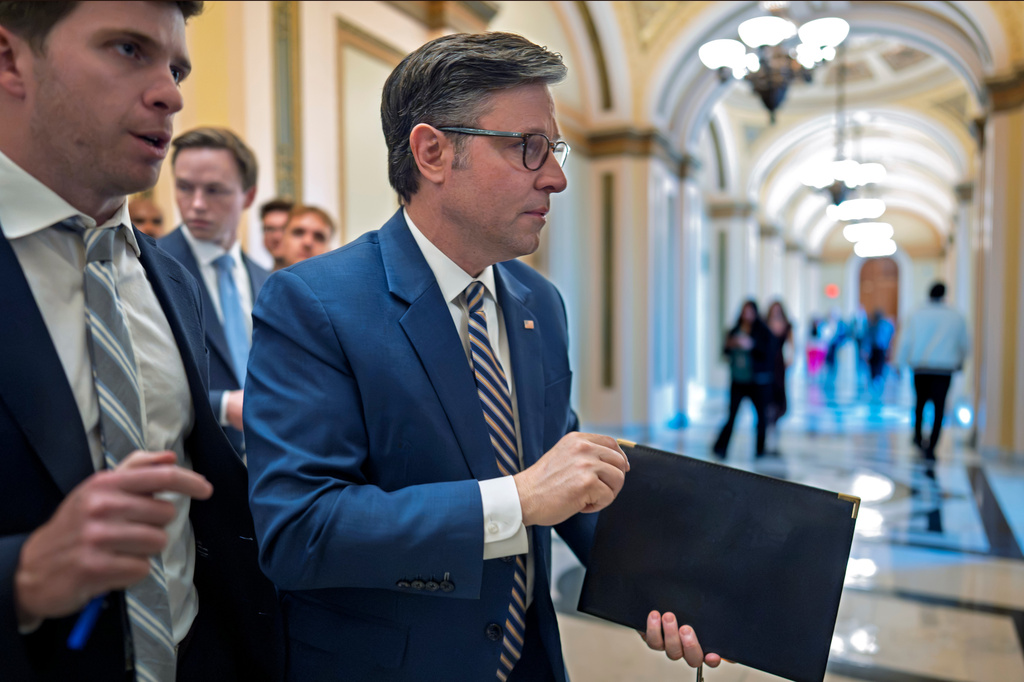
On Tuesday, July 21, 2026, Speaker of the House Mike Johnson, R-La., left the chamber after members debated a series of measures at the Capitol in Washington. These measures included a continuing resolution to fund the government and a spending package concerning the Iran war. As Congress heads into its month-long summer recess, it seems more engaged in debate than action.
Members of Congress have spent time addressing issues, from the Iran war and border enforcement to election law changes and natural disasters. Yet, these recurring topics leave Americans feeling stuck in a cycle as if watching reruns. This perception overlooks an essential fact: Congress’ legislative process deliberately revisits issues multiple times through the authorization and appropriations cycles.
This apparent legislative turmoil becomes most pronounced when the fiscal year’s end approaches, compounded by upcoming elections. Every House member and a third of the Senate are up for election, making budget controversies critical. The budget sets policy priorities and directs the funds. Typically, a budget resolution allocates spending for the 12 necessary appropriations bills, expected by Oct. 1.
The House Appropriations Committee has reported all 12 bills, with three passing in the House. Meanwhile, the Senate has not passed any. Consequently, Congress must pass continuing resolutions (CRs) to prevent a government shutdown, an outcome deeply remembered from the longest shutdown recorded the year before.
The House and Senate passed CRs on July 21 and Aug. 8, maintaining current spending with increased funds for disaster relief, hunger assistance, and veterans’ programs. The House CR extends to Dec. 4, and the Senate’s to Dec. 11. House Speaker Mike Johnson stated this approach avoids a pre-election shutdown, keeping Republicans from appearing culpable.
The CRs require reconciliation of differences during Congress’ return in September, ahead of the new fiscal year starting Oct. 1. Another budgetary tool is reconciliation, intended to align budget targets with fiscal reality. Although two resolutions have passed, a third with $95 billion for the Pentagon, agricultural aid, and voting restriction grants cleared the House on July 23.
Senate Majority Leader John Thune, R-S.D., indicated the reconciliation process would wait until the CR work is settled. Once Congress resumes, it faces a tight four-week window before Oct. 1. There’s limited time for significant legislative achievements before October, when campaigns dominate as control of Congress is at stake.
Conventionally, off-year elections allow the party out of the White House to gain congressional seats. However, this is uncertain as both parties lack clear messaging or a defined path to a majority. Remarks by President Trump about GOP voter frustration with congressional Republicans do not help. Conversely, Democrats face challenges by promoting candidates endorsed by the “Democratic Socialists of America,” which does not resonate widely.
As former New York Yankees catcher Yogi Berra once said, “It ain’t over till it’s over.”
Don Wolfensberger, a congressional staff veteran for 28 years, served as chief of staff for the House Rules Committee in 1995. He authored “Congress and the People: Deliberative Democracy on Trial” (2000) and “Changing Cultures in Congress: From Fair Play to Power Plays” (2018).
© 2026 Nexstar Media Inc. All rights reserved. This material cannot be published, broadcast, rewritten, or redistributed.