Call for Missile Launch Notifications as China Tests Nuclear Capabilities
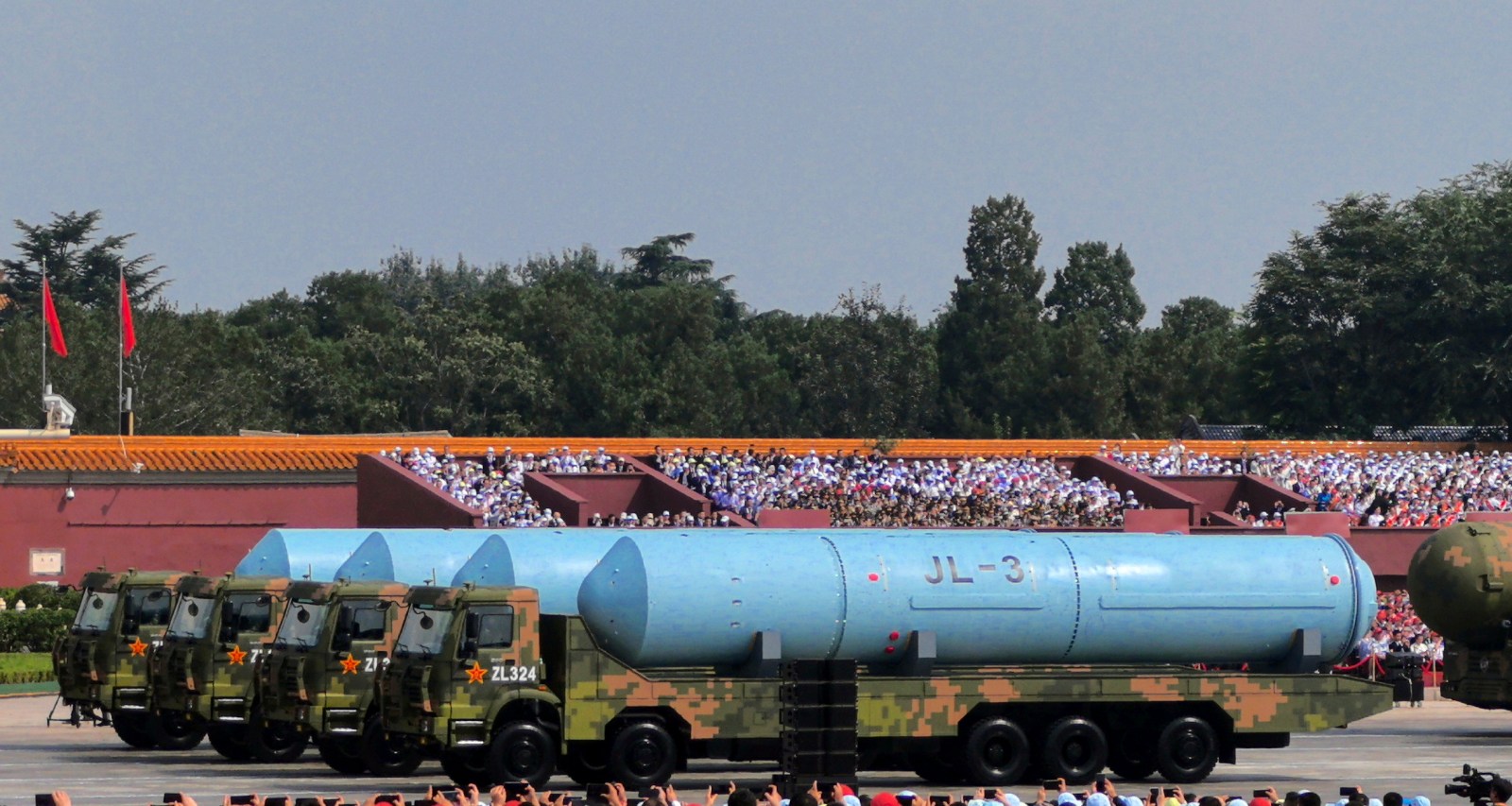
The United States, along with 40 other nations, released a statement urging countries to provide advance notice of missile launches. This move follows China’s recent test-firing of a nuclear-capable missile.
The missile, launched from a submarine, is believed to be either a Julang-2 or -3 intercontinental ballistic missile (ICBM). It carried a dummy warhead and traveled approximately 4,500 miles over the Pacific Ocean, sparking concerns among regional countries.
Countries like Japan and Australia, both U.S. treaty allies, condemned the test as destabilizing. They criticized China for providing only two hours’ notice before the launch. Two Pacific nations, the Marshall Islands and Palau, also joined in the protests against the test.
Recent missile testing activity in the Pacific area did not follow the standard practices adopted by most states to notify and deconflict ICBMs, submarine-launched ballistic missiles, and space launch vehicles,said the joint statement, refraining from naming China specifically.
The statement emphasized that surprise tests involving nuclear-capable missiles pose a serious threat and increase the likelihood of accidental conflicts. It called for all nations, especially those with nuclear weapons, to provide at least 24 hours of prior notice.
Beijing Responds to U.S. Criticism
In response, China rebuked the U.S. during a United Nations-linked disarmament conference in Geneva. Chinese Ambassador for Disarmament Affairs, Li Chijiang, asserted that China conducts its ICBM tests safely and responsibly, as reported by state media.
Li accused the U.S. of using the conference for political manipulation and applying double standards. He highlighted that China has conducted only three ICBM test launches, whereas the U.S. has performed over 300.
What qualifications do you have to criticize China?Li questioned, challenging the U.S.’s stance.
Experts pointed out that the recent test by China differs significantly from U.S. ICBM tests. Robert Underwood, a former congressman and director of the Pacific Center for Island Security, noted that U.S. tests do not travel over island states in the Pacific, unlike the Chinese test route.
China’s test demonstrates its nuclear triad’s viability and exhibits a strategic counter-strike capability, according to Underwood.
Concerns Over China’s Nuclear Arsenal
U.S. officials have expressed apprehension about China’s growing nuclear arsenal. The Stockholm International Peace Research Institute estimates that China’s warheads have increased to at least 600 in early 2025 from 350 in 2020.
Despite calls from the U.S. to engage in nuclear arms-limitation talks, Beijing has declined, arguing that its stockpile is at a defense minimum and significantly less than those of the U.S. and Russia.
Newsweek reached out to the Pentagon and Chinese Foreign Ministry for comments regarding this issue.