Challenges and Opportunities for Undocumented Students in California
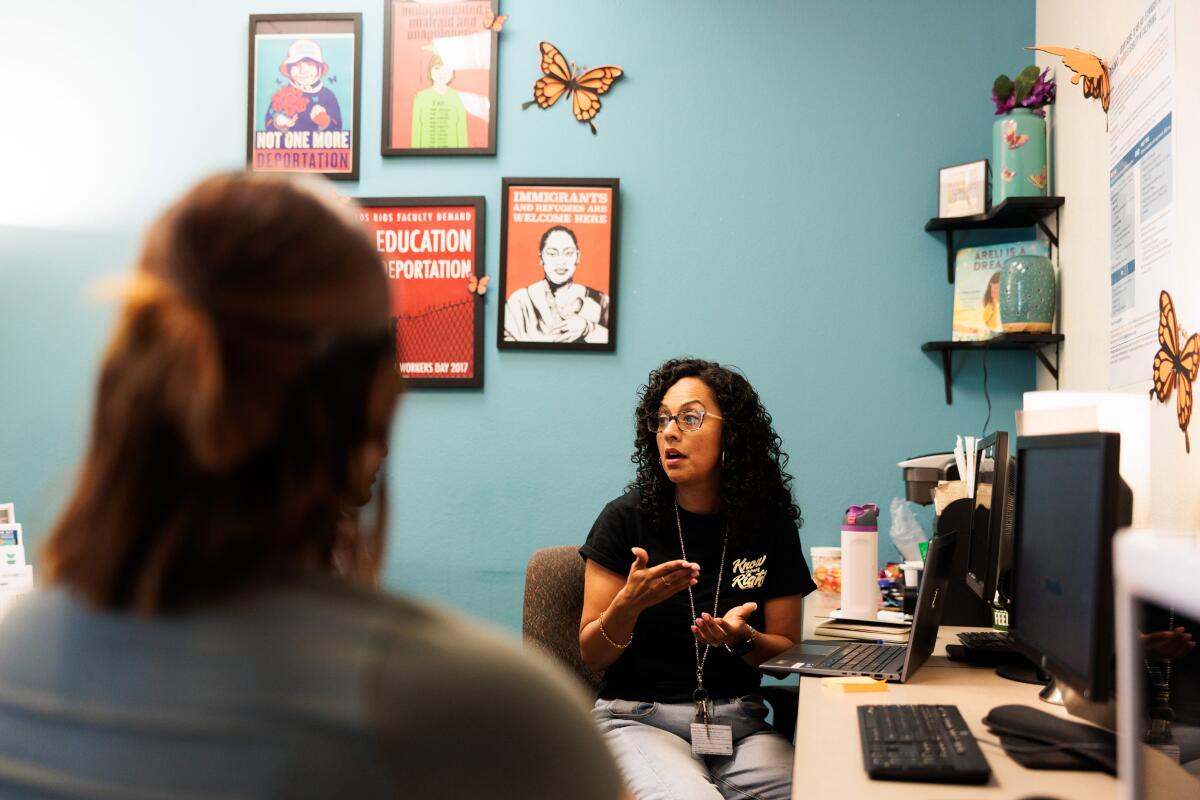
At Folsom Lake College, a flier reminds students living in the U.S. without legal status that they can still pursue higher education in California, urging them to “Keep going.” This message speaks directly to the students supported by Alicia Alejo at the community college’s Undocu-Falcons Center. Her office provides vital services, including legal consultations, mental health support, access to food pantries, and financial aid. However, during the Trump administration’s stricter immigration policies, these students became less visible, often opting for online classes and avoiding active campus participation.
California offers unique opportunities for undocumented college students compared to other states. It allows access to in-state tuition and state-based financial aid through the California Dream Act. This includes covering community college enrollment fees and mandating that schools employ specialized staff to assist undocumented students. Despite these benefits, applications for state financial aid from undocumented students decreased during Trump’s presidency. While there were 35,949 applications in the last academic year, this number has dropped from almost 50,000 five years earlier.
Research also shows a decrease in low-income undocumented students attending the University of California and California State University systems, falling by half between 2016 and 2022. Experts link these declines to the pandemic and Trump’s immigration policies, as well as the unavailability of DACA for new applicants, which has limited employment prospects post-graduation. The Department of Justice’s lawsuit against California and 16 other states over tuition support is also affecting students’ aspirations.
One student’s journey illustrates the challenges and support available. Christian Espinoza came from Mexico at nine and excelled academically, eventually transferring to UCLA with the help of financial aid. There, resources catered specifically to undocumented students, such as designated housing and the UndocuBruins Fellowship, provided a sense of belonging. Espinoza earned degrees in sociology and computer science before continuing his education.
In 2024, Espinoza faced a setback when detained by Immigration and Customs Enforcement. After his release and subsequent asylum application, he eventually left the U.S. amidst legal proceedings during Trump’s presidency. He completed his doctorate virtually from Mexico, but now finds integrating into Mexico’s job market challenging.
The lack of work permits has been a significant obstacle for undocumented students seeking internships and jobs. Consequently, California universities and state lawmakers have developed professional opportunities that do not require federal employment authorization. Programs like Dream Summer, managed by the UCLA Labor Center, have awarded over $6 million in fellowships to students working with social justice organizations.
The University of California (UC) system does not currently employ undocumented students. A state appeals court called UC’s policy discriminatory, yet UC has not revised its stance. Some advocates push for statewide legislation to allow campus employment for undocumented students, arguing that it could enhance college attendance and increase access to state jobs post-graduation.
California educators are also fostering entrepreneurial skills since many undocumented individuals can legally open businesses in the U.S. In 2020, the state approved a grant program to support those facing significant barriers to conventional employment, including starting their own businesses.
Experts remain hopeful these initiatives will encourage undocumented students to pursue higher education, emphasizing the potential loss of valuable contributions if they do not. Parshan Khosravi, of uAspire, underscores the importance of nurturing these students’ talents, indicating they could become future leaders and innovators.