Iran Vows Retaliation Against Expanded U.S. Sanctions
Iran’s Reaction to U.S. Sanctions
In response to the latest U.S. sanctions, Iran has declared its intention to retaliate, warning of potential attacks. Speaking on state media, Iran’s Economy Minister Ali Madanizadeh condemned the measures, labeling them an ‘economic terrorist attack.’ Since 1979, the U.S. has sanctioned Iran following the seizure of its Tehran embassy by Iranian students.
Madanizadeh noted that China and Russia have so far resisted falling in line with U.S. sanctions. At a press briefing, Chinese Foreign Ministry Spokesperson Lin Jian voiced strong opposition to ‘illegal unilateral sanctions.’
Details of the U.S. Sanctions Announcement
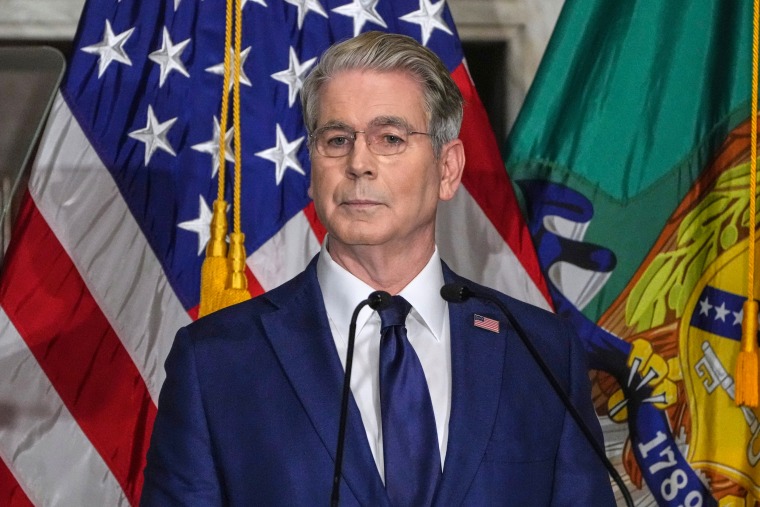
U.S. Treasury Secretary Scott Bessent recently unveiled new measures against Iran, likening them to an ‘economic D-Day.’ Bessent cautioned that nations financially linked to Tehran would face isolation. While penalties were not imposed, President Donald Trump has been contacting global leaders to halt interactions with Iran.
The Treasury Department announced the launch of ‘Operation Economic Outcast,’ expanding the future scope of Iran-related activities that could face secondary sanctions. It highlighted five key sectors: digital assets, technology, gold, aviation, and shipping.
In addition, the Office of Foreign Assets Control has sanctioned 60 entities and individuals across multiple regions, citing their support of the Iranian regime.
Impact and Responses
The United Arab Emirates, which has maintained significant economic ties with Iran, recently announced a cessation of all financial transactions with Tehran.
Within Iran, reactions to the U.S.’s announcement have been mixed. Farzin, a mechanic in Tehran, expressed indifference, noting that U.S. sanctions have not greatly impacted his business. He observed that car parts continue entering the country, either legally or through its borders.
Experts like Andreas Krieg from King’s College London noted Iran interprets these measures as ‘economic warfare,’ prompting defiance rather than compromise.
Consequences and Global Tensions
Tehran’s president, Masoud Pezeshkian, emphasized that the U.S. must reconsider its approach in dealing with Iran. Relying on coercion and intimidation, according to Pezeshkian, could exacerbate tensions.
Tehran is expected to apply pressure on the Strait of Hormuz, a vital trade route previously responsible for 20% of the world’s oil traffic. The blockade on this key waterway has already led to soaring energy prices.
Despite the sanctions, Krieg asserted that Tehran could impose costs on global trade, particularly through disruptions at the Strait of Hormuz.
Escalating Rhetoric
Iranian media have aired provocative content threatening President Trump’s son, raising concerns over the conflict’s rhetoric. The U.S. Secret Service has acknowledged these threats, but refrained from discussing protective measures.