Iran’s Power Dynamics Amid Leadership Changes
Six months ago, the U.S. launched Operation Epic Fury, marking a significant shift in Middle Eastern geopolitics. This operation killed Iran’s former supreme leader, Ali Khamenei, but left several critical developments in its wake.
Iran’s New Leadership
With the death of Ali Khamenei, the new Ayatollah, Mojtaba Khamenei, is conspicuously absent. Despite this, the U.S. President, Donald Trump, in a recent conversation with Blaze Media’s Glenn Beck, expressed doubts about Mojtaba’s death. Trump believes Mojtaba is severely injured and that reports of his death might be exaggerated.
Regardless of Mojtaba’s status, Iran operates under the notion that he remains influential, even if he is not physically present. His father, Ali Khamenei, was a seasoned revolutionary leader who built robust internal networks and security agencies during his tenure. Unlike his father, Mojtaba lacks both the experience and authority needed to influence Iran’s political elite, specifically the Islamic Revolutionary Guard Corps (IRGC).
The Real Power Players
In practice, leadership and decision-making in Iran appear to be driven by a select group of power brokers. They include parliamentary speaker Mohammad Bagher Ghalibaf, new Supreme National Security Council secretary Dr. Mohsen Rezaei, and IRGC commander-in-chief General Ahmad Vahidi. These figures have assumed crucial roles in diplomacy and strategy, overshadowing Mojtaba’s presence.
Mojtaba as a Symbol
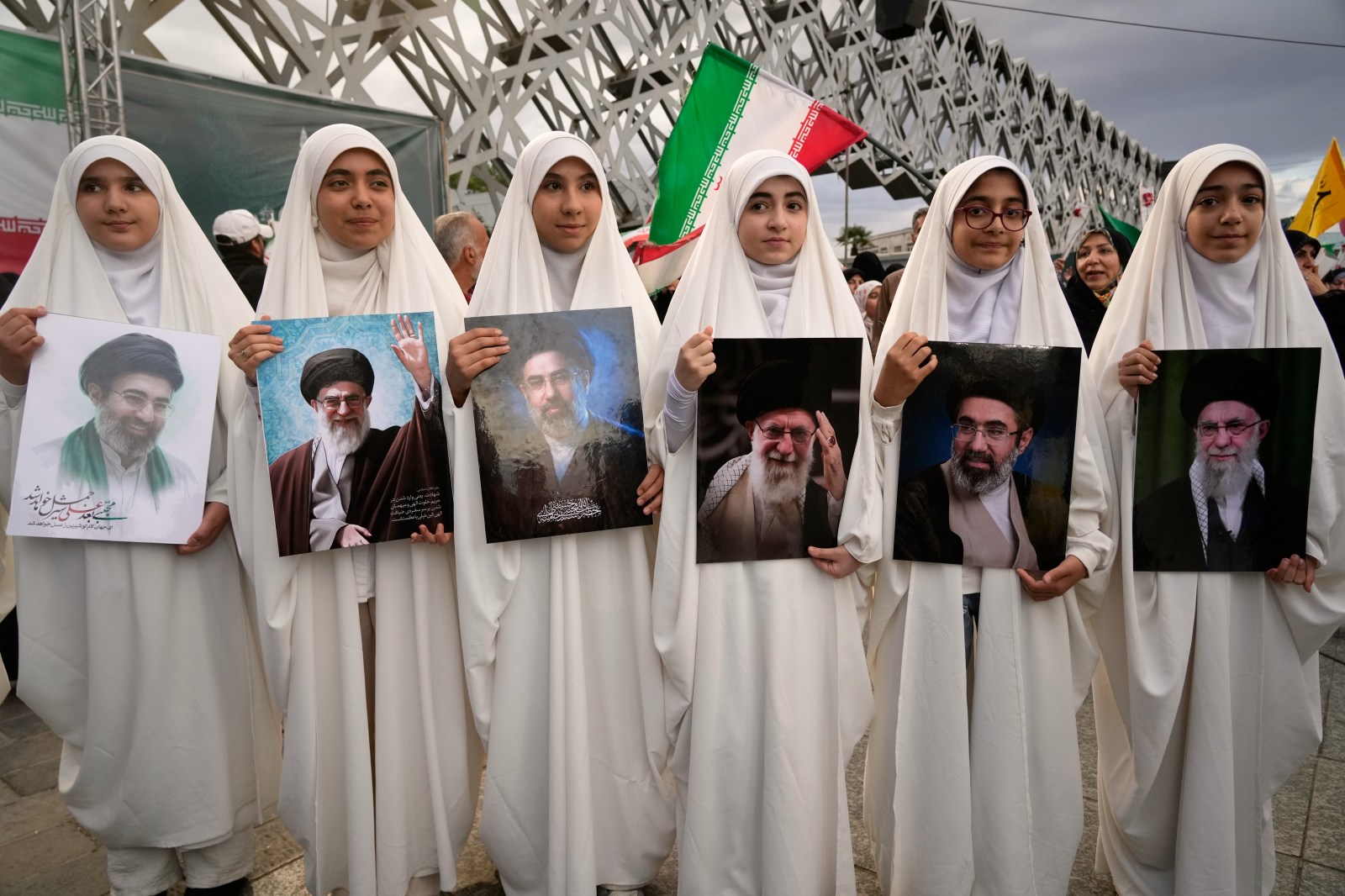
Mojtaba issues only minimal public statements, and since February, he has not been visible in the media or public events, including his father’s funeral. This lack of presence suits the current power structure in Tehran, enabling the IRGC and other authorities to leverage his image as a convenient figurehead.
According to Khosro Isfahani, from the National Union for Democracy in Iran, Mojtaba is ineffective in leadership. The regime utilizes his symbolic position to obtain public endorsement for its actions. Andreas Krieg, a Middle East analyst at King’s College London, notes a paradigm shift in Iran’s governance, with increased competition among the IRGC, presidency, parliament, and other entities. The IRGC emerges as a dominant force, wielding control over military, intelligence, and domestic affairs.
The Spiritual Leader
Although Mojtaba’s physical influence is limited, his symbolic role resonates with the Iranian public. Peiman Salehi, a Tehran-based political analyst, explains that Shia Islam encourages spiritual guidance from absent leaders, aligning with the notion of the Twelfth Imam’s presence. In this context, Mojtaba serves as a spiritual figure, allowing decision-makers to maintain public support while implementing policies amid economic challenges.
In summary, while Trump’s speculation on Mojtaba’s survival remains relevant for diplomatic intelligence, the real dynamics of power in Tehran have shifted towards a more collective governance model. Mojtaba’s symbolic existence continues to serve as a unifying figure for Iran, but actual authority lies with Iran’s strategic and military leadership.