Deadlocked Jury in Lindsay Clancy’s Trial: Implications and Historical Context
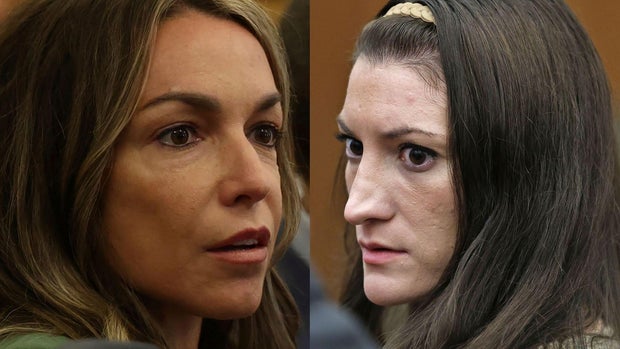
On Tuesday, the jury in Lindsay Clancy’s trial informed the judge that they could not reach a unanimous verdict. Judge William Sullivan instructed the jurors to continue deliberations, but they went home without a decision after deliberating until around 3:30 p.m.
Hung Juries in High-Profile Massachusetts Cases
Deadlocked juries have occurred in several recent high-profile cases in Massachusetts. Karen Read in 2024 and Emanuel Lopes in 2023 and 2024 experienced similar situations.
Emanuel Lopes was on trial for the murder of Weymouth Police Sergeant Michael Chesna in 2018. His first trial in 2023 ended in a mistrial due to a hung jury. During his second trial in 2024, the jury reported three times that they were deadlocked. After six days and 32 hours of deliberations, they reached a unanimous guilty verdict.
In Karen Read’s first trial in 2024, the jury was also deadlocked, resulting in a mistrial after five days and 27 hours of deliberation. The jury indicated deadlock after 17.5 hours and again at 23.5 hours, before a third deadlock led to a mistrial. Read was acquitted in a second trial a year later.
Understanding the “Tuey-Rodriguez” Instruction
In cases like these, the judge may use a “dynamite” charge to help the jury reach a consensus. In Massachusetts, this is known as a “Tuey-Rodriguez” instruction, stemming from a 1973 case.
The law allows judges to send deadlocked juries back for deliberation twice. Additional opportunities to deliberate are provided if juries ask questions regarding the law. If a second deadlock is reported, judges consult with attorneys and often read the jurors the Tuey-Rodriguez charge. The charge states, in part:
You should consider that it is desirable that the case be decided. You should consider that you have been selected in the same manner, and from the same source, as any future jury would be. There is no reason to suppose that the case will ever be submitted to six persons who are more intelligent, more impartial, or more competent to decide it than you are, or that more or clearer evidence will be produced on one side or the other. With all this in mind, it is your duty to decide this case if you can do so conscientiously.
If the jury remains deadlocked after this charge, the judge can declare a mistrial. In Clancy’s case, a mistrial would mean she remains “in custody” at Tewksbury State Hospital under psychiatric care. The Plymouth County district attorney, Timothy Cruz, would then decide whether to retry Clancy for first-degree murder, opt for a lesser charge, or abandon the case.