House Select Committee Seeks DHS Briefing on Uyghur Forced Labor Prevention Act
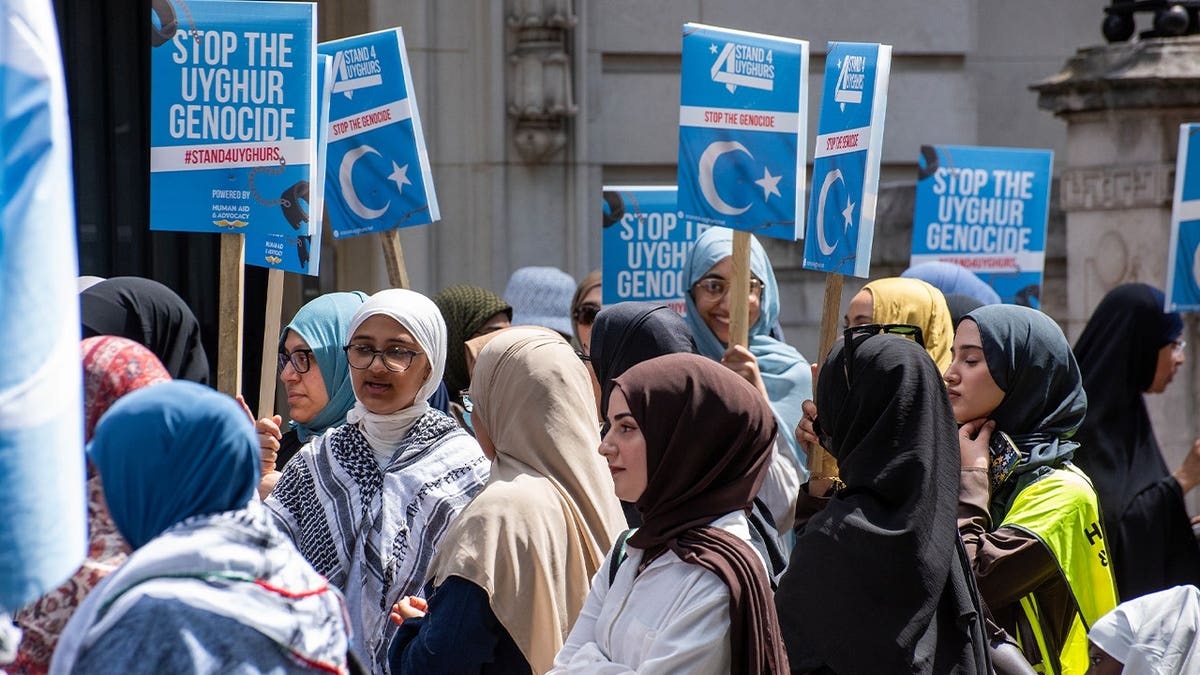
The House Select Committee on the Chinese Communist Party (CCP) is requesting a briefing from the Department of Homeland Security (DHS). This request focuses on the implementation of the Uyghur Forced Labor Prevention Act (UFLPA), a law aimed at preventing the import of goods produced through forced labor in China. A letter shared with Fox News Digital highlights these concerns.
Background on UFLPA
Passed in 2021, the UFLPA mandates the DHS’ Forced Labor Enforcement Task Force to curb the importation of products made with forced labor from China, specifically the Xinjiang Uyghur Autonomous Region (XUAR). Human rights organizations have reported on the alleged forced labor imposed on Uyghurs, a Muslim minority group in China.
The Uyghurs face political persecution, forced assimilation, and labor under harsh conditions, as noted by Rep. Ro Khanna, a member of the committee.
Rep. Ro Khanna’s Perspective
Rep. Ro Khanna argues that enforcing the UFLPA is crucial not only for moral reasons but also for economic and national security in the U.S. He highlights that products such as steel, aluminum, and textiles produced through forced labor are impacting American industries negatively.
Khanna insists on the need for DHS to identify and list companies using forced Uyghur labor. This action would help mitigate unfair competition in the U.S. market.
Concerns Addressed in the Letter
The bipartisan letter sent to DHS Secretary Markwayne Mullin requests clarification on ten matters related to the UFLPA. It asks about the current efforts by DHS and Customs and Border Protection (CBP) to update the list of entities on the UFLPA Entity List.
In July, DHS included 43 additional companies to this list. Khanna views this move as a positive step, prompted by the committee’s impending letter.
Product Supply Chain Issues
The committee raises concerns that products manufactured by companies on the list continue to reach U.S. customers. Examples include supply chains for materials vital to technology production.
The letter also points out a report suggesting that the cotton in widely sold “Labubu” dolls originates from forced labor.
Challenges in Banning Imports
Khanna discusses the challenges posed by China’s tactics to evade import bans through outsourcing. He stresses the importance of identifying product origins and preventing the import of goods linked to forced labor.
A bipartisan consensus among lawmakers underscores the need to address this issue to ensure fair trade, free of exploitation.
Khanna emphasizes that most Americans support fair trade; they oppose competition with goods derived from forced labor.