China Accelerates AI Infrastructure while U.S. Looks to Maintain Lead
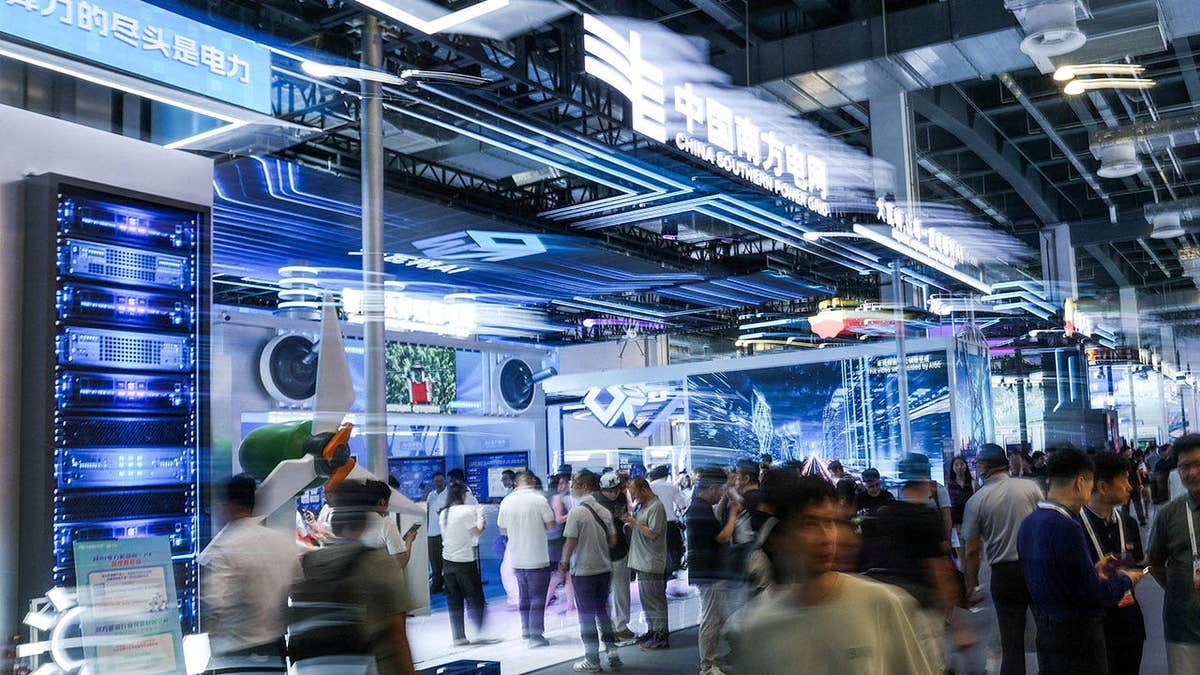
China is rapidly advancing its infrastructure development to support artificial intelligence. This surge in construction raises concerns about Beijing closing the gap with the United States in the race for AI superiority.
Currently, the U.S. holds a significant lead in data center numbers. The Stanford Institute for Human-Centered Artificial Intelligence’s 2026 AI Index indicates 5,427 U.S. data centers compared to China’s 449. Though the count doesn’t account for differences in size, computing capacity, or utilization, China is making swift advancements.
According to Gordon Chang, a China expert, despite China being far behind, its speed of progress is noteworthy. He believes if the U.S. continues at its current pace, its advantage may be tough for China to erase, but growing resistance to data-center development could impede American expansion.
President Donald Trump echoed this sentiment, warning of China’s potential gain from anti-data-center movements. Trump argued that acceptance of data centers could bring jobs and tax revenue.
Vice President JD Vance highlighted potential risks if Democrats regain control of Congress. He emphasized the need to build power to support data centers and infrastructure, advocating for easier construction of power plants.
China, meanwhile, continues to expand its infrastructure. The Chinese Embassy in Washington stated that AI should promote cooperation rather than geopolitical rivalry. The 2025 Global AI Governance Action Plan supports clean power construction, networks, computing, and data centers to benefit international intentions.
China is engaging in its ‘East Data, West Computing’ strategy. This shifts computing capacity to western areas where land and resources are abundant. Notable construction is underway in areas like Horinger and Zhongwei, with five national computing hubs in western China.
The US-China Economic and Security Review Commission observed China sees infrastructure expansion as crucial to competition. Commission Vice Chairman Mike Kuiken noted China’s ability to construct infrastructure quickly due to less stringent laws but pointed out China’s lack of access to advanced chips.
The AI boom in Texas illustrates growing demand for data centers. The U.S. retains advantages in AI models and investment, with 59 models produced in 2025 compared to China’s 35. Yet private AI investment figures may understate China’s government-backed spending.
While Chinese models are narrowing the performance gap, Chang suggested American opposition to data centers might be influenced by China-linked networks. Though Kuiken indicated genuine U.S. concerns about projects due to electricity, water use, noise, and land development.
The competition involves more than AI model development. It is an expansive race around constructing electricity, data centers, chips, and networks needed for scale. The race is over how swiftly each nation can advance its infrastructure to operate these models.