Weather Extremes Expected Across the U.S. During Labor Day Weekend
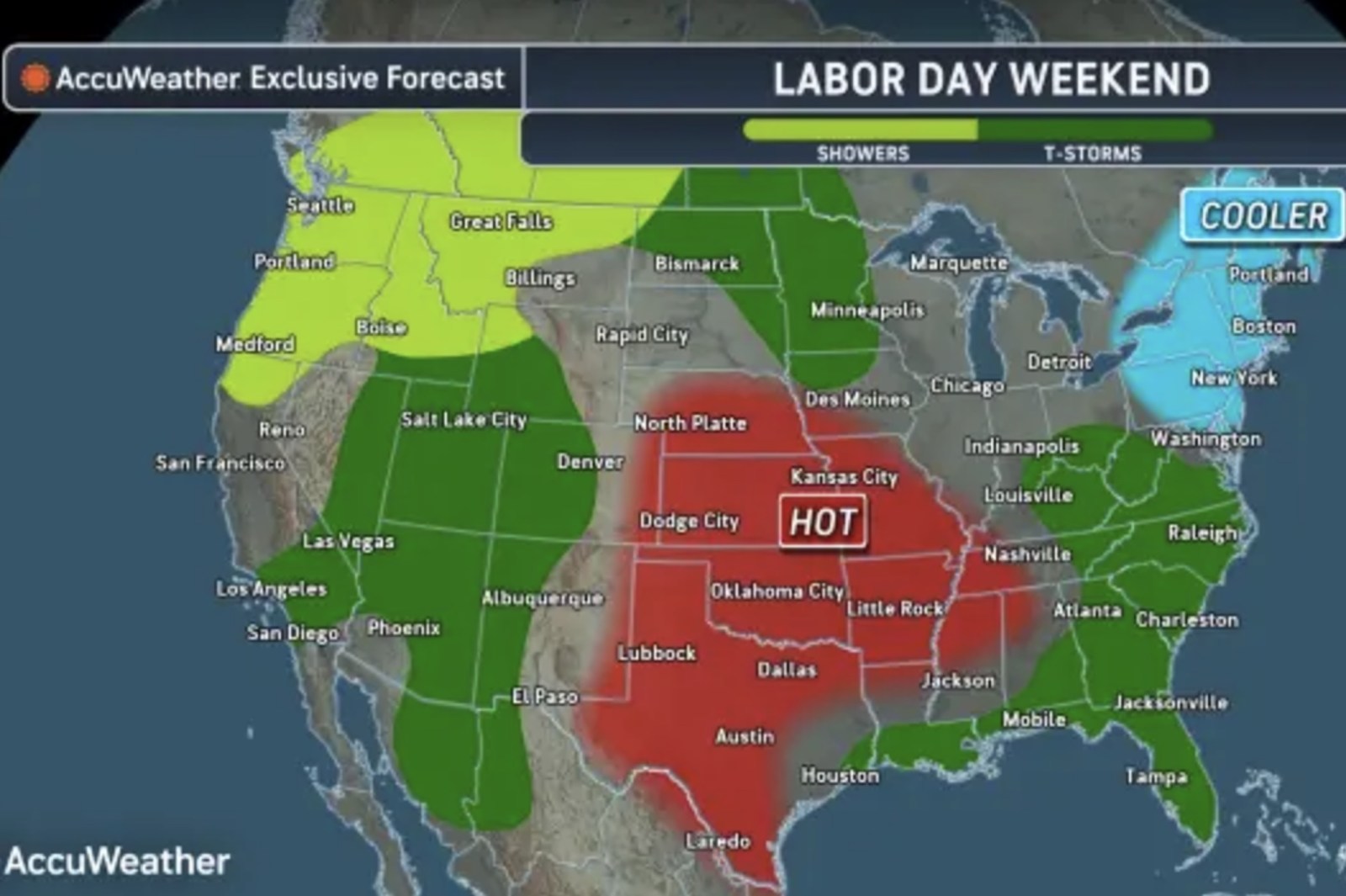
Those anticipating the Labor Day weekend are facing weather extremes. Severe heat threatens parts of the central U.S., while powerful storms could lead to flash flooding and disruptions from the West to the Southeast.
Heat Alerts in Central States
The National Weather Service (NWS) has issued extreme heat warnings across five states. The advisory cautions that heat-related illnesses become more likely during periods of high heat and humidity.
AccuWeather reports a vast heat dome will bring soaring temperatures to the central and southern Plains and the Mississippi Valley. Major cities in Texas, Oklahoma, Missouri, Tennessee, and Nebraska may see temperatures climb above 100 degrees Fahrenheit, potentially persisting into the next week. High humidity intensifies the heat, with some areas feeling up to 15 degrees hotter.
The latest NWS forecast indicates increased heat from the middle Mississippi Valley to the mid-Atlantic, with advisories in place due to dangerously hot conditions.
A post from the NWS Weather Prediction Center noted that a persistent ridge of high pressure is driving record warmth, with widespread moderate to extreme heat risks expected into the early week.
Storms and Heavy Rain
While the central states might remain dry under the heat dome, showers and thunderstorms are expected along its edge. These could affect parts of the West, the northern Plains, the Midwest, and the Southeast, bringing risks of torrential rain, flash flooding, and damaging winds.
NWS forecasts showers and storms in the Southwest starting Wednesday, increasing in coverage and intensity by Thursday, with heavy rain anticipated. Storms will also likely hit the Great Basin, central Rockies, and from the Great Lakes to the northern mid-Atlantic.
Understanding Heat Domes
A heat dome occurs when a high-pressure system becomes stationary over an area, trapping heat and humidity. This causes the air below it to sink and compress, raising surface temperatures. The heat dome creates extended periods of unusually hot weather and warmer nights, heightening heat-related health risks.
According to Michael Muccilli from NOAA’s Weather Prediction Center, such systems bring further warming due to sinking air and sunlight. While heat waves usually last one to two weeks, they can persist longer during droughts.
Texas Flash Flood Concerns
Texas faces increased flood risks after Tropical Storm Edouard moved through, later downgraded to a tropical depression. The NWS forecasts northward movement into Northeastern Texas, with heavy rain expected on Wednesday, possibly causing localized flash flooding in urban and low-lying areas.
AccuWeather also warns of flash flood threats from storms at the heat dome’s edge, particularly in parts of the West, where heavy rain from thunderstorms is expected.