Military Reduces Drone Activity at Southern Border Using High-Energy Laser
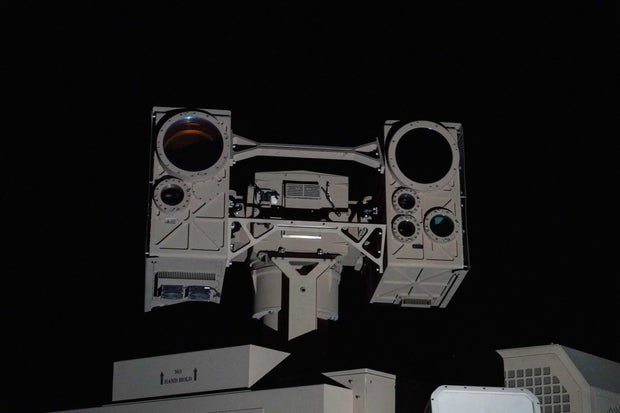
By September 7, 2026, less than two weeks after the military deployed a high-energy laser system against suspicious drones, officials reported a 75% decrease in drone activity at the southern border. This system first engaged and neutralized three drones on August 25 and 26 after extensive training. The training period included an incident that necessitated a temporary shutdown of El Paso’s airport earlier this year.
The military has coordinated closely with the FAA to ensure the laser’s deployment remains safe for civilian air traffic. Currently, the U.S. military employs various methods to counter drone incursions. These include jamming techniques that redirect drones; however, the laser system offers a distinct advantage by taking down drones that pose a potential threat.
In 2024, Air Force Gen. Gregory Guillot informed lawmakers that the southern border experienced roughly 1,000 drone incursions monthly. Nonetheless, the introduction of the laser has significantly impacted this activity. Although Army Col. Robert Felicio, commander of the 130th Maneuver Enhancement Brigade, refrained from disclosing exact figures, he noted a marked reduction following the laser’s initial use.
The laser’s effectiveness was demonstrated during a test viewed exclusively by CBS News. Soldiers deployed a small quadcopter drone over a field near the border wall, tracking it via an Xbox controller and a camera feed. Upon acquiring the target, they utilized the laser to disable the drone. The system operates by emitting an invisible, instantaneous heat beam that strikes precise points, causing damage, evidenced by a broken propeller and missing battery on the recovered drone.
AeroVironment manufactured the system, and its version called LOCUST has been situated at various points along the border. The Army recently contracted AeroVironment for additional systems, a $465 million agreement. The intuitive nature of controlling the laser with an Xbox controller suits many soldiers accustomed to video gaming.
The laser is not a complete remedy for drone threats. Environmental factors like rain can diminish its effectiveness. Nonetheless, military officials advocate for increased investment in laser weapons, highlighting their cost-effectiveness. While each unit costs between $17.4 and $25 million, each shot incurs an expense of only about $3, compared to other air defense systems where interceptors cost millions.
Safety concerns persist around civilian proximity to laser operations. Coordination with the FAA is integral to mitigating risks, such as misfires potentially affecting aircraft. Additionally, the U.S. works with Mexican authorities to monitor cross-border threats.
Cartels use drones primarily for surveillance to navigate U.S. enforcement and exploit smuggling opportunities. According to Army Lt. Col. Ray Richards, disrupting these drones hampers cartel operations financially. The reduction of drone capabilities represents a significant setback for the cartels.
Besides surveillance, cartels deploy armed drones within Mexico to target rival factions, resulting in 221 documented incidents and 77 fatalities between 2021 and 2025, according to a report from the National Counterterrorism Innovation, Technology, and Education Center. The report, supported by the Department of Homeland Security, emphasizes the threat to U.S. personnel stationed at the border.
Felicio and Richards highlighted the proximity of U.S. posts to the areas drones originate from during discussions with CBS News. Although no drones were observed on site, the recurring passage of the same drone before CBS’s arrival was noted by service members. Felicio expressed that the continual reappearance of drones presents an ongoing threat, one that the laser could eliminate, offering a lasting solution to diminish cartel capabilities.