Archaeological Discovery of Ancient Tomb in Egypt
An archaeological team from Egypt and Spain has made a significant discovery near Cairo, unearthing a tomb dating back 4,300 years. Local authorities announced that the tomb, found at Saqqara—an ancient burial ground south of Cairo—belongs to a judge and his father from Egypt’s Fifth Dynasty.
The tomb dates to the reign of Pharaoh Djedkare Isesi, a ruler known for his administrative reforms in the 24th century B.C., according to the Egyptian tourism and antiquities ministry. Built for Yunmen, a high-ranking official, the tomb reveals insights into the role of such officials. Yunmen was responsible for hearing appeals from kingdom subjects and addressing their complaints. As described by Amr al-Tayeb, director of the Saqqara archaeological site, Yunmen’s responsibilities connected to the concept of Maat—the goddess of truth, justice, and social order.
This discovery came during the summer excavation season in the Mariette Cemetery area of northern Saqqara. The project is a collaboration between the Autonomous University of Barcelona and Egypt’s Supreme Council of Antiquities. The mastaba—a characteristic flat-roofed tomb for elite Egyptians—features two funerary chapels: one for Yunmen and another for his father Ity. Ity was a senior scribe overseeing agricultural land and offerings.
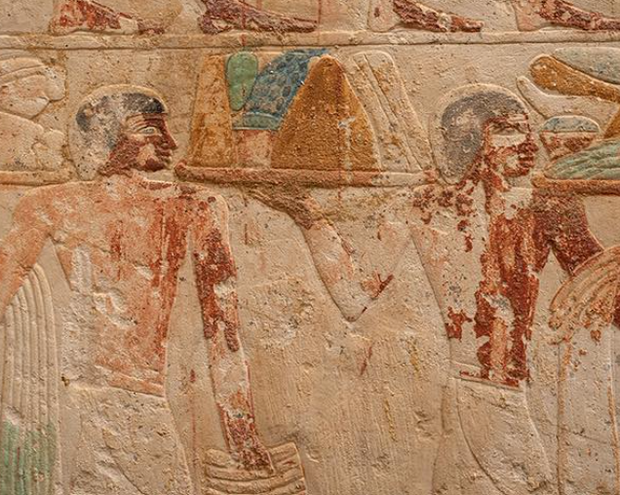
Yunmen’s chapel is adorned with finely carved reliefs depicting farm labor, servants bearing offerings, and funerary scenes. Many paintings have retained their original colors despite being buried for over 4,000 years beneath the desert sands, stated the ministry. “It features exceptionally well-preserved scenes,” the ministry shared on social media, along with site images.
The team also found an ornate facade with funeral inscriptions and formal depictions of Yunmen. In Ity’s chapel, traces of offering scenes survive, along with a false door—a symbolic passage for the dead to receive sustenance from the living.
This discovery aligns with Egypt’s efforts to promote archaeological finds to boost tourism, a major source of foreign income. Last November, the government held an official ceremony for the opening of the Grand Egyptian Museum. This $1 billion endeavor faced delays due to financial crises, political issues, the COVID-19 pandemic, and regional conflicts.