Real Estate Impacts of Data Center Expansion Explored
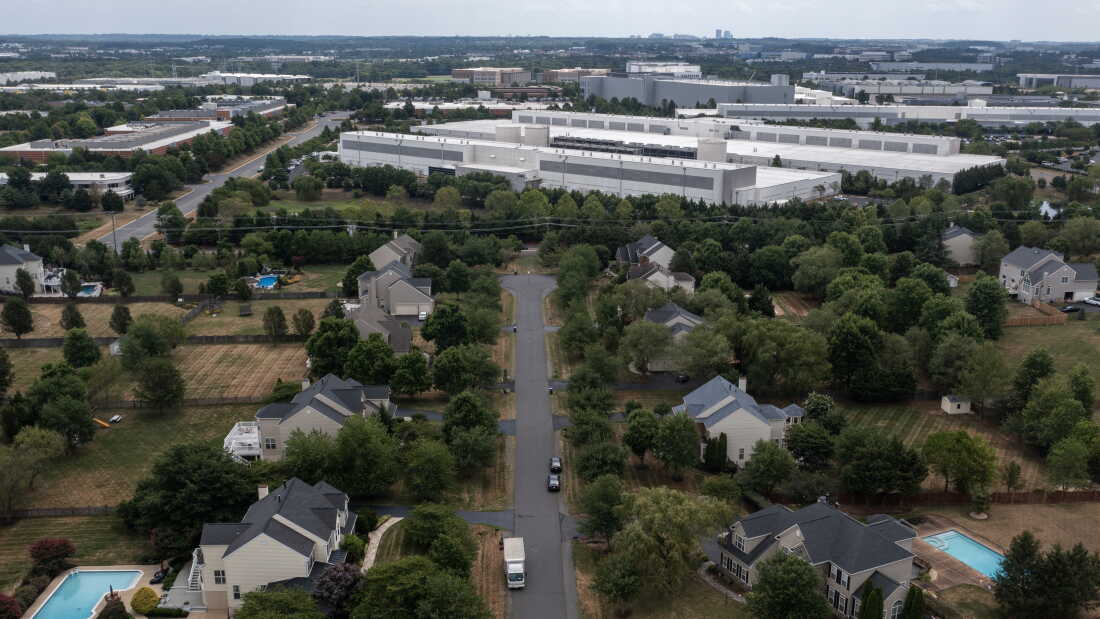
In Ashburn, Virginia, an aerial view showcases numerous data centers near residential areas. Northern Virginia hosts 319 mapped data centers, comprising 19% of the nation’s facilities. As data centers expand rapidly across the United States, concerns regarding their influence on the housing market have grown as well. To address this, the National Association of Realtors (NAR) commissioned a study to examine data centers’ impact on real estate markets.
The study reveals significant variation in the effects of data centers, depending on the location. Nadia Evangelou, principal economist and director of real estate studies at NAR, emphasizes that data centers should not be generalized as a single category. While some counties benefit economically from data centers, others face challenges like energy supply strain.
Data centers power internet functions essential for industries from artificial intelligence to basic web searches. As AI technology advances, the demand for data centers increases, leading to construction near residential neighborhoods. NAR’s study analyzes various datasets, including the location and size of 1,500 data centers, property values, home sales, demographic data, and a survey of over 2,300 realtors across the country.
The research found that although data center construction is accelerating, these tech hubs occupy only 1% of the country. Key locations include Northern Virginia, Silicon Valley, Phoenix, Central Ohio, and Grant County, Washington. Evangelou notes that these areas differ economically and attract data centers for various reasons, affecting home values, employment, and electricity rates differently.
Northern Virginia, for example, contains 319 mapped data centers, while Louisiana hosts just one. Other significant hubs are Silicon Valley, Central Ohio, Washington State, and South Texas. Many areas with data centers already have robust housing markets and high income levels, which remain stable despite the presence of data centers.
The study focused on existing facilities but also observed how markets perceive these centers before construction completion. Abilene, Texas, is feeling the impact of the $500-billion Stargate Project, which will be the largest nationwide data center by its completion in 2026. Operated by Oracle for OpenAI, the Stargate data center covers about 4 million square feet.
Steve Stovall, a local realtor, notes an influx of workers boosts the economy but strains the housing market. Housing shortages have resulted, with existing homes sold, rental properties full, and hotels occupied. Some rentals have become Airbnbs or short-term leases, increasing prices.
Abilene’s median home price has risen from $250,000 six years ago to about $342,000 now. While it is hard to predict further impacts of the Stargate Project before completion, concerns regarding energy usage and environmental effects are notable among residents. Abilene’s situations might intensify as two more data centers are approved for construction nearby.
Evangelou stresses the importance of regular updates to the study to reflect ongoing data center construction. The national realtor group plans to release an update within six months.