Rise in Anti-Muslim Rhetoric Amid Political Campaigns
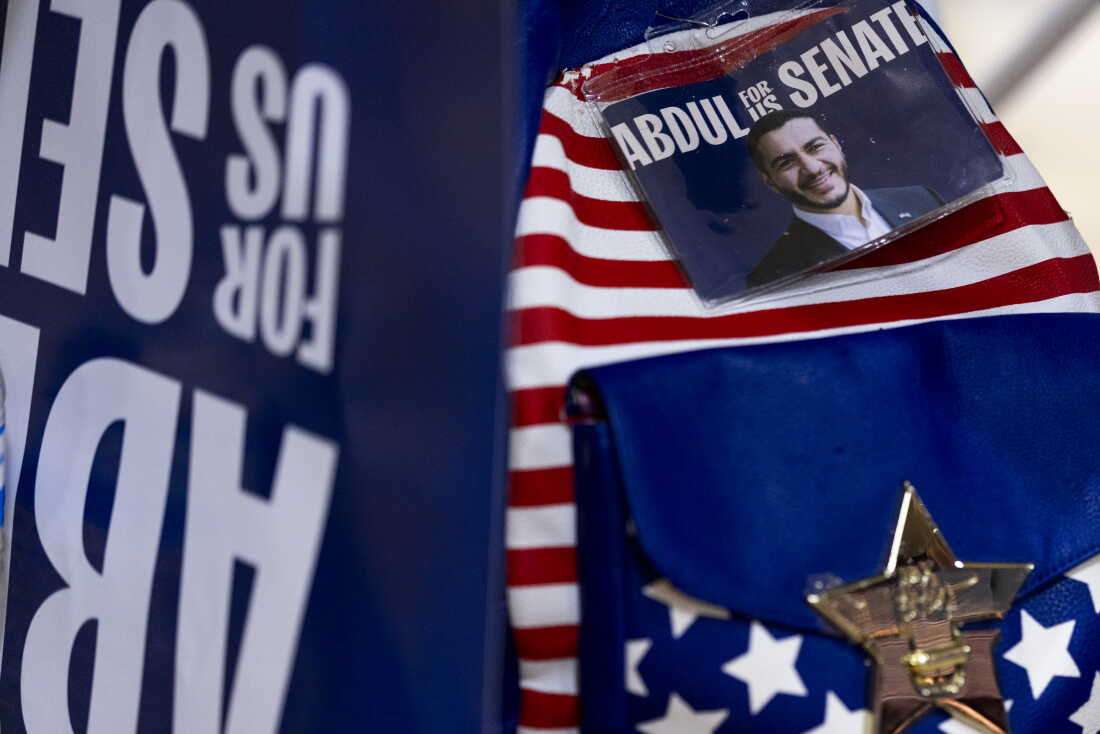
On September 3, 2026, expressions of support for Democratic Senate candidate Abdul El-Sayed were visible during a town hall event in Waterford, Michigan. After defeating his primary opponents, El-Sayed, a Muslim candidate, faced a surge in anti-Muslim rhetoric, mirroring the backlash seen after New York Mayor Zohran Mamdani’s election last year. Within mere hours of El-Sayed securing the Democratic Senate nomination in Michigan, he faced claims of radicalism from Sen. Tommy Tuberville, a fellow politician from Alabama. Tuberville accused El-Sayed on social media, labeling him as a ‘radical Islamist’ aiming to undermine America. This antagonistic message aligns with a pattern of rising anti-Muslim sentiment propagated by some political figures.
Nazita Lajevardi, a professor of political science at the University of Michigan, noted the normalization of such harsh rhetoric, contrasting it with reactions a decade prior when such explicit racism stirred public shock. She observed that rhetoric aimed against Muslims isn’t shocking anymore, though it should be. This narrative has gained traction across political campaigns nationwide, featuring themes like combating ‘Radical Islam’ and preventing the ascendancy of ‘Sharia law.’ Despite Muslims constituting slightly over one percent of the U.S. population, incidents of discrimination intensified with El-Sayed’s primary victory. The Center for the Study of Organized Hate (CSOH) highlighted a substantial increase in hate, spearheaded by politicians and influential personalities online.
Raqib Naik, executive director of CSOH, emphasized a troubling trend where 46 Republican officials published over 1,100 posts with anti-Muslim sentiment between February 2025 and March 2026. He noted the expanded scope of attacks, evolving from portraying Muslims as security threats to casting them as civilizational threats. A recent inflammatory post from Rep. Nancy Mace of South Carolina claimed Muslims in public office pose a danger to national security.
The propagation of these messages isn’t restricted to broadly recognized political figures. Texas Republican candidate Bo French asserted last year that an ‘Islamic invasion’ threatens local neighborhoods and governance. He attributed changes in community demographics to these claims, further fanning the flames of fear over Muslim influence. Naik correlated such narratives with conspiracy theories like ‘the great replacement,’ alleging deliberate demographic shifts intended to facilitate political agendas. This rhetoric has been associated with violent events, illustrating the real-world implications for Muslim communities.
In Texas, scrutiny and legal challenges surrounding projects like the East Plano Islamic Center underscore the localized impact of these narratives. GOP lawmakers, including Gov. Greg Abbott, fueled these tensions by sharing posts invoking ‘Sharia city’ imagery, prompting further investigations. Despite Sharia representing a personal code of conduct for Muslims, GOP figures continue to misrepresent its role and influence in American society.
This rhetoric and legislation, exemplified by a Republican Party of Texas platform resolution — ‘Don’t Sharia My Texas’ — champion anti-Muslim policies, encouraging lawmakers to deport or denaturalize advocates of Sharia law. Governor Abbott threatened funding withdrawal for major airports for accommodating Muslim practices like washing stations. Naik pointed to the Texas political climate as a harbinger for broader political agendas, manipulating base interests toward pivotal moments, often online.
Maya Berry, executive director of the Arab American Institute, stressed the multifaceted origins behind narratives linking Islamification with socialism and communism. She perceives these efforts as disingenuous, driven by strategists seeking viral traction and campaign funds. Berry warned of the tangible harm such rhetoric poses, impacting young Muslims in educational environments and beyond.
Following Mamdani’s election, initiatives like the House’s Sharia-Free America caucus amplify these anti-Muslim messages, with members openly opposing Muslim inclusion in society. Rep. Andy Ogles’ remarks against Muslims reflect these sentiments, with House Speaker Mike Johnson implying ‘Sharia law’ as the underlying issue instead of focusing on individual Muslims.
Berry contrasted current political dynamics with President George W. Bush’s post-9/11 advocacy against scapegoating Muslims, believing the previous stance was crucial in preventing widespread discrimination. She lamented the present narrative, shaped by influential figures promoting fear rather than combating prejudice.
Politically, the effects of this rhetoric are mixed. Lajevardi noted potential repercussions for the GOP, particularly in strategic regions like Michigan, where voters might reject harsh rhetoric. Such broad messaging may fracture Republican progress with Muslim and Arab American communities, potentially reversing outreach gains from Trump’s 2024 campaign.
Republican consultant Vinny Minchillo acknowledged the mobilizing power of fear-induced narratives among Republican voters. By diverting focus from economic concerns like inflation, GOP candidates exploit other narratives to engage voters. Yet, this approach risks alienating crucial voter segments, undermining long-term campaign objectives.