Texas Landowners Challenge Border Wall Plan
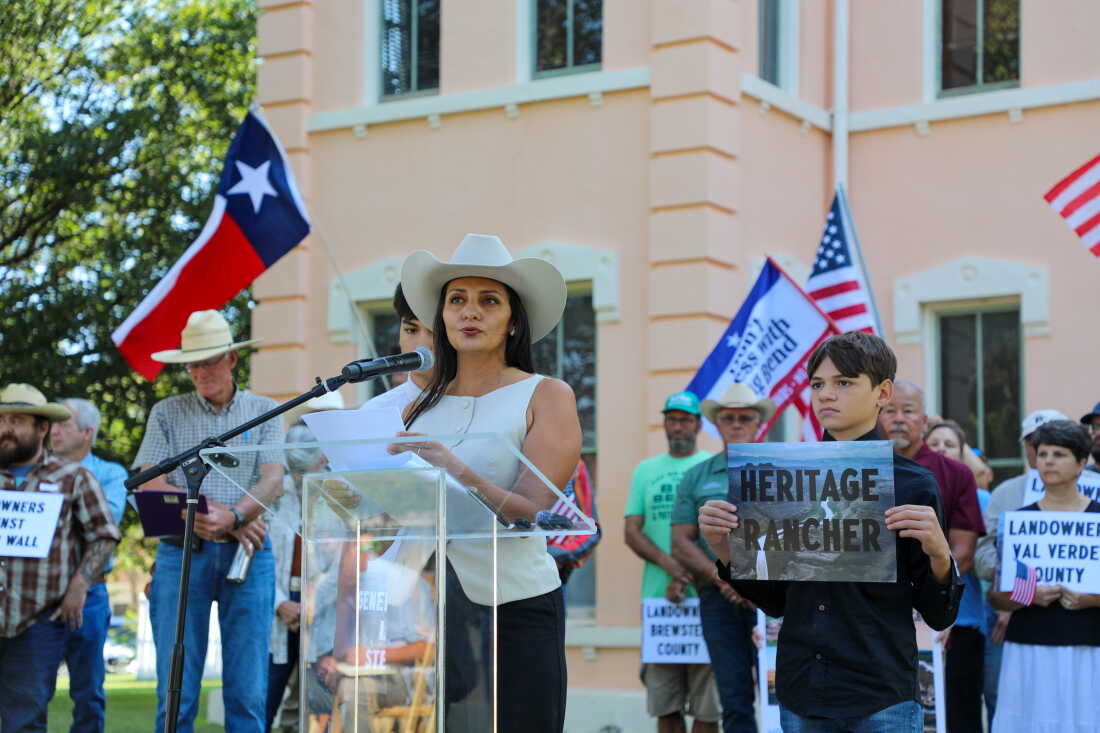
Yolanda Alvarado, a fifth-generation cattle rancher in west Texas, stands with her sons at a press conference in Marfa. They announced a landowner lawsuit against a proposed border wall along the Mexico border.
A group of Texas landowners along the U.S.-Mexico border is opposing the Trump administration’s plan to use private land for wall construction in various counties. Six landowners and the nonprofit Conserve Big Bend filed a lawsuit in U.S. district court in Washington D.C. against the Department of Homeland Security and related agencies. They represent more than 230 landowners and aim to halt the border wall plans.
“Hundreds of us are standing together to defend our constitutional rights and our private property,” said Clara Bensen, a board member of the nonprofit No Big Bend Wall, part of Conserve Big Bend. The lawsuit announcement took place at the Presidio County courthouse in Marfa. Several landowners and public officials gathered, displaying flags and banners.
The lawsuit argues that Department of Homeland Security waivers for the project were incorrectly issued earlier this year. These were based on the designation of the Big Bend Sector as a high illegal entry area. However, the area accounted for less than 1.5% of total apprehensions on the southwest border over the last five years, according to CBP data. This designation allowed expedited construction and bypassed various federal laws.
The legal action aims to stop construction across the Big Bend region, including steel barriers and roads inside Big Bend National Park. Landowners claim their Fifth Amendment rights to due process are being violated.
“We live every day on edge not knowing what will become of our home, our ranching operation, or our future,” said Yolanda Alvarado. “There is no transparency from our own government or officials.”
The court has 60 days to respond to the lawsuit. DHS and CBP have not yet commented on the lawsuit. Over 230 landowners from west Texas, facing property condemnation, are part of the group suing DHS.
This lawsuit adds to numerous legal challenges the federal government faces over the “Smart Wall” plans in the Big Bend region. These plans involve the installation of high steel walls and other border infrastructure on various lands along the Rio Grande.
Since February, opposition has grown among landowners and local communities. They argue the barriers could harm the region’s tourism-driven desert landscape. “No Al Muro” signs, Spanish for “No to the wall,” appeared widely. In April, a landowner coalition emerged to provide legal resources. This coalition now includes around half of the private landowners in the Big Bend Sector.
David Keller, a plaintiff in the lawsuit, expressed concerns about the wall as the “biggest threat” to the Big Bend region. His skepticism grew as CBP awarded significant funding to contractors for the project.
Keller emphasized the community’s unity. “Survey and construction schedules have fallen months behind,” he noted. “They underestimated our attachment to this place.”
Previous lawsuits challenging waivers were unsuccessful. Bensen noted the current case focuses specifically on Big Bend’s geography and low border activity.
“It asks whether DHS can lawfully authorize wall construction in this specific region,” Bensen explained.
Lico Miller from No Big Bend Wall is among those affected. His family’s ranch near Ruidosa, Texas, could be bisected by the proposed wall. The wall would cut off meaningful access to the Rio Grande, a vital resource for ranching and farming operations.
Miller believes the lawsuit could mitigate the project’s progress, reinstating waived federal laws. “It is inevitable this administration will attempt to build this wall,” he stated. “It’s not inevitable they will succeed.”
Over $7 billion has been allocated to Big Bend border barrier projects. Landowners aim to stay united, recognizing the Rio Grande’s value to their properties.
Miller added, “We must believe Texas’ sovereignty is at stake. At some point, this ‘don’t tread on me’ attitude needs to mean something. We are the final line standing against this.”