Rovelli’s New Perspective on Physics and Reality
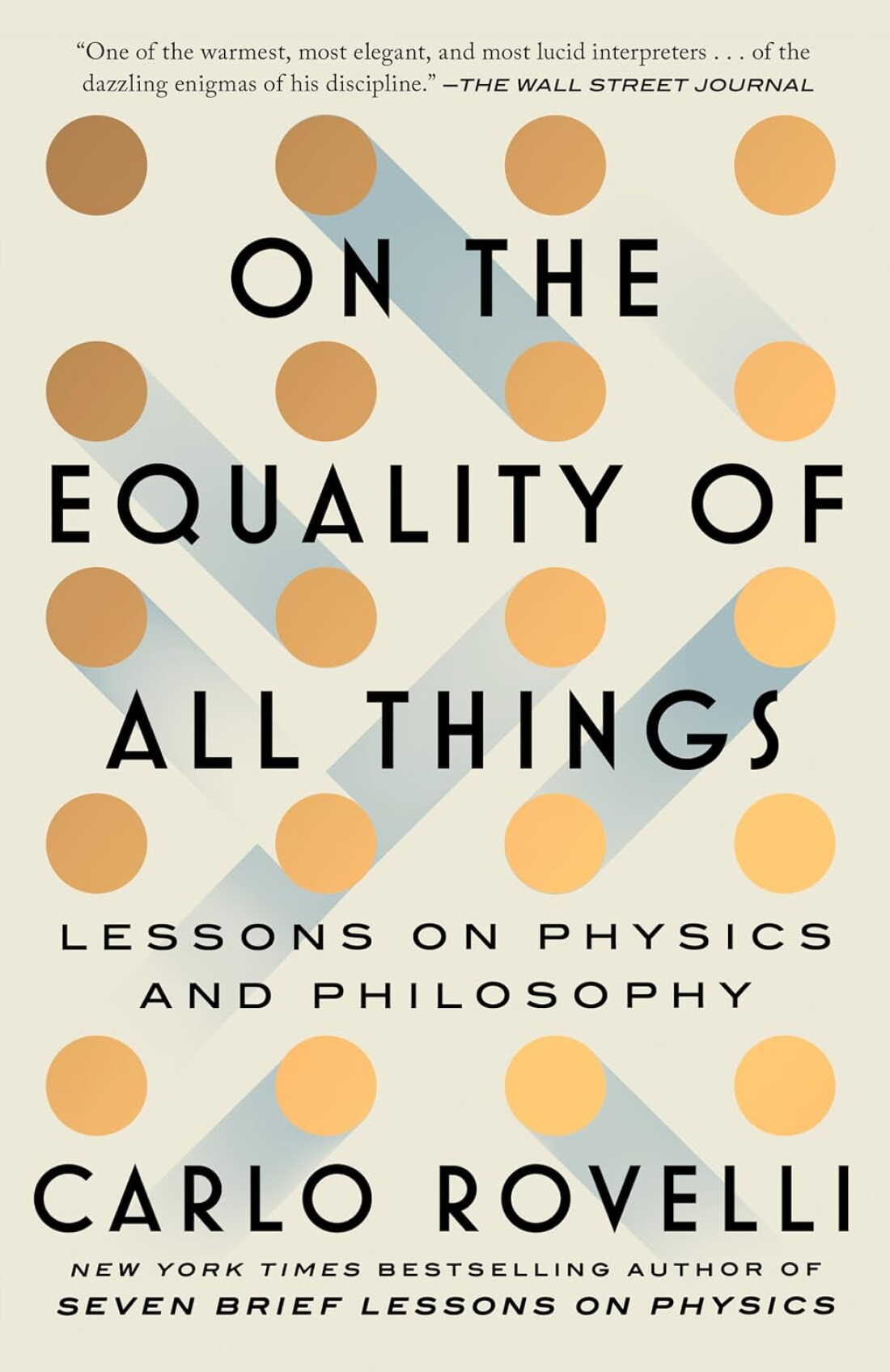
A book on my shelf titled Physics and Ultimate Reality captures the ambitious dreams young physicists often have. We aspire for perfect, objective knowledge of a well-defined universe. The idea of achieving a ‘God’s-eye view’ is frequently portrayed as the ultimate promise of physics in popular literature. Yet, physicist Carlo Rovelli’s latest book challenges this perspective.
In On the Equality of All Things, Rovelli argues that the quest for an ultimate reality is misguided. He notes that our understanding of the universe is limited by our experiences. Since we inhabit a solid planet, we believe in fixed objects, assuming they can have absolute motion. However, he points out that modern physics has debunked these perceptions.
Albert Einstein’s theory of relativity demonstrated that time and space measurements are relative, affecting even our sense of simultaneity. Quantum mechanics further complicates this by showing that what we observe depends on how we measure it. Physics does not offer a comprehensive view from the outside but rather a perspective from within our constraints.
Rovelli dedicates significant attention to a view called the relational interpretation of quantum mechanics. This challenges the longstanding view since Newton that physics describes an independent reality. In quantum mechanics, the difficulty of defining objects before measuring them led to ideas like Schrödinger’s Cat, where a cat could be both dead and alive until observed. Some physicists created theories of parallel universes to reclaim ultimate reality, but Rovelli rejects these ideas.
He argues that everything exists only in relation to something else, without absolute perspectives. This view limits physics’ ability to explain everything. Rovelli states, “Physics is often credited with a power it does not have: that of exhausting what can be known about the world. Knowing the physical laws does not equate to knowing the world itself.” This radical claim contradicts scientific triumphalism found in popular science books and challenges many philosophers.
Rovelli embraces a broader philosophical scope, including classical Indian and Asian philosophies. Thinkers like Nagarjuna and Zhuangzi are highlighted as comparable to Plato and Aristotle in addressing complex realities. Rovelli sees this as enriching rather than diminishing the value of science. He promotes science as a creative journey toward beauty and knowledge, encouraging humility in facing the universe’s complexity.
Though Rovelli’s argument invites some disagreements, such as the underestimation of experience’s role in science, it opens dialogue for future debates. His book presents a revolutionary way to redefine human understanding of science and our place in the universe.
Adam Frank is a professor of physics and astronomy at the University of Rochester and co-author of The Blind Spot: Why Science Cannot Ignore Human Experience.