Observing the Queue: A TikTok Sensation and the Kasama Phenomenon
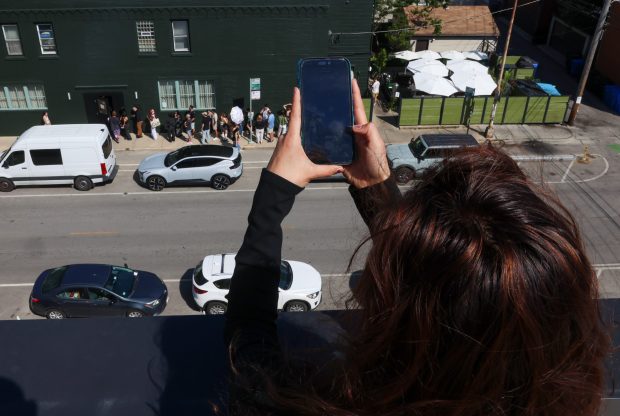
From the rooftop of her apartment, Sophie Frere observes a daily spectacle. People crowd around a Filipino restaurant named Kasama in Chicago’s Wicker Park. Some view this as mass hypnosis. Others see it as justified excitement. Two months ago, Frere relocated from San Diego to Chicago, finding herself across from Kasama. Intrigued by the constant line, she asked her neighbor about it.
Her neighbor explained Kasama’s reputation as a Michelin-starred spot. Frere, puzzled by the daily lines in a city with many dining options, realized she needed to document the phenomenon. Friends from the UK found it absurd, while those in San Diego felt compelled to try it. Frere remains undecided. This cultural curiosity led her to create a TikTok account, @kasamahowwefeelin, dedicated to capturing the daily queue.
Almost instantly, her videos gained popularity, attracting hundreds of thousands of views. A second video garnered over 200,000 views. Each video now draws between 600,000 to 700,000 views. Despite these numbers, Frere’s videos are surprisingly uneventful. They focus on the stationary line, akin to Andy Warhol’s films of still subjects. In one instance, a live stream of the queue attracted 700 viewers. Frere jokingly questions their interest in watching a line.
What are you bozos watching? You’re literally staring at a queue!
Responding to her joke about DJs entertaining the line, she received 300 messages from DJs willing to perform. Consequently, a few DJs were hired to play for the line, turning a joke into reality.
Before her move, Frere worked in California, focusing on AI and consumer behavior. Dissatisfied with corporate culture, she moved to Chicago to study either law or psychology at Northwestern. During her observations, she reflects on the stories of those waiting: tourists, families, and locals, all sharing snippets of their lives. She considers the American inclination towards experiences contrasted with the European perspective on queueing.
Historically, the concept of a line dates back to 14th-century England, where waiting one’s turn was compulsory. David Andrews’s book, Why Does the Other Line Always Move Faster, notes that organized lines emerged in the 19th century. Yet, it was French patience during the Revolution, according to Thomas Carlyle, that made queues notable.
Today, Kasama’s line represents social currency more than a burden. Prior lines in Chicago were for popular doughnuts and cupcakes, but now social media has intensified the ‘fear of missing out’ on culinary experiences. Frere herself participates in the line and notices the chaos it sometimes causes. Queries about the line’s length and worthiness flood her inbox. Frere acknowledges contributing to the queue phenomenon while humorously considering her role as community service.
Ultimately, Kasama started as a neighborhood cafe, now it holds a place among the world’s best restaurants. The line outside bears testimony to its global allure.