Conflict and Change at Lebanon’s Southern Border
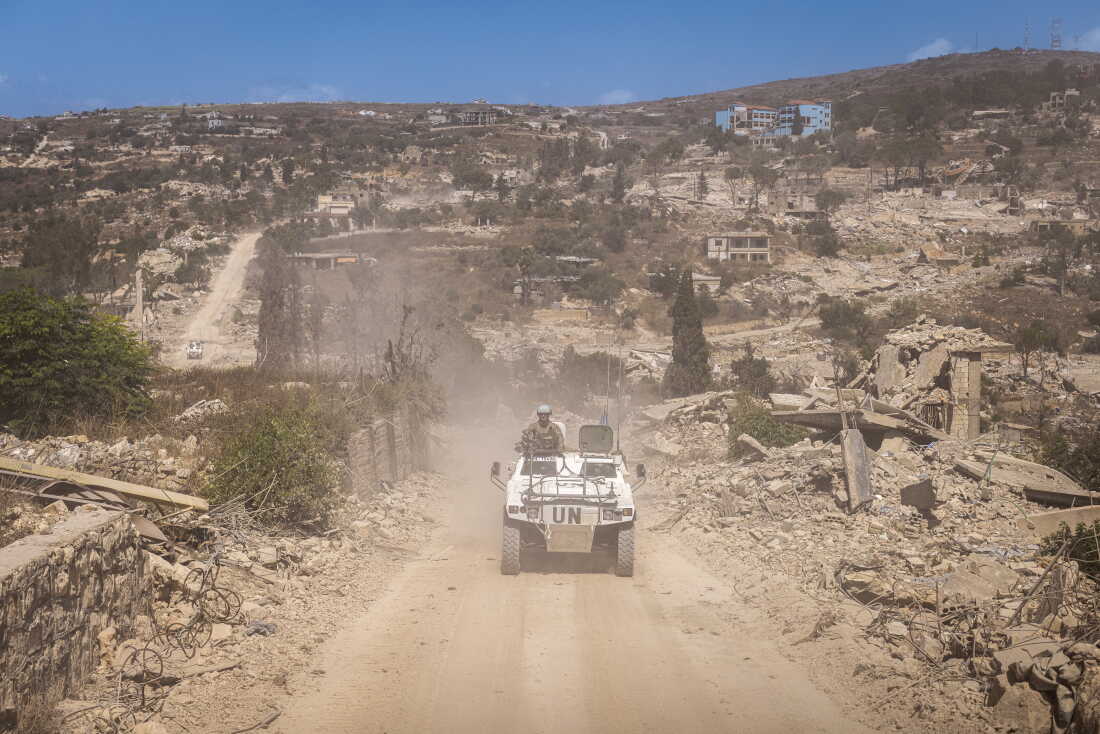
French peacekeepers from the United Nations Interim Force in Lebanon (UNIFIL) patrol beyond the “yellow line,” established by Israeli forces, through the devastated towns of Houla, Kfar Kila, and Odaisseh. This line comes after a ceasefire brokered by the U.S., continuing Israel’s restricted buffer zone policy. This area prompts memories of Israel’s 18-year occupation, which ended in 2000. Lebanese civilians cannot enter this zone, impacting nearly 6% of Lebanon’s land.
Today, the UNIFIL armored vehicle moves cautiously along Lebanon’s southern border, not due to terrain or threat, but because the landscape has dramatically changed due to conflict. UNIFIL has monitored this region since 1978, verifying Israel’s withdrawal after occupying Lebanon. A later mandate expansion added oversight of ceasefire adherence between Israel and Hezbollah, a group formed in 1982.
Despite UNIFIL’s nearly 50-year presence, its mandate is set to expire at year-end, with no renewal expected due to U.S. and Israeli opposition.
No lasting peace has emerged. A June agreement provides only a fragile pause in hostilities that, according to Lebanese sources, has caused over 4,300 deaths and displaced 1.2 million people since March, when Hezbollah began attacks. Israel cites the loss of 39 soldiers, a contractor, and two civilians to Hezbollah’s actions. Seven UN peacekeepers have died as well, according to UNIFIL.
Marking a de facto boundary, the blue line was demarcated by the UN following an Israeli withdrawal in 2000. Despite its presence on maps, it no longer reflects reality. UNIFIL patrols near Israeli military positions beyond the yellow line highlight ongoing tensions. The buffer zone is a zone of exclusion and conflict, preventing Lebanese civilians from accessing their land.
In Kfar Kila, a graffiti-covered gate spoke of past border crossings closed in 2000. Destroyed roads and homes in Houla, a site of previous massacres, underscore the enduring impact of conflict.
Months of fighting create new restrictions. Despite these, UNIFIL has reopened parts of its operation. “Today, we return to the eastern sector,” states Sgt. Audric, informed by limitations on identifying soldiers for security reasons. “Negotiations have allowed us to regain movement after the ceasefire.”
This reopening coincides with challenges in enforcing UN Security Council Resolution 1701, established to end earlier conflicts. Although British and other peacekeeping forces plan to withdraw by 2026, UNIFIL’s original mission to restore security and assist in reclaiming Lebanese authority linger.
Spanish peacekeepers provide medical services in Mari, offering crucial support to locals struggling without medical infrastructure.
The impact of Israel’s new buffer zone spans almost 6% of Lebanon’s territory, echoing memories of past occupations. Lt. Col. Sebastián Dorado Santos’ remarks reinforce that the yellow line creates difficulties for civilians: separating homes, fields, and disrupting daily life.
Amidst the destruction, roads become mere tracks, families’ homes turn to ruins, and Israeli flags dot the landscape. However, isolated Christian villages persist amidst ruin, although services remain scarce. Humanitarian aid frequently arrives, but Father Hani Tawk describes locals as yearning for more permanent solutions.
Local authorities emphasize agriculture’s significance as a livelihood. Mayor Salman Abou al-Ola of Mari stresses the need for access to farmland, spotlighting another area affected by restriction. UNIFIL’s resumed medical aid highlights the ongoing crisis, exacerbated by limited local medical options.
Fueling tensions, wildfires set in remote areas raise allegations against Israel. UNIFIL’s Maj. Jesús Fernández Manchado comments on reality’s transformation under the yellow line’s constraints, as new pilot zones define strategic territories where forces withdraw or advance strategically.
An evolving geography evident in stories like Ihsan Yaghi’s, whose family returned to Zawtar al-Gharbieh amid shifting military presence. Returning after displacement, they encounter reminders of occupation, highlighting the difficulty of rebuilding homes and lives.
The story repeats among residents returning to their wrecked homes without basic amenities. The site is part of a U.S.-brokered pilot project allowing Lebanese forces to replace withdraw Israelis. However, memories and destruction signify enduring legacies of conflict.
While the blue line remains on maps, physical realities diverge. Today’s Lebanon is one marked by drones, displaced villages, and inaccessible lands. While borders persist, those living here face day-to-day consequences of changed circumstances and persistent conflict.