Gender-Based Violence Sparks Outcry in South Africa
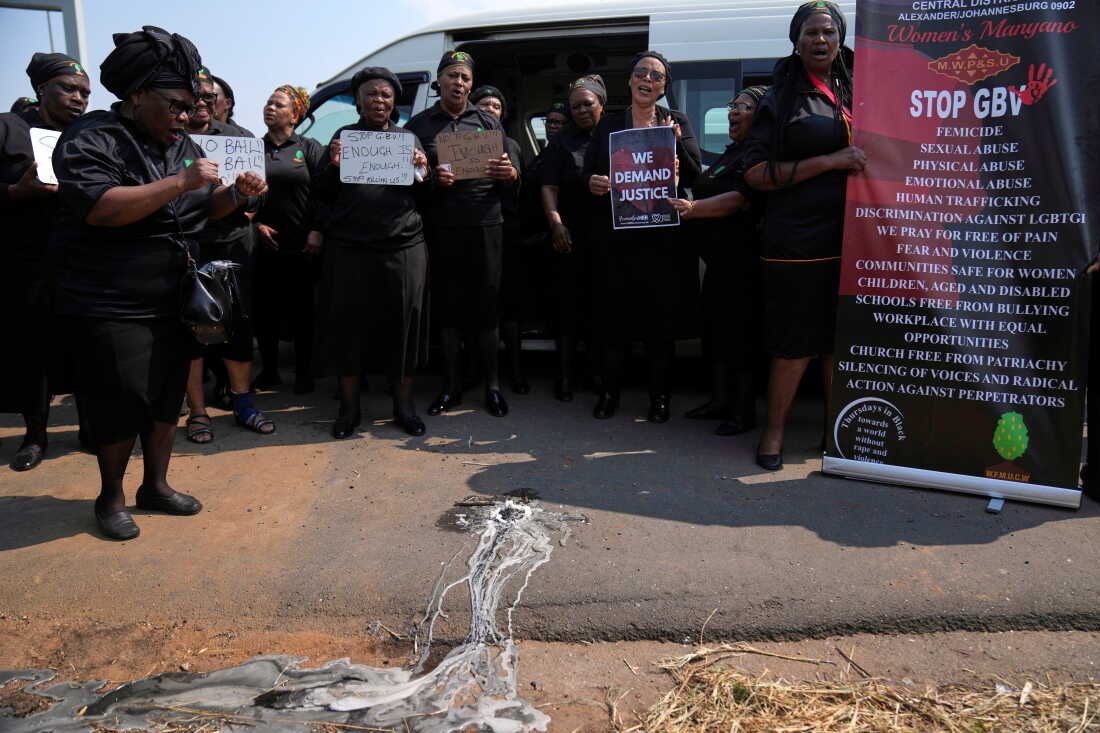
Members of a women’s church group gathered to sing beside a melted candle, paying respects at a site in Kempton Park, South Africa. This is where the body of a woman was discovered last week. The vigil took place on Thursday, September 17, 2026, east of Johannesburg.
Elizabeth Moselakgomo, a 38-year-old manager, mother, and avid runner, went for her usual jog near the Johannesburg airport last week. She never returned. When she did not come home, her 8-year-old daughter contacted relatives, who then informed the police. Five days later, Moselakgomo’s half-naked body was found. Her face was so badly beaten that it was unrecognizable.
Moselakgomo is one of nine women found slain in the same area of South Africa’s biggest city. Most victims experienced sexual assault. Despite South Africa’s high rates of gender-based violence, citizens are shocked, angry, and afraid due to this recent spate of murders. Over 100 rape cases are reported daily in the country, with approximately 15 women killed every day, according to police.
Authorities have not ruled out a serial killer. Meanwhile, police warn women to remain vigilant and avoid being alone. This advice has led to backlash on social media, where women argue that the responsibility should lie with police to protect them.
President Cyril Ramaphosa vowed thorough investigations to find the perpetrator or perpetrators. However, many criticize the government, stating not enough is done to protect women and girls, even after gender-based violence and femicide were declared a national disaster in 2025.
Shenilla Mohamed, Amnesty International’s South Africa Director, stated, “Women in South Africa continue to be hunted and denied the most basic right to life and security.” She emphasized that women are tired of empty reassurances and demand safety measures.
“I can’t move freely,” said Shari Maluluke, a 26-year-old runner, highlighting the restrictions women feel due to safety concerns.
Protests have erupted in Kempton Park and Cape Town, where women demand action. Moselakgomo’s passion for running inspired local running clubs to honor her and other victims with memorial runs. Participants dressed in black and observed a moment of silence before starting the run.
During these events, women expressed feeling unsafe throughout South Africa. “You send your location, you share your Ubers,” said Didi Tsitsi, 31, regarding precautions women take daily. She attributes femicide in South Africa to government shortcomings, policing issues, and deep-rooted societal expectations of masculinity. “We still haven’t really, I think, dealt with all of the legacies of apartheid – this is I think one of the ways it’s manifesting,” Tsitsi added.
Research supports these views. Studies suggest apartheid’s harsh rule, which denied Black men autonomy, contributed to a crisis of masculinity, entrenching patriarchal attitudes.