NASA and Boeing Prepare for Starliner Test Flights
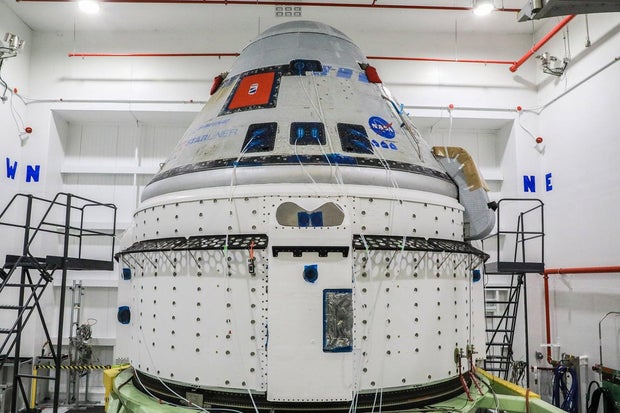
NASA is collaborating with Boeing to launch an unpiloted Starliner capsule between December and January. The goal is to test upgrades and improvements following a 2024 mission that experienced multiple propulsion failures. This previous issue left two astronauts at the space station for more than nine months.
If the unpiloted test flight proves successful, NASA and Boeing aim to conduct a piloted Starliner flight by mid-2028. This mission will feature redesigned propulsion system valves, more robust subsystems, and other modifications to prevent past failures. Veteran astronaut Warren “Woody” Hoburg will lead the mission.
Currently, SpaceX’s Crew Dragon capsule is the only U.S. vehicle for transporting astronauts. NASA seeks to return Boeing to operational status to maintain U.S. capability for astronaut transport. This capability is crucial for reaching the International Space Station, slated for retirement in 2030, and future commercial space stations.
“It’s always been the Commercial Crew Program’s goal to have two crew transportation providers,” said Dana Weigel, manager of NASA’s low-Earth orbit operations.
Weigel explained the necessity of certifying Boeing’s Starliner. This spacecraft is vital not only for supporting the ISS but also for future commercial destinations.
Boeing announced on social media, “Together with NASA, we’re making Starliner hardware enhancements and adding resources for human spaceflight certification.” These improvements aim to establish the Starliner as a long-term provider of crewed missions to low Earth orbit.
Astronauts Barry “Butch” Wilmore and Sunita Williams launched aboard a Starliner on June 5, 2024, expecting a 10-day test flight. However, the mission faced multiple propulsion system leaks and thruster failures. Although docking was achieved, these issues delayed their return as technical problems were addressed.
Ultimately, the Starliner came back to Earth without its crew after three months. Wilmore and Williams stayed on the station an additional six months, returning via a Crew Dragon on March 18, 2025. Their anticipated 10-day mission extended to 286 days.
An independent review identified several major flaws, including thruster failures, helium leaks, and a lack of redundancy in critical systems. Boeings Starliner, despite technical challenges, returned safely to Earth. The company is addressing all these concerns with operational changes to reduce unexpected heating of thrusters.
Boeing is replacing valves in all 12 crew module thrusters, redesigning service module thruster poppets, and upgrading systems like data recorders, batteries, and parachutes. NASA and Boeing plan to launch an unpiloted mission, Starliner 1, by December or January to dock with the space station.
“Our goal is to fly Starliner One as soon as the vehicle and the team is ready,” Weigel said.
Throughout the mission, controllers will test thrusters and pressurization systems to assess the improvements.
NineUnited Launch Alliance’s Atlas 5 rockets will carry the Starliner to space, although their supply is limited. NASA intends to help certify ULA’s new Vulcan rocket for future Starliner missions. ULA confirmed their support for the Starliner-1 mission and ongoing collaboration with Boeing and NASA.