U.S. Supreme Court Faces Historic Low Approval Ratings
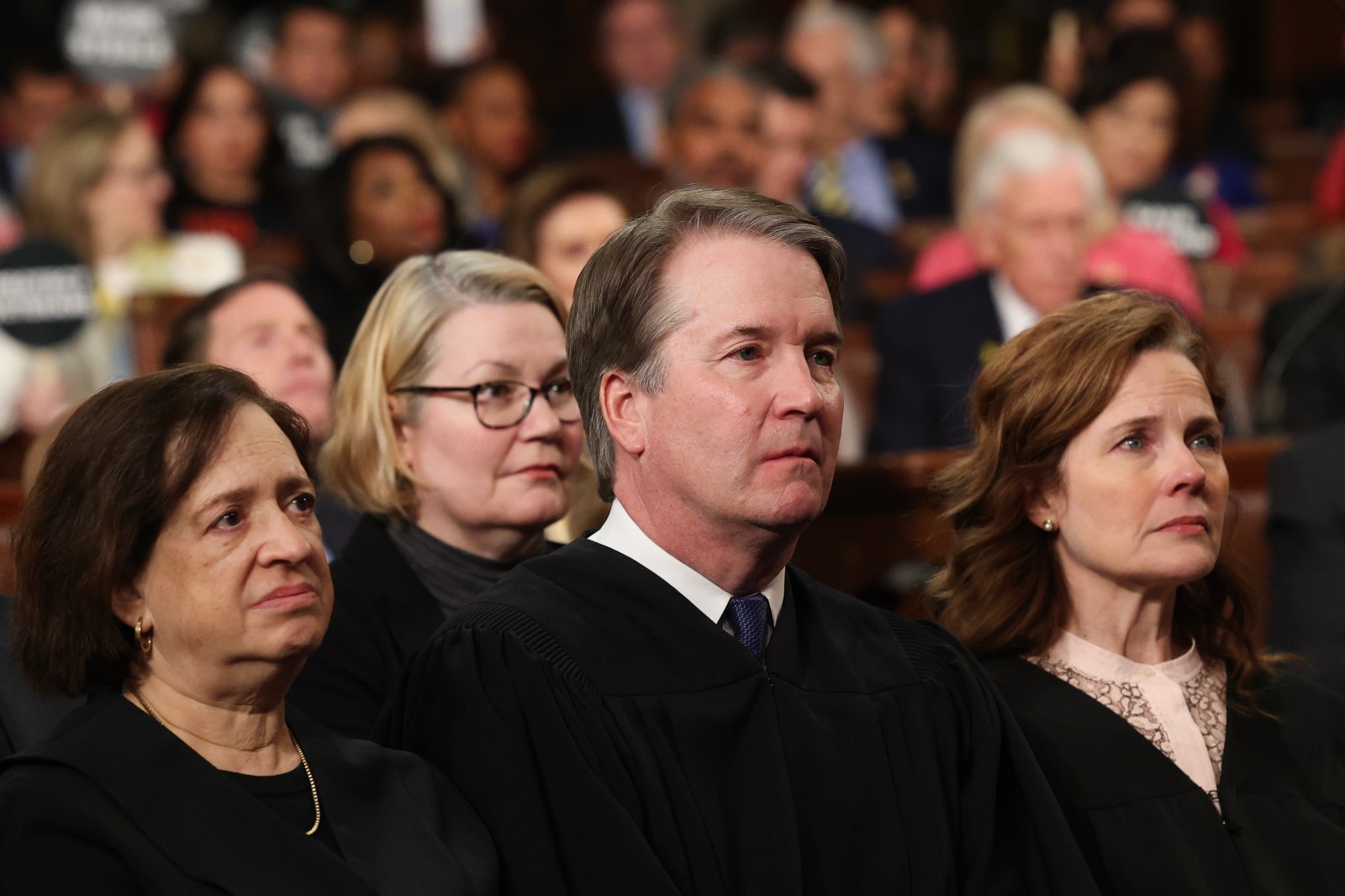
The approval rating of the United States Supreme Court has dropped to a record low among independent voters, according to a recent Gallup poll released on Wednesday. The poll revealed that only 31 percent of independents approve of the Court, marking the lowest point recorded in Gallup’s polling history. Comparatively, the approval ratings were at 35 percent in July 2026 and 38 percent in September 2025. This decline reflects the growing concerns about the Court’s impartiality and independence among the public.
Criticism towards the Supreme Court has intensified, especially among Democrats who are dissatisfied with the conservative-leaning Court’s decisions, such as the overturning of Roe v. Wade and perceived efforts to weaken the Voting Rights Act. Former President Donald Trump has also expressed discontent with certain rulings, including those related to birthright citizenship.
Stephen Wermiel, a professor of practice in constitutional law at American University, noted that the Court faces substantial criticism. He commented, “Liberals view the Court as a conservative think tank, while Trump believes his appointees have betrayed him. This criticism from all sides is impacting the Court’s standing.”
Overall approval for the Supreme Court stands at 34 percent in the latest Gallup poll, close to the record low of 33 percent in July 2026. Approval was slightly higher at 42 percent in September 2025 and 44 percent in September 2024. The poll also indicates that Republican approval has risen from 58 percent in July to 65 percent in September, while Democratic approval remains low at 12 percent.
Gallup’s polling shows that Republicans generally view the Court more favorably than Democrats, with conservatives forming a 6-3 majority on the bench. The last time Democrats had a more favorable view was in July 2016, when 60 percent of them approved of the Court as opposed to 32 percent of Republicans.
Of those surveyed, 43 percent consider the Court too conservative, while 35 percent think its stance is appropriate, and 17 percent see it as too liberal. The survey included 1,000 adults from September 1 to 17, 2026, with a margin of error of ±4 percentage points.
The Supreme Court’s Changing Approval Ratings
Over the past decade, the Supreme Court’s approval ratings have fluctuated notably. The highest rating was 58 percent in July 2020, but it dropped to 40 percent by September 2021, then a record low. Since then, it has struggled to recover. In July 2025, approval fell below 40 percent for the first time, reaching 39 percent and slightly rising to 42 percent in September 2025 before dropping to 33 percent in July 2026.
Challenges on the Emergency Docket
Supreme Court Justices have started addressing the issue of declining approval ratings. Justice Ketanji Brown Jackson has criticized the use of the emergency docket, which allows quick decisions without oral arguments. She voiced her concerns at the University of the District of Columbia, questioning the fairness of expedited cases compared to others waiting in line.
The emergency docket is also under criticism from other justices. Justice Elena Kagan has noted improvements but remains cautious. The Trump administration frequently used the docket for quick interventions, often succeeding in reversing lower court orders.
Stephen Wermiel highlighted that the perceived mishandling of the emergency docket contributes to the Court’s diminishing status. He suggested a need for clearer explanations of these actions to restore balance.
Major Supreme Court Rulings
Recent Supreme Court decisions have not always favored former President Trump. Notable rulings include a 6-3 decision against his efforts to end birthright citizenship, rejection of the authority to impose wide-reaching tariffs, and blocking the removal of Federal Reserve Governor Lisa Cook.
However, the Court did side with Trump on issues like transgender athlete inclusion in sports. It also affected voting districts as seen in the Louisiana v. Callais case, which led to changes in several states’ maps, criticized for diminishing Black voters’ electoral power.
Trump’s Reaction to Supreme Court Decisions
Former President Trump has openly criticized the Supreme Court for its rulings that he perceives as against his agenda. Recent remarks on the Missouri congressional map ruling reflect his discontent with decisions perceived to favor Democrats.
Through his platform, Truth Social, Trump expressed frustration over the Court’s impact on his policy efforts, including birthright citizenship and tariffs.
Additional Polling Insights
Other polls also indicate the Supreme Court’s waning approval. A Marquette Law School Poll found a net approval of -14 points, with 43 percent approving and 57 percent disapproving. The Court’s approval was even lower at -22 points in a YouGov and The Economist poll, showing 34 percent approval against 56 percent disapproval.
These surveys also highlight the perception of the Court as mostly conservative, with a small percentage seeing it as liberal.