Swiss Glacier Ice Loss Highlights Global Warming Impact
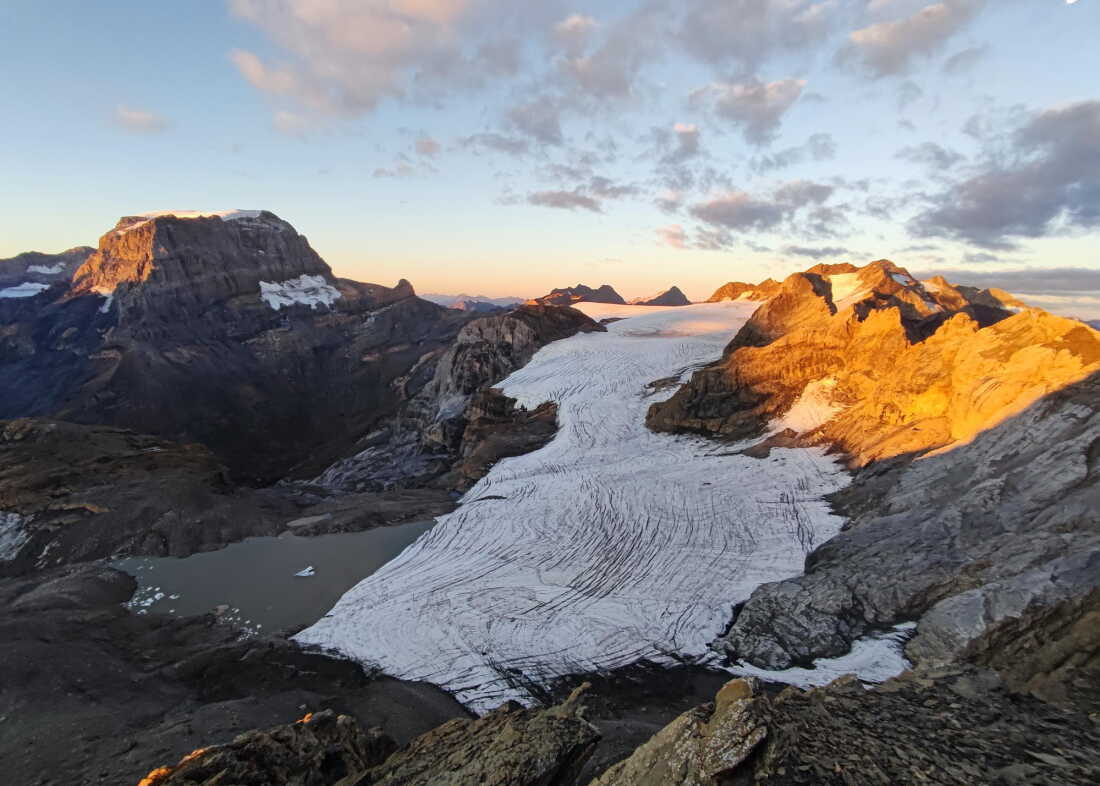
The Swiss glaciers have shown significant ice loss, with exposed rock where ice once dominated. This situation is part of a broader global pattern of glacier shrinkage, directly linked to global warming.
Significant Ice Loss Documented
In 2026, Switzerland’s glaciers lost over 5% of their ice. Matthias Huss, who leads Switzerland’s glacier monitoring network (GLAMOS), measures these ice fields each summer. His research has captured the rapid decline, peaking in 2022 with a record 6% loss within that year alone.
This year’s summer revealed further melting, leaving surfaces barren and rocky. Huss describes these landscapes as “dry and dead,” with only small ice remnants visible. Some areas where meters-thick glaciers once stood are now beginning to host alpine plants.
Implications of Ice Melt
The 2026 glacier report indicates a 5.5% ice loss, slightly less than in 2022 due to increased winter snow covering. Yet, major glaciers like the Rhône and Aletsch have experienced record losses, critical as they serve as Europe’s “water towers.” Their melting waters feed vital rivers like the Rhine and the Danube, essential for food supply and transport.
This ice loss has already had serious implications. River levels dropped, halting freight on major waterways, and even impacted nuclear power stations reliant on these waters for cooling. Further glacier loss could exacerbate drought conditions, threatening agriculture.
Risks Beyond Water Supply
Glaciers and alpine permafrost play a crucial role in mountain stability. Without them, the risk of landslides and flooding increases. Last year, the Swiss village of Blatten was destroyed by a glacier collapse, an event that brought down part of a mountain. Fortunately, the area was evacuated, but the village remains buried under significant debris.
In Nepal, a glacier collapse caused floods, killing at least 1,400. Huss notes that while mountain areas are inherently risky, climate change can trigger such disasters. The combined effects of ice loss and permafrost warming make climate change a catalyst for these events.
Time to Act on Climate Change
Huss stresses the urgency of addressing climate change, pointing to the clear evidence from the glaciers. He cautions that without action, Europe’s alpine landscapes could vanish by the century’s end if warming continues at the current rate.