Ukraine’s Military Innovation: Using APCs as Explosive Devices
Ukraine’s military has transformed armored personnel carriers (APCs) into improvised explosive devices, leading to breakthroughs on the front lines in the Donetsk oblast. Brigadier General Andriy Biletsky, a commander with the Third Army Corps, shared insights into this innovative tactic.
“To breach enemy defenses, the Third Army Corps developed an invention – Soviet BTR-60s converted into robotic kamikaze complexes,” explained Biletsky. These converted APCs have enabled Kyiv’s troops to advance in the Lyman sector during a counteroffensive. Ukraine has highlighted its strategic use of unmanned vehicles and drones in this effort.
Code-named Operation Vivaldi, the mission has successfully impeded Russian attempts to capture critical fortified cities within Ukraine’s Donbas region. The mission’s outcome has been contested by Russian military bloggers, despite Ukrainian claims. Newsweek reached out to the Russian defense ministry for remarks.
Application of BTR-60 Armored Personnel Carriers
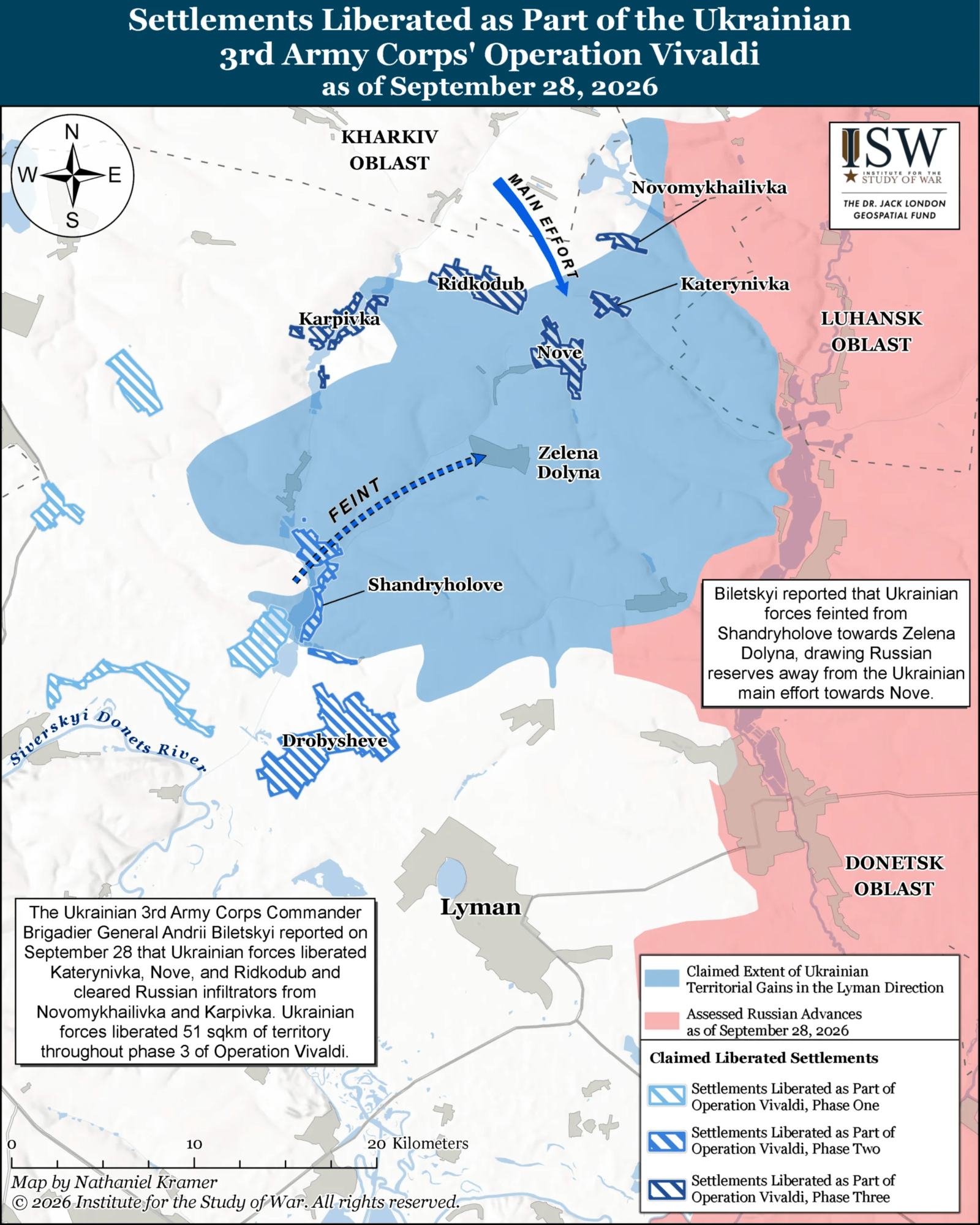
In recent revelations, General Biletsky detailed Operation Vivaldi’s progress. Ukrainian forces executed a strategic deception from Shandryholove, northwest of Lyman, towards Zelena Dolyna. This maneuver diverted Russian attention from Ukraine’s primary target at Nove, on the northern edge of Russian positions.
Biletsky stated that using BTR-60 APCs was crucial in this operation. Originally designed as troop transporters in the 1950s, these vehicles were repurposed into vehicle-borne improvised explosive devices (VBIEDs), helping Ukrainian forces breach Russian defenses and destroy fortified structures.
“They demolished the enemy’s strongest fortifications,” Biletsky said, noting Russian forces surrendered in entire units, including officers and artillerymen.
Operational Success and Challenges
Throughout the third phase of Operation Vivaldi, Ukrainian forces liberated 19 square miles, culminating in a total recovery of 67 square miles. Analysts attribute part of this success to Ukraine’s ability to maintain the element of surprise, bolstered by strict operational security and effective counter-drone operations.
Major Maksym Zhorin, deputy commander of the 3rd Army Corps, previously mentioned that advances were kept under wraps through the use of a “protective drone” system involving electronic warfare. Despite silence from Moscow’s forces about the operation’s success, some Russian sources criticized their defense ministry for not recognizing the true front lines.
The Institute for the Study of War (ISW) reported that Ukrainian forces control both Nove and Shandryholove. Russian positions are now considerably distanced, being at least ten miles from Shandryholove and five miles from Nove.
Newsweek editorial contacts for this story are Matthew Robinson and Tony Phillips.