Comprehensive Report Highlights Failures in Handling Eaton and Palisades Fires
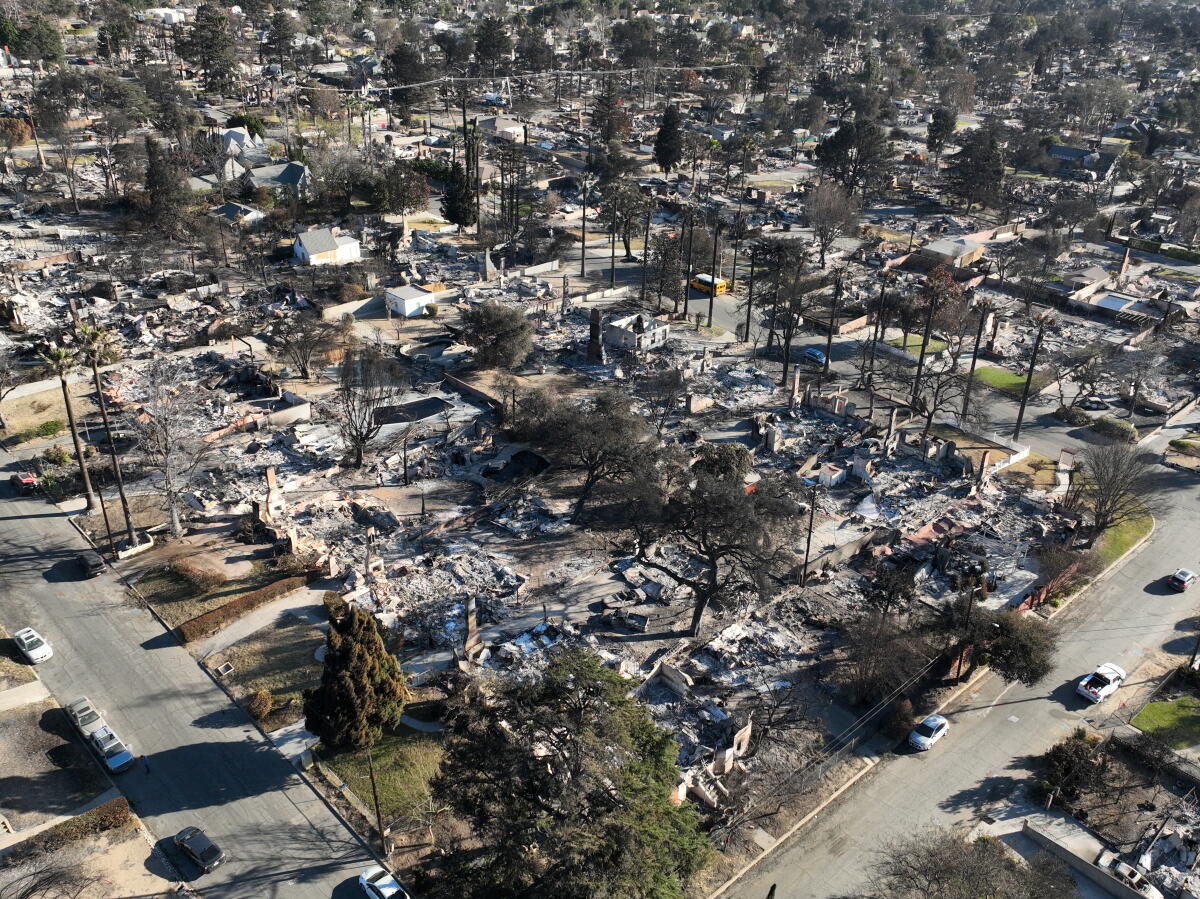
The most thorough examination yet of the calamities on January 7, 2025, comes from an independent investigation commissioned by Gov. Gavin Newsom. It uncovers numerous weaknesses in government preparation and response during the Eaton and Palisades fires that claimed 31 lives and destroyed over 16,000 structures. Published by the UL Research Institutes’ Fire Safety Research Institute, the findings confirm pivotal reporting by The Times. They especially highlight delays in evacuation alerts within a historically black neighborhood, where most fatalities occurred, and negligence by the Los Angeles Fire Department (LAFD) regarding warnings of a lingering fire.
The 724-page document reveals chaotic and inefficient communication that exacerbated already perilous conditions during evacuations, rescues, and firefighting operations. In the Eaton fire, there was a failure to relay reports of an ember-storm by paramedics in west Altadena to incident commanders. Additionally, the L.A. County Fire Department did not effectively coordinate evacuation efforts. Commanders took over an hour to order evacuations after finally receiving reports of fire in west Altadena, the document states.
As for the Pacific Palisades, the LAFD ignored several warnings about the ongoing Lachman fire. The investigation shows no evidence of the department monitoring the burnt area when critical fire weather loomed. Topanga State Park had not consulted fire agencies when creating its wildfire strategy.
“The whole system was, in a sense, just boiling — primed and ready to release all of that stored up energy come January 7th,” said Derek Alkonis, FSRI’s senior research program manager during a briefing.
Communication Failures in West Altadena
In the Eaton fire, a severe lack of communication between ground deputies and paramedics and the response officials allowed flames to penetrate west Altadena, where evacuation alerts were late. Sheriff’s officers physically alerted residents, but a comprehensive evacuation notice wasn’t issued. The report indicates the 911 calls relayed crucial information about the fire’s development, but the data went unseen due to the absence of coordinated operations.
The report further reveals that most fatalities in the Eaton fire happened within areas unaware of the encroaching flames. Delayed evacuation orders, issued hours late, contributed to the disastrous consequences. Early alerts could have given vulnerable groups the time needed to respond adequately.
Neglect of Smoldering Fires in Pacific Palisades
The LAFD had initially contained the Lachman fire on January 1, 2025, but subsequent precautions were inadequate. State Park officials had urged that trails and an existing hose be managed, but the concerns were overshadowed. Encounters with hot spots by fire personnel went unheeded, a captain warning against hose removal was ignored, and the eventual flare-ups were missed as fire officials failed to patrol the site in anticipation of severe fire weather.
The investigation attributed these lapses to a lack of comprehensive mop-up protocols, which meant that containment could be uncertain and unsupervised. Firefighter input on potential risks was undervalued, leading to unresolved issues and exposed communities.
LAFD’s Ineffective Response
The FSRI report criticizes the LAFD’s response to the Palisades fire, citing inexperienced handling of major fire situations. This prevented a unified command as experienced agencies diverged to operate independently, complicating the already formidable challenge of an uncontrollable fire fueled by adverse weather conditions.
Missteps like insufficient preparatory deployment worsened the response time. The initial LAFD setup in Fire Station 23, awkwardly situated along evacuation routes, and unfamiliarity with requesting external aid hampered urgent firefighting actions. A lack of interagency communication was evident, with the LAPD and LAFD resorting to conflicting evacuation maps. Ultimately, the imposition of Cal Fire improved the organizational framework.
Responders deployed without exhaustive oversight, driven by mounting emergencies often preceding command permissions. The fallout was a battered command credibility, worsened by entrenched mistrust towards senior LAFD figures, with line captains seen as more reliable than higher command.
Disjointed Eaton Fire Command Structure
Disorder plagued the Eaton fire command center from its inception at the Rose Bowl, resulting in fragmented evacuations and confusion. Despite ground warnings, West Altadena evacuation alerts lagged due to poor coordination among fire and sheriff officers.
Despite alarming reports, deployments were delayed, and the allocation of personnel was deficient — officers largely remained in cluttered eastern sections, inefficiently deployed to address the real-time demands of escalating fires.
Disorganized cross-agency communication not only delayed the response but led to overlooked tools like FireGuard satellite imagery. Late evening on January 7, the fire’s movement west was captured, but this critical information was not incorporated into command operations, leaving communities exposed. Subsequent integration of FireGuard indicates acknowledgment of these oversights.