China’s Fleet and Economic Challenges in the Face of U.S. Trade Relations
China recently secured two months of trade peace through a state visit, but it faces ongoing military and economic challenges. Chinese President Xi Jinping visited the United States for the first time in over ten years, engaging in diplomatic pleasantries with President Donald Trump. This included troop reviews and discussions on artificial intelligence, culminating in an extension of a trade truce set to expire on January 10. Xi emphasized the need for peaceful coexistence and urged Trump to handle Taiwan cautiously.
However, discussions on crucial minerals needed for military technology were notably absent. While the White House mentioned continued work on rare-earth shortages, this highlights America’s vulnerabilities in its supply chain.
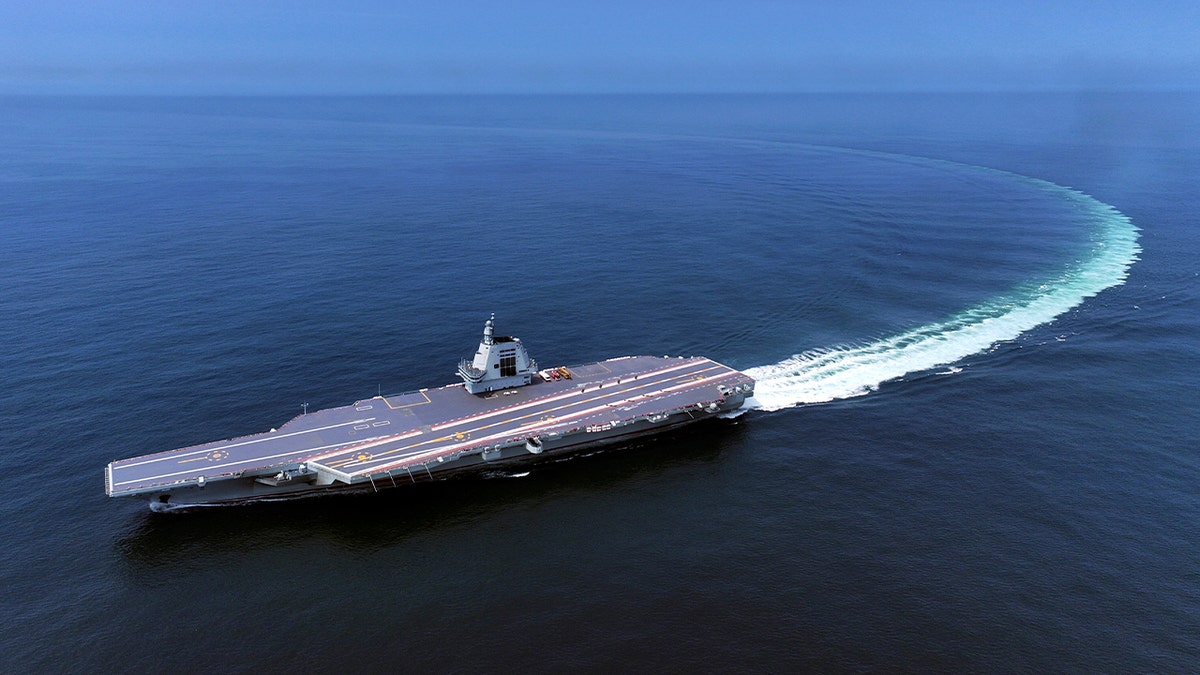
Despite the diplomatic gestures, China’s military ambitions continue unabated. The rapid expansion of its naval fleet is impressive, with new warships launching swiftly. A photo released by Xinhua News Agency showcased China’s third conventionally powered aircraft carrier, the Fujian, during its maiden sea trial in May 2024.
China’s current dilemma isn’t about building a navy, as it already has one, but about sustaining it beyond 2031. The costs associated with operating and maintaining a modern navy are significant, often surpassing building costs. The People’s Liberation Army Navy has been rapidly producing ships such as destroyers and nuclear submarines, which will soon require extensive maintenance.
These financial challenges coincide with a strained fiscal system at local levels. Many provincial regions struggle with revenue deficits, compounded by a collapsed land sales market. Beijing has shifted debt onto official records, easing interest rates but creating new financial burdens. Deflation further exacerbates debt challenges, complicating economic recovery efforts.
Historically, such economic strains have led to dire outcomes. In the 1930s, Germany used financial tricks to mask rearmament costs, which eventually led to insolvency. Unlike Germany, China’s financial manipulations aren’t hiding military spending but still face a similar maturity date dilemma—maintaining a substantial military force requires resources that past strategies did not.
As China eyes Taiwan and aggressively refines rare-earth minerals crucial for U.S. and allied military technology, the importance of timely support and strategic planning becomes evident. China has attempted to hinder Western rearmament efforts by restricting mineral access, but U.S. efforts to diversify supply chains and reduce dependency are underway.
The photo-op with U.S. leaders resulted in no major policy gains for China. While extending trade talks, Xi achieved no significant deals on minerals. This centralizes power without reducing future costs. Maintaining a strong military presence demands significant resources, set to increase over the coming years.
Maintaining peace through strength remains vital as the time pressure on Xi continues to grow. The U.S. must use the next five years wisely, as China’s strategic options narrow.
Chuck DeVore, a Texas Public Policy Foundation vice president, former California legislator, and retired U.S. Army lieutenant colonel, provides insights on these developments.