Hurricane Rachel and El Niño Raise Flooding Risks in Southern California
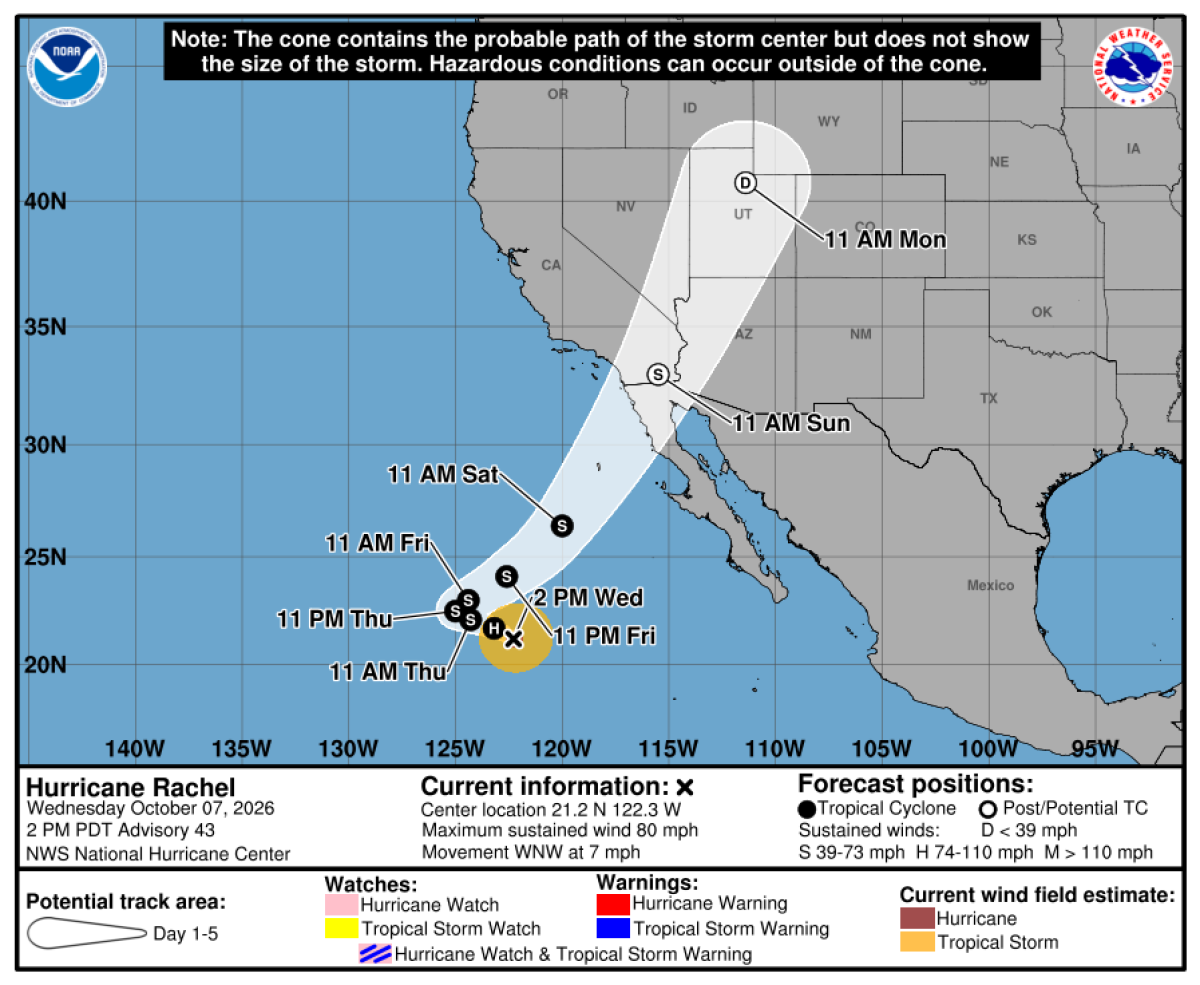
Hurricane Rachel, located in the Pacific Ocean, presents a renewed threat to Southern California. It could lead to coastal flooding and bring widespread rain this weekend and early next week. Forecasters highlight that south-facing beaches, such as the Long Beach Peninsula, Catalina Island, and the coast from Malibu to Ventura, are particularly vulnerable to flooding.
The likelihood of flooding this weekend is heightened by the presence of a Kelvin wave. This wave, a feature of El Niño, can raise sea levels by 6 to 12 inches, compounding the threat to the California coastline. Meteorologist Ryan Kittell from the National Weather Service in Oxnard notes that coastal flooding risks are expected to peak on Sunday. “We’re likely to see more significant beach erosion, especially on Sunday,” says Kittell. Many of these areas have already suffered from previous flooding events, leaving little beach for buffer.
El Niño conditions mean tides in Southern California could reach 1 to 1.5 feet above normal, increasing the risk of isolated damage. Damage levels might not be as severe as those experienced during Labor Day weekend when communities like Malibu and Long Beach faced destruction from Hurricane Marie’s swells.
Current weather models suggest El Niño this year could be the strongest since modern records began in 1950. As of Wednesday, Hurricane Rachel was classified as a Category 1 hurricane but is expected to weaken as it approaches Southern California. The National Hurricane Center reports that the hurricane will veer sharply rightwards due to an interaction between two unusual low-pressure systems arriving from the north. These systems are predicted to merge with Rachel’s remnants to form a new weather system impacting the area.
Forecasters say the storm will likely lose its tropical storm strength before reaching Southern California. Rain is anticipated between Saturday and Tuesday, with the highest probability from Sunday night to Monday night. There’s a 70% to 90% chance of rainfall in Los Angeles and Ventura counties, with expectations of about one-quarter to three-quarters of an inch, particularly in mountainous regions. San Diego County, Orange County, and the Inland Empire have increased chances of rain from Sunday through Tuesday.
In the San Francisco Bay Area, low-lying coastal zones may experience up to 1.2 feet of water above ground level. Sunday is predicted to be windy, with gusts of 20 to 35 mph. Boating may not be advisable. Strong currents and waves may heighten the risk of drowning at beaches. Kittell warns of local strong winds and possible thunderstorms coinciding with coastal flooding risks, which might also lead to high surf and rip currents.
El Niño contributes significantly to this pattern, with Kelvin waves raising sea levels. Michael Jacox of NOAA explains that Kelvin waves adhere to coastal boundaries, resulting in elevated sea levels near shores. According to Dillon Amaya from North Carolina State University, these waves could keep sea levels high for a prolonged period due to continuous El Niño influences.
NOAA has updated the probability of a record-breaking El Niño to 83%, up from the previous 75%. Typically, El Niño events, occurring every two to seven years, result in altered atmospheric conditions that can lead to global weather changes. Historically, Southern California’s strongest El Niño events involve excessive rainfall, as seen in 1982-83 and 1997-98. However, the 2015-16 event mainly caused record coastal erosion without increased rainfall.
Oceans are displaying unprecedented temperatures, with some areas measuring up to 18 degrees above baseline. The NOAA Climate Prediction Center emphasizes that such conditions heighten the probability of El Niño-related impacts, although outcomes are not assured.
Southern California’s recent heat wave is expected to subside by the weekend, with temperatures dropping from highs of 95 to 105 degrees into the 70s by Monday. However, a high risk of heat-related illnesses and large fires persists. Kittell suggests restricting outdoor activities to the morning. An advisory warns of possible additional heat toward the end of next week.